Artificial intelligence delivers results that we must skillfully analyze
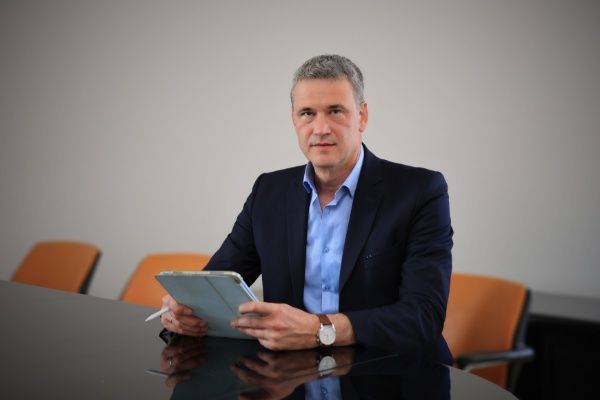
· Metodi Georgiev
The roof is repaired when the weather is nice, not when it rains!
Introduce yourself in a few words..
My name is Metodi Georgiev, with experience in various industries,
but due to circumstances always connected with customer service.
For the last 20 years, I have been engaged in the development and management of international
companies in IT and Outsourcing sector. I also have the pleasure of teaching at
the Faculty of Economics at Sofia University "St. Kliment Ohridski".
How would you describe your career in a few words?
Quite colorful at the beginning and very consistent and
logical in its development over the last 20 years. Like many people from
my generation, who graduated in the period 1995-2000 and
had to start our career path in a broken and mostly gray
economy, without significant international business in the country, it was difficult. We had to
look for different opportunities, which very often were outside the country. I had
acquaintances working in some (of the few) international companies and I envied them
strongly for the opportunity to workt, to learn and develop in an established business environment. Unfortunately, just at the time when
I graduated with my economic education, in 1997, the situation became very difficult and
some of the companies either left the country or laid off their staff. I was lucky to leave with my wife to the USA, winning a green card, which
opened huge opportunities for us, both for professional realization and
to complete a business master's degree. In 2005, we made a conscious decision to return to Bulgaria, where the situation was exactly the opposite of that in
the nineties. Many international corporations invested in the country and
the opportunities for young and educated people were enormous. I also had one
advantage - I was one of the few at that time who returned to Bulgaria with
experience and education. This also brought the next positive change in my career
development.
What was the
most important choice that shaped your path Inyou?
All actions (and the lack of them) over time
shape our path. If I had to define one, it would be the pursuit of
education and continuous learning. I do not fully agree with people who
say that diplomas do not matter, only what is learned. What is learned is leading, but
obtaining a diploma is a result of what has been learned and it shows the persistence and
discipline of a person to start and to
finish what has been started. In formal education, we learn to work with other
people, to deliver results, to present and to compete both with
others and with ourselves. With the diploma, universities verify that we are ready to take
the next step, giving us feedback. And learning continues throughout life. If I had to
mention one choice that had the strongest impact on my future development, it would be
my departure for the USA.
What would you like to know at the beginning of your career,
but no one told you?
That it is extremely important to be satisfied with what you
are doing and to strive to be happy, as much as possible. In this way, you will
have a more balanced life, but you will also be much more effective for the organization you work for. You will “deliver” and develop with ease.
How can a person
understand which profession is suitable for them?
The interests of each of us are shaped over the years,
and undergo development or change. I believe that family has a strong
influence on our choice not by directly directing us to a specific profession (at least
not always). Family plays an important role in the upbringing and shaping of
children's interests. It is important to create conditions for children to read and to
shape their interests through this window through which they see the world.
The behavior of parents also plays a role in shaping the character and interests
of a child. Over the years, different role models shape a person's aspiration towards one
or another professional field. As I said before, it is important for a person
to orient themselves towards something that will satisfy them, not just because it is
trendy as a profession or brings more money. They should not be
neglected, but thank goodness today almost every profession offers opportunities for
decent remuneration or additional income.
Which skills
according to Inyou will be key in the next 10 years?
The easiest answer is digital skills and working with
Artificial Intelligence (AI). This is true, but I would also draw attention to another
set of skills that will be critical, in my opinion. This is the combination of
analytical skills as well as soft skills. Analytical skills will be necessary for us,
because AI will increasingly perform activities currently carried out by humans.
But it will provide us with results that we will need to use to
make the right decisions. We will all need to be specialists in working
with AI if we want to be successful in what we do.
The soft skills that we will need to develop will be
different from what we are striving for today. We will need to develop skills for
communication and management in an environment where, besides people, we will also have
machines, with all their pros and cons. I also believe that with the increasing
influx of machines into our lives, people will have an increasing need for human
communication. I even see this as a niche for a unique offering from companies,
targeted both at clients and, most importantly, at employees.
Otherwise, I think that high-level experts with
specialization in Data
Science, Data Analytics, Machine Learning, AI will be key in
the development of companies. As well as the undeniable need for expertise in the field of Cyber Security.
How to
build a network of useful contacts without appearing interested?
Contacts are built consciously, but not when for some
reason we need a specific one. As they say, “the roof is repaired when the weather is nice, not when it rains.” In other words, throughout our
conscious life, we must be active, build relationships, and
work on our personal brand. Our personal brand is how others perceive us, the trust we build as professionals and individuals. We must
use professional events, social networks (above all professional),
and be active in the field in which we are developing, in the organization in
which we work.
What is the
biggest mistake you have made in your career, and what did you learn from
it?
In one of the international companies whose operations
I managed regionally, we were transferring activities from Western Europe and the USA to
our locations in Central and Eastern Europe, for which I was responsible. This was
justified business decision by the global management and brought measurable
economic benefits to the entire organization. Throughout the time, I viewed this
process not only as the leader of the local teams but also as the logical
business decision of the company and believed that we all approached it in the same way.
It turned out that a colleague who was responsible for one of the “sending” centers was trying to sabotage the project. Beyond
internal political games, I realized that he had a different perspective.
He was losing business and laying off people. What this story taught me is that
there is always another perspective and we must take it into account. Very often,
business decisions are logical and economically justified, but they are “cold” decisions,
in which people are not the priority. Our job as leaders is to
make it so that people are fully included in the equation.
And the story had a better ending than the beginning because
we had a series of conversations in this direction and it yielded results.
How to
recognize a toxic work environment and when is it time to leave?
Again, I want to emphasize that it is extremely important to strive for a work environment that brings us satisfaction. We spend more than
one third of our time at work. In this sense, it is important to recognize
a toxic work environment. Before joining a given organization, it is good
to do our research and try to understand what culture it carries,
what the values and relationships are within the company. During
interviews, candidates should be sensitive to all signs of what
the environment is like. An important rule is that the application process should
help not only the interviewers to understand whether the candidate is right for
the position. It is especially important that the candidate should also answer the question
of whether this organization is right for them.
Once you are inside the organization, everyone has different
“sensors” and different sensitivities. Here my principled answer is that at
the moment you feel that the environment is toxic, you should make a decision and
find a way to exit the organization. No matter how long you wait, you will be
late. However, my more practical reading is first to look around and
understand whether the toxicity is in the whole company or in our team. To see if
the problem is with certain managers or is larger, because then our actions
would be different. Also, think practically about your next job,
look at what the opportunities are.
What would you
do differently if you could start over?
I would study finance at an earlier stage. Beyond the idea of
this specific training and knowledge, I wish I had more opportunities for
training, both for specific skills and career ones. In the 90s, there were not
many options, and I believe it is important for young people to seek opportunities for realization
preparedly, not chaotically. I still managed to take advantage of career
consultations and work with mentors relatively early, and this helped me in determining
my right career steps.
How to
maintain our motivation in times of stagnation?
Personal development and striving to achieve goals,
related not only to our professional path but also personal ones. Outlining
clear steps and following them, of course with adaptation if necessary. A person is
structured to be energized by successes, achieving results. We need to feel
successful and that drives us forward. Also, the long-term perspective is important - what is our big goal, what we are striving for and what needs to
be done to achieve it. Still, we must be flexible and not feel
guilty and unsuccessful if we change direction along the way, setting a different goal.
How to
achieve a balance between professional and personal life?
It is different for everyone, and I think the only right
answer is that there should be some balance and work cannot be 100% of your time,
however satisfied you are with it. It can be 90%, but it should not be
100%. The same applies to the fact that we cannot do without commitments, professional
realization. This is not only related to the money we need to live
well. Each of us needs to engage in something, to realize
certain projects and to feel useful. It is no coincidence that we see most successful
and wealthy people, even when they retire from active business, starting to engage in
charity, patronage, teaching, consulting.
When is it time
to change our career, not just the job?
When we do not feel satisfaction from what we
are doing. Another case for the need for change may be a time when we witness
huge changes that require new skills, professions, and different
business models. These are the times of all industrial and technological
revolutions. Such is the time now. So think about whether it is time for
a change.
If you had to
give just one piece of advice to people seeking success, what would it be?
Do not stop learning and improving with wide
open eyes and perceptions for the future - immediate and long-term.
What is Inyour definition of a “successful career”?
Professional satisfaction from what has been achieved both in terms of
knowledge and position in the organization. This must be necessarily supported
by satisfaction and balance in personal life. Again, we must
emphasize that for everyone, the definition of success and what makes us happy
has different parameters.