Confidence does not mean being always right, but being true to yourself
· Denitsa Kostadinova
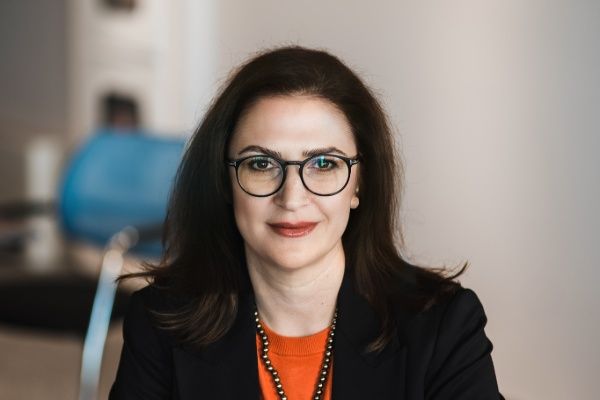
My personal 'recipe' includes continuous searching – today more purposefully and critically!
Introduce yourself in a few sentences..
My name is Denitsa Kostadinova and I have been working for 20 years in
marketing, event management, and communications in various industries. For the
last 13 years, I have been in the real estate sector. Currently, I lead
the marketing and communication activities of AG Capital, an investment group of
real estate companies that develops projects in Bulgaria, Poland, and Romania.
By education, I am a lawyer and cultural scientist.
What did you dream of becoming in your childhood?
A lawyer. Since I was little, I had a developed
romantic idea of the profession, for which detective novels were to blame.
This romance combined with my strong sense of justice somehow
naturally matched.
At what
age did you earn your first money? Tell us an interesting story?
With a lot of effort and persistence, I received a scholarship for
excellent success in school.
These were also my first independently earned money. I remember that I took my parents out to dinner at
'Japanese', and for myself, I bought a bracelet from a small jewelry store on 'Aksakov', which I still keep to this day.
What are
the main factors and examples that shape us as individuals at an early age
and form our interests? What is your recipe for curiosity, sources
and wells of information and inspiration at this stage of our human development?
The strongest influence in
early age is the family environment – not so much the words, but the example we see every day. Gradually,
the circle expands – teachers, friends, books and even random meetings start to
shape us. My personal 'recipe' includes continuous searching – today more
purposefully and critically. I learned to
check and filter more. Inspiration lately often
comes from the younger ones – with their authenticity and somewhat charming
uncompromisingness. I do not believe
in the clichés that young people are lazy or irresponsible. On the contrary, it seems
that they are more aware of which battles are worth fighting. My young self admires them.
Has there been
any significant difference in your perceptions in more mature age about what
motivates you to do or not do something?
Yes – I have evolved. I no longer
do everything at any cost. I have become more moderate, moreselective and self-preserving. But my motivation
remains unchanged – I always ask myself: “Is this in sync with my moral and
ethical values? Will I be able to look at myself calmly, without reproach and doubt?“ If the answer is not a definite “yes”,
then it is not my path.
Whose decision
was it where to pursue higher education and what to study? Was this decision
correct, viewed from today’s perspective?
It was entirely my decision. And
I still consider it correct. Law is not
just a profession, but a discipline that shapes the way of thinking and develops the ability to analyze
and see different perspectives. And although I do not practice it, I am happy for the stable foundation and accumulation
it has given me. I would recommend that the basics of law be studied mandatorily
in high school classes, the benefits for our society would be great.
Share with us
more about your interests, knowledge, skills, and hobbies?
I love to travel and cook. People who know me are well
aware of these passions of mine.
They say that
the personal brand is everything that people say about you when you are not in
the room. What would you like to hear today?
That I am genuine.
Unpretentious. Consistent. That
I am who I am – both in words and actions. For me, this is the
greatest recognition and the even better thing is that I hear it.
Emotional
intelligence, adaptability, and flexibility, as well as our soft skills are
key conditions for success in recent years. How do you cope with
the daily challenges of life to stay in good shape and
mood?
Gratitude is what
keeps me in good shape – every day I remind myself of what I am grateful for, what brings me
satisfaction and this
centers me. One
of my biggest challenges is to observe how, despite, that we talk so loudly about emotional intelligence massively it is precisely people who lack it and do not even
know what it is. This is
hard to accept, but it is not a reason to change myself.
What are
the most important conclusions you have drawn so far for maintaining the right
communication considering the different characters of the people you meet daily
– colleagues, friends, relatives?
The most important thing I
learned is not to compare
people to myself and not to expect them to react as I would react.
Every person we meet, whether personally or professionally, walks their
own path, probably fights their own battle, which we do not know about, or goes through life
phases that are completely foreign to us. Expectations
often lead to disappointments in every aspect of life.
What
do you think about money? What is their influence on your life? What is your
advice to people who often ask themselves questions related to money and how
sufficient they are?
Money is important,
of course. They provide freedom and security. But when they become an end in themselves,
they start to distort our priorities. For me, money is a means – not an end goal. My advice is: define your 'enough', instead of competing with
other people's standards. There will always be someone richer, with a more expensive car,
a bigger apartment, on a more exotic vacation. This should in no way
shift the focus from our own life.
What is
the most valuable career advice you would give to people?
I would not define it as career advice, but life advice: to believe in yourself. To build an inner
compass that is not influenced by external noise and opinions. Confidence does not mean to
be always right, but to be true to yourself even, when things do not go quite
as expected.