Doctor in England - what are the challenges?
· Stanimir Stoilov
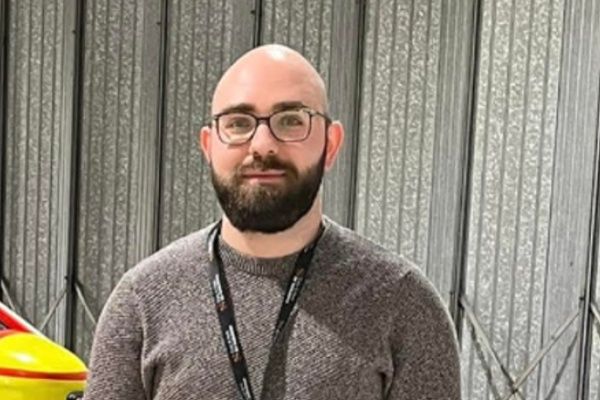
I would advise those who can negotiate their pay to do so at every opportunity, while first ensuring the quality of their work!
Introduce yourself in a few sentences. What does your work as daily commitments consist of?
My name is Stanimir Stoilov and I work as a doctor in London. I am currently nearing the end of the first year of the so-called Foundation Programme - a two-year programme that is mandatory for every doctor who graduated here and consists of rotations in various medical and surgical specialties. Fortunately, I was accepted into a specialty that, in addition to clinical work, allocates time for research activities. Outside of my work in medicine (and related fields), I am part of two Bulgarian organizations - Foundation BEST (Bulgarian English Speech and Debate Tournaments) and Shakespeare Company “Petrovden”, which are a big part of my personal development, for which I am extremely grateful and particularly happy that I can contribute to their development, even from a distance.
In which country and city do you currently live and how did you end up there?
I live and work in London (United Kingdom), which makes me very happy. Since my first visit here, it seemed like something was attracting me to this metropolis. During my higher education here in the UK, I lived in various places where my universities were - University of Exeter for my bachelor's degree and University of Warwick, where I graduated as a doctor. I spent eight very exciting years at these two places, but London has always been my goal.
What were the biggest challenges you faced at the beginning of your stay?
Perhaps the teaching and learning methods in English universities. Local high school students are somewhat prepared for the style of higher education, while I was not. It is no coincidence that they say that the focus in the first year at university is actually on learning how to learn.
How did you overcome the language barrier (if there was one)?
I didn't feel there was one. I graduated from Language High School “Bertolt Brecht” in Pazardzhik with a profile in English, where I had two great teachers, both in preparatory class and afterwards, to whom I owe a lot. Even before I entered the Language High School, since 2009 in Patalenitsa, we started working with English directors, teachers, and students in acting. This meant that every summer for about a month I was surrounded by English speakers and quickly became one of the main translators between the Bulgarian and English teams. In addition to this, before and after each summer production, I handled correspondence with the English colleagues. In high school, besides the intensive English language training and participation in various Olympiads and competitions, I also became part of an organization for speeches and debates in English, namely the Bulgarian English Speech and Debate Tournaments (BEST) Foundation. This involved preparation for participation in tournaments several times a year, and when I was in 12th grade, I also became part of the management team of the organization as an intern. Outside of school, I also helped with translation during various international events related to youth home in Pazardzhik. All of this developed my language skills and gave me a confidence that made the transition to life in an English-speaking environment very smooth.
What resources or networks (local communities, colleagues, organizations) helped you adapt?
Mostly the friendships I made during my university education, which are still very strong to this day.
What are the main differences between the work culture in your current country and that in Bulgaria?
I am not fully familiar with the work culture in Bulgaria. Here, teamwork is emphasized and the so-called flat hierarchy (flat hierarchy) is adopted, which ensures patient safety. As a new doctor, I have the confidence to express my doubts or concerns even to the highest members of my team, who are grateful for that.
What values and workplace practices impressed you the most?In your opinion?
That differences among people are valued and that everyone is given the opportunity to develop. Work is done according to protocols and standards, which is important to ensure a uniform level of care for patients, wherever you are in the country. There is a strong emphasis on safety, which can sometimes seem excessive, but helps to prevent serious mistakes. I think many people are aware that the UK has huge problems with its healthcare system, which I do not deny but confirm. However, there are also many people who, with dedication and creativity, are trying to solve these problems, which I greatly appreciate.
Have there been situations where cultural differences have hindered you?
I can't think of any. In my opinion, deep down, people have more similarities than differences. I have the great honor of working with people who are going through difficult periods in their lives, and the opportunity to help them transcends any cultural boundaries.
How does finding a job differ in your current In country compared to your homeland?
I have no direct experience applying for doctor positions in Bulgaria, but I am somewhat familiar with the system. In my opinion, the main difference is that in the UK, applications for specialty doctors are administered at a national level, with individual hospital units not participating in the selection process. That is, if you wish to apply for specialty X, you take the corresponding exam (which is again conducted at a national level by an independent organization) and indicate your desired specialty programs, where you can choose only one or rank your preferences for programs in different cities. There follows longlisting, shortlisting, and interviews, with successful candidates ultimately receiving their placements. I think this way biases towards certain candidates are eliminated. On the other hand, competition for places in large cities increases every year, while smaller populated areas experience a shortage of staff. Unfortunately, the government does not seem to be on the side of specialty doctors, and job positions are fewer than necessary, even though they are desperately needed. This is also evident from the ongoing strikes by doctors, in which I participate and support wholeheartedly. I would encourage my colleagues in Bulgaria to do the same.
Another major difference is that here we have only one employer for the entire country, namely the National Health Service National Healthcare Service (NHS), which means we have to work under suboptimal conditions due to the lack of competition.
Did you have to go through any additional qualification courses?
As students and doctors, we regularly undergo various courses and training to maintain our level. I think that such standardization of skills and approaches is useful in a profession like medicine.
Have you encountered prejudices or obstacles because of your foreign origin?
No, quite the opposite. London is a multicultural city where people from almost 290 nationalities and ethnicities live and work. This is especially true for healthcare. Foreign origin often brings people closer together, not only personally but also professionally. Unfortunately, there are still many prejudices and discrimination against certain groups of people. There are initiatives that try to combat this, and it is important that we all be part of the progress. I have not been a direct victim of such, but my close friends often face obstacles because of their skin color, which in 2025 is absolutely unacceptable.
What would you advise people who want to take a similar step?
The medical profession, and particularly practicing it in England, carries many challenges and requires sacrifices. It is certainly extremely rewarding and offers many opportunities for development. I would advise people who wish to pursue it to carefully consider every aspect of the job before applying. In my opinion, this is best achieved by gaining experience in the healthcare field, even if briefly. There are many details that cannot be seen from the perspective of a patient or an outside observer, and for this reason, I believe that experience is of utmost importance.
If you could go back, would you choose the same path?
Yes, definitely. I am happy that I obtained a bachelor's degree before starting my medical education – it gave me a lot, and to this day I use the skills and experience gained from it. Although I know that there are many challenges in medicine, many of which I cannot handle alone, it remains the right profession for me, and I can't wait to continue developing as a doctor.
What do you miss most from your homeland in professional and personal terms?
I cannot comment on the professional aspect, as I have not worked in my profession in Bulgaria, but I think I would miss the contact with Bulgarian patients and doctors. I know that there are extremely good specialists in Bulgaria, and it would be a pleasure and an honor for me to learn from them.
On a personal level – the close people and the hometown (as well as the nice tomatoes!).
Have you considered returning and under what conditions would you do so?
At this stage, I see my future in London. However, I think I would like to have even a small contribution to healthcare in Bulgaria in some way – I still do not have a specific idea of how this would happen, but it is something I am motivated to achieve.
What do you think about money? What is its influence on your life? What is your advice to people who often ask themselves questions related to money and how sufficient they are?
Money is undoubtedly important. Especially during the doctors' strikes, I heard comments like “medicine is a calling, not a profession” and so on, which frankly are very absurd and outdated. When a work environment is tense and full of challenges, it is understandable that a person expects to be rewarded appropriately for their efforts and stress. When this does not happen, it is very easy for them to distance themselves and not perform to their full potential. I am a fan of the phrase work hard, play hard and I think that adequate pay is very important. I do not have much control over my salary, as it is determined by the government, but I would advise those who can negotiate their pay to do so at every opportunity, first ensuring the quality of their work.