Don't ask for everything at once, everywhere and all at once
· Lyudmil Terziyski
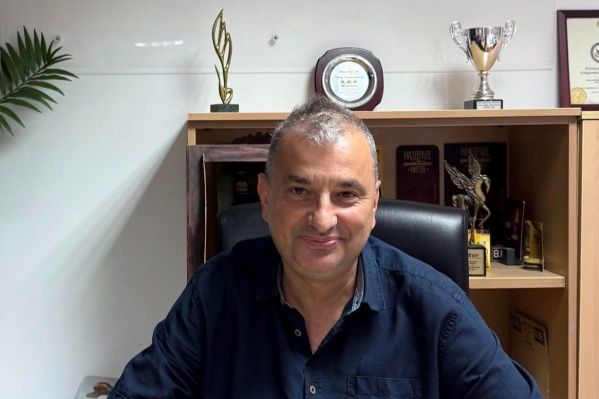
A person should have such an attitude towards clients, colleagues, and managers as they wish to receive from them!
Introduce yourself in a few
sentences..
My
name is Lyudmil Terziyski and I am one of the founders and CEO of
Dedraks AD. We are one of the largest and most modern printing houses in Bulgaria, having
established the company 33 years ago. We are also the only ones with two
printing bases in the country – one located on 10 acres in NDK in Sofia, and
the other in our seaside capital – Varna.
This
makes us unique, because together with our colleagues from Billboard AD we can
provide a full range of offset and digital services extremely quickly
in every part of the country.
Although
we are extremely well and sustainably established, I lead the company with
readiness and enthusiasm, as if we started operations yesterday.
Tell us what are the
philosophy and values of the company you currently represent?
I am proud that,
being a printing house, thecompany strives to operate in a way that leaves the planet for the next generations as it was inherited from the previous ones. This is also my personal mission.
We
want to show people that printing on paper does not have the carbon
footprint that is usually talked about. We use papers with FSC certification, or in short – papers for which it is
guaranteed that for every tree cut down, three are planted. We use 100%
biodegradable and recyclable papers, which helps us to be part of the circular
economy. Our papers are partially or entirely made from recycled materials
and raw materials. They are produced with energy from renewable sources.
I mention this because we put a lot of effort in this direction, yet
we are often “accused” of being a “harmful” industry. Sometimes it goes to
the extremes of “forced” digitalization just because it is trendy, while for me it is always
preferable to open a good old book rather than read from a screen.
I am happy when I see childrenwith theirnoses buried in a book, not in their phones.
I
believe we are going to extremes, renouncing paper and declaring it almost harmful. It reminds me of sending witches to the stake back in the day... For example, do you know
that according to satellite images from NASA, the Earth has become greener in the last 20
years as a result of all the efforts in this direction? However, how much energy does
one data center consume, for example, and what has a larger carbon footprint?
This
is for me a misunderstood digitalization. For example, the Scandinavian countries
returned paper textbooks after they had reached full digitalization. We print a huge part of the textbooks that Bulgarian children learn from, and this makes me proud and satisfied with our work.
How long have you been developing
your current company? What are the most valuable lessons that the events of this period have taught you?
In
33 years we have been through a lot. There were periods when we thought that the machines we invested in were crucial
for our future. In other periods, we became “slaves” to our clients' desires. In
third periods, we became “slaves” to the banks to have enough resources to work.
All of this has given us a lot – technologically we are incredibly advanced, we can literally
fulfill any wish and manage our resources very wisely.
From
today's perspective and experience, however, I can say that our most valuable asset is
our team. Life constantly offers us surprises and we strive to be
flexible, adaptive, and to change strategies on the go, so that we
can continue to be pioneers in our challenging industry. We try to do our
work quietly. I do not like people and companies that parade about how
much and what work they do, while in the meantime they actually do not have time
to get it done. I am even answering this interview here on a Sunday evening, but here – my team
made me participate and I listen and execute... :)
Alongside
our development, we have always strived to help wherever and with whatever we can. Our
company is large and as such, I believe it is our commitment to actively participate in
charitable and socially significant events related to cultural institutions,
children in need, foundations with meaningful goals, and others.
If you personally had to
write a job advertisement, how would you attract the attention of a future employee?
We have a large and dedicated team with a very strong core, and if
you ask someone from this core how many years they have been with the company, you will hear answers
in the range of 20-25... Many of them came directly from university or even
high school, for a little while, but continue to develop with us decades later.
So, if I had to write an advertisement, I would tell what I know from them – why they have been with
us for so many years. Because of the peace and lack of unconstructive
stress, because of the good working conditions, but most importantly – because of the good environment
and team.
What does your
company do to organize a constructive and beneficial working environment for everyone?
Should people in the team be friends?
I
don't know if people should be friends, but I believe it is good if they are.
The most important thing is to work effectively and enjoyably in a team and to support and
respect each other. I believe we have achieved this and I strive to continue in the same
spirit.
I am against the principle of “divide and conquer”. When I have
a situation where a colleague has come to me to speak against another colleague,
I always prefer to meet with both of them together. We strive in every way to make our
workplace pleasant and cozy. I am happy when I see colleagues cooking
together in our kitchen and sharing a pleasant lunch. Did you know that the word
“company” comes from the Latin companio (“the one with whom you share bread”), while the word
“corporation” comes from corpusus (“body”). In the company, we share bread, in
the corporation, we feed the body of the legal entity. I hold and strive daily to
be those who share bread...
What makes you go to
work with pleasure? How do you deal with difficult and stressful moments?
Generally,
a person likes it to be easy, right? However, I realize that difficult
moments keep me in shape. They abound in our work, but I am grateful for them. They give us lessons, strength, and the opportunity to see beyond our established frameworks
and experience.
We work on a huge volume, printing books, brochures, catalogs,
displays, calendars, packaging, and much more for many of the largest
companies in Bulgaria and several companies in Europe. It is a true pleasure for me to
see the smiles on the faces and the spark in the eyes of colleagues when they have managed with a large and
difficult project. Recently, we had a client whose printing house had refused to handle their
order due to volume and
complexity.
They had lost valuable time, and the client is from a highly regulated sector, where
possibilities for delays or unavailability are not on the table. When they
turned to us, the colleagues were literally scared – could we even
react. Fortunately, our printing house works around the clock and we managed to react –
on time, without mistakes, and with an optimized proposal to them (a more effective,
while at the same time cheaper way to fulfill the packaging). The joy and
pride in their eyes were eloquent, and here I am not even talking about the gratitude
from the client's marketing team.
What kind of work model does your company adhere to – office or remote? What do you think about
the possibility of giving options for flexible working hours, within which
employees have greater freedom to allocate their personal and work
commitments?
I like
flexibility in every form, including when it comes to working hours and place.
However, this is applicable to a few people in our case. We are a production company, and this
requires people to be on site by the machines, with serious order and discipline, and
excellent task planning.
I myself sometimes work remotely, often only part of my
working day is in the office, and in the other I stay
at home to concentrate and manage to finish important and more general topics.
I remain in peace and thus manage to “raise” my gaze and sift what is
important for the company, what strategy or tactic is needed today. However, it is important to go to where the essence of our work is done – in the office and production – to see problems with my own eyes,
to hear priorities with my own ears, to give recommendations.
I do not fully support remote work in principle,
because I believe that the connection between the team is lost, the atmosphere is not felt,
and the culture stops being lived. In the eyes of a person working from the beach or the mountains,
the problems of people in the office can easily fade away. We had such an experience – a summer with the sales team and the result was not good. Our clients are very
loyal to us and this was not disastrous, but we realized that it is particularly important for each
account manager to personally monitor their orders in production for deadlines, quality,
or possible problems, alongside “Quality Control” and production
managers. At the scale we operate, mistakes are too costly for us to
afford not to go through several levels of control. The physical
absence of colleagues in the office was immediately felt, and we all saw together that this is not a good solution for us.
How do the continuous technological changes in the world affect your business?
On
the one hand, the development of technologies helps us a lot. We have automated
several processes and drastically reduced unattractive labor. I constantly
want us to keep up with the possibilities of new technologies, so that we can offer
a fast process, competitive prices, and uncompromising quality. They often give us
the opportunity to be very creative in the solutions we offer to
our clients. On the other hand, however, comes the misunderstood digitalization. In recent
years, we have seen a decline in orders for books and educational materials.
I can only hope that it is due to digitalization, not due to less
reading in general.
How important is hierarchy and
what does it mean to you? What kind of communication do you advocate in your
company?
The
correct hierarchy is very important, and its daily observance prevents chaos from occurring. I am an advocate of friendly communication, but like everything – it is good when it is within a certain limit. There is a difference between freedom and permissiveness, and this is where hierarchy comes in.
It is important to be humane and to treat others' problems with understanding – colleagues, clients, partners, suppliers. Sometimes for us,
these problems may seem trivial, but for the other party, they are of particular importance.
This is the moment when you need to carefully assess the balance between the interests of
the company and the person on the other side, because sometimes they diverge.
We constantly strive to improve the working environment even in the smallest details – equipment, automation, air conditioning, relaxation areas,
because the devil is in the details, but so is the angel.
What is your career
advice for all people who are building a strategy for their professional development?
From
the perspective of my life and work experience, I would tell young people that it is
better not to want everything now and immediately, everywhere and at once. You can have
everything – just not at the same time, and to make it happen requires years of
hard work, constant learning, and quite a few mistakes. A person must first and foremost
lay the foundations to be persistent, patient, and consistent, and only then expect the
results.
And
last but not least, I believe that a person should have such an attitude towards
clients, colleagues, managers, as they wish to receive from them. Be humane and
whatever you have achieved, do not forget where you started from and with whom you
walked this path.