Don't wait for someone to give you a stage, build your own
· Konstantin Buchvarov
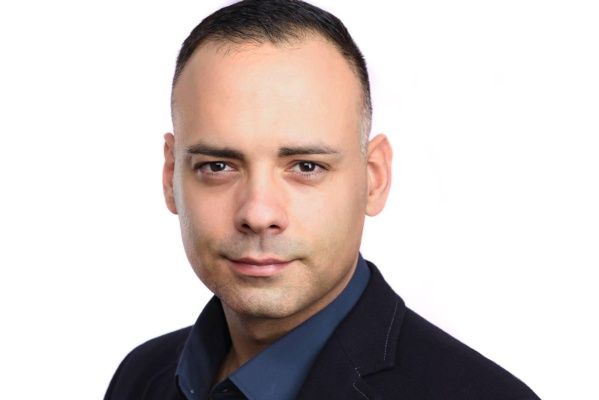
I listen actively, ask more, and strive to understand not only what the person across from me is saying, but why they are saying it!
Introduce yourself in a few sentences..
My name is Konstantin Buchvarov. For more than 15 years, I have been building
marketing teams and comprehensive strategies for some of the most innovative companies in
Bulgaria – among them Ozone, Ebag, Realto Group, Abrites, CloudCart, and Netinfo, and
others. I have worked in various industries – from e-commerce to SaaS and
media – always with a focus on how a brand can create long-term
value and emotional connection with its customers.
I lead teams and projects, believing in leadership through
inspiration, results, empathy and
adaptability. I am convinced that a good leader does not "manage" people – they
create an environment in which they feel free, supported, and confident to
build themselves.
What did you dream of becoming in your childhood?
As a child, I dreamed of becoming a researcher and traveler. Not
just to travel the world, but to understand how it works – people, cultures,
systems. And today I believe that this curiosity and desire for discovery has
stayed with me – only now my travels are in the world of ideas, technologies, behavior and brands.
I was a child who asked many questions and constantly drew
plans – for inventions, routes,
projects. This imagination prepared me
for the world of strategic thinking and marketing long before I knew
what the word "brand" meant.
At what age did you earn your first money? Tell us some curious incident?
I was 14 years old when I made my first website – and not for
a client, but for the school itself, where I
studied. I used Notepad, HTML, and CSS – skills, that I had
learned in a children's programming course. I worked on it in the evenings after
classes with great excitement.
When I presented it to the principal, he paused for a moment, looked at the screen, and said with a smile: "This looks like a real site!". For me, this was the moment when I realized that I could create something that has a real impact. That I could use my knowledge to make something meaningful and useful. And later, through recommendations, I started receiving my first paid orders.
This experience was not just "my first money", but my first awareness of my professional identity – a creator who turns knowledge into results. And this identity has stayed with me to this day – in marketing, in leadership and in entrepreneurship.
What are the main factors and examples that shape us as individuals at an early age and form our interests? What is your recipe for curiosity, sources and wells of information and inspiration at this stage of our human development?
The environment that gives us the freedom to ask, to seek, to make mistakes. People who inspire us by
example, not by pressure. And the ability to follow our inner impulse, even when it is not the most-popular
path.
In my case, my parents gave me the most important – trust and space. I combined
this with personal discipline and a thirst for understanding. Even as a student, I spent hours
in online forums, public and school libraries, reading books on cognitive sciences and psychology,
searching for answers to questions like "Why do people buy?", "How are decisions made?",
"How is a perception of value created?".
My recipe: Never-ending curiosity, combined with structured learning from various sources –
books, experience, real people.
Has there been any significant change in your perceptions in mature age about what motivates you to do or not do something?
Yes, completely. At
first, my motivation was related to the desire to prove myself – to myself,
to others, to the industry. Over time, I realized that long-term motivation does not come from outside, but
from within – from the desire to create value, to develop the people around you, and
to do something meaningful, even when
it is not easy.
Today, I am motivated by the idea of building – not just campaigns and products, but a culture of thinking, of sustainable growth, of conscious leadership. My motivation is no longer "what can I achieve", but "what can I create together with others".
Whose decision was it where to pursue higher education and what to study? Was this decision correct, looking back today?
The decision was entirely mine. I chose to study "Computer Science and
Information Technology" because I have always been in love with high technology and
the logic of mathematics. It was a time,
when there was still not so much information online, but my inner voice was
categorical.
Now,
looking back – the decision was not just correct, but foundational. It did not
make me a "programmer", but a person with systematic thinking. It taught me how to break down large problems into
manageable pieces, how to structure processes, how to think logically –
skills that I use every day, whether I am leading a campaign or managing
a team.
Share more about your interests, knowledge, skills and hobbies?
I am passionate about automotive aesthetics and detailing culture – for
me, this is a form of meditation through attention to detail, aesthetics, and precision.
I am deeply interested in behavioral psychology, cognitive science, and marketing
as a tool for influencing human behavior.
I love reading biographies of people who have quietly changed the world –
without grand speeches, but with persistence, vision, and an aesthetic sense of the world. In
my free time, I exercise, read, and play video games – both a form of
relaxation and a way to observe digital culture and behavior in real
time.
Would you change your profession today and which fields of activity capture your interest?
I would not change it, but I would upgrade it. Marketing is now something
much deeper than advertising – it is part of the strategic fabric of every
business. I am increasingly interested in products, entrepreneurship, educational initiatives, and creating new
businesses.
I am currently developing my own business related to automotive
aesthetics and brand culture, and this brings me a new dose of satisfaction and
challenge. For me, a career is no longer a one-way street, but a network of
opportunities in which we can move consciously, boldly, and flexibly.
It is said that personal branding is everything that people say about you, when you are not in the same room with them. What would you like to hear today?
That I am a person who knows how to lead – not through force, but through
clarity. That I inspire without pushing. That I can turn the complex into the simple
and create an environment in which people feel confident, calm and significant. And most importantly – that I am a person whom one can
trust.
Emotional intelligence, adaptability, and flexibility, as well as our soft skills are key conditions for success in recent years. How do you deal with the daily challenges of life to stay in good shape and mood?
I have a few personal "anchors" that help me stay in shape
– both mentally and emotionally. I start my day with a short walk without my phone –
it gives me clear thought and breath before the dynamics of the day. I incorporate physical
activity almost every day – even if brief, it is a form of emotional reset. During the
lunch break, I often read a book or listen to a podcast that inspires me.
I work at my own pace – alternating deep focus work with
short active breaks. In the evening, I ask myself three questions: "What did I learn today?", "Whom did I support?"
and "What am I proud of?".
This keeps me in a mode of growth, gratitude, and awareness – regardless of
external circumstances.
What are the most important conclusions you have drawn so far about maintaining proper communication considering the different characters of the people you meet daily – colleagues, friends, close ones?
I have learned that there is no universal approach. Every person is a world, and good
communication starts with empathy. I listen actively, ask more, and strive to understand not only what
the person across from me is saying, but why they are saying it.
I try to combine directness with delicacy, clarity with respect. I believe that the strength of a leader is not in the words, they say, but in the way they make people feel. If you can speak the language of the person across from you without losing yourself – that is true communication.
What do you think about money? What is its influence on your life? What is your advice to people who often ask themselves questions related to money and how sufficient they are?
Money is energy – it reflects the way we perceive
value. For me, money has never been an end in itself, but a means to create,
freedom, and the opportunity to support what I believe in. They provide choice, but not
happiness. Happiness comes from the path you take to earn them and the people you walk it with.
My advice: Do not measure your life in money, but in the value you create and the balance you achieve.
What is the most valuable career advice you would give to people?
Be a lifelong learner. Build your skills so that even if everything
around you changes, you still remain valuable. And never underestimate your personal
brand – it is the capital that brings you opportunities, even when you are not actively
seeking them.
Don't wait for someone to give you a stage. Build your own. But do it with integrity, with passion and with meaning.