I love the challenges of large and complex projects
· Hristo Radichev
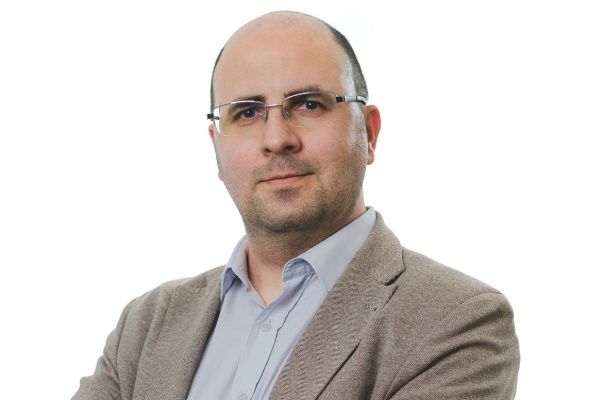
I have one very specific quality – I cannot tolerate the existence of a problem that I know I can overcome, no matter how difficult it is!
New position: Manager
Company: Merkana
Introduce yourself in a few sentences and highlight your career development so far?
My name is Hristo Radichev and I am one of those people who really love to work on large and complex projects. I spent the last 15 years as the manager of Mediapost Hit Mail Bulgaria, where I started with two other people (and one more part-time), and finished with two companies, around 90 team members, over 6 million BGN in turnover, and at least 200 stories that start with “there was no chance, but we did it.”
At the same time, I had the honor of being a board member of Mediaposte Hit Mail in Romania, part of La Poste Group. There I participated in the strategic discussions of a group with a total of 9 companies. In addition, over time I created a platform for cross-border trade, I was the first Bulgarian at Facebook Agency Bootcamp, and for fun, I sold expensive boxes of beer and beer accessories in several European countries. As Confucius says: “Choose a job you love, and you will never have to work a day in your life.” Well, I chose a few – just in case.
What motivates you to take on this new role and what are your main goals for the position?
After so many years in the corporate world, where there is a process for everything – even for creatingsomething new – I felt it was time to create my own project. Something that not only follows trends but tries to create them. Thus, Merkana was born – a cross between (in my opinion) a good idea, which tries to fight the endless bureaucracy, on one hand, and the romantic belief that traders and producers from the Balkans deserve the same chance as the big players from developed countries, on the other.
My main goal is simple: to remove the barriers between the markets of the European Union and the so-called Western Balkans – customs, language, logistics, and mental – so that my clients can focus on their product, not on transport, references, forms, and the question “and now how do you pay in Macedonian denars?” If I ultimately succeed in making it so that a good producer from Novi Sad can sell in Bucharest more easily than in the neighboring neighborhood, I will be at peace that I have not wasted my time.
What professional or personal qualities do you think will help you succeed in your new position?
I have one very specific quality – I cannot tolerate the existence of a problem that I know I can overcome, no matter how difficult it is. I can be extremely diplomatic, but I am not a passionate fan of pretenses. Often colleagues look for me when a path needs to be charted from chaos to order, from “I don’t know where to start” to “I know what we are doing tomorrow.” This, combined with a good sense of humor and the ability to speak with equal ease with both programmers and financiers, but also with ordinary operators, makes me effective in environments where communication is often more difficult than the work itself.
I believe in the words of Peter Drucker: “Culture eats strategy for breakfast.” I can write strategies, but my true talent lies in making people believe in them, feel them as their own, and follow them without having to convince them for too long.
What challenges do you expect to face and how do you approach change management?
The biggest challenge will be not so much creating something new, but rather breaking down old ways of thinking. Many companies – both in the EU and in the Balkans still believe that international trade is only for the “big players.” Change requires persistence, empathy, and (sometimes) the ability to explain the same thing three times with different words – and a smile.
I approach change like a mountain – you don’t conquer it in one breath, but step by step, with good preparation and the right partners. For me, it’s a mix of psychology, project management, and a pinch of stoicism – because at the end of the day, you can’t control everything, but you can control your reaction.
What is your approach to teamwork and building a strong internal culture?
A good team is not just a collection of competencies – it is an orchestra. And not every day sounds like a symphony; sometimes it’s closer to a jam session, but what matters is that there is rhythm and respect. I work with people who know that it is not shameful to say “I don’t know” or “I made a mistake” – as long as you then offer a solution.
I build a culture where results are important, but never at the expense of people’s dignity. I think every good leader should be able to read between the lines of an Excel spreadsheet, but also between the lines in the tone of an email. And if on Monday morning no one trembles at the thought of meeting with you, then you are on the right path.
What would you like people to say about you in the company after a few months?
I hope they say that I am a person who has given them the freedom to think, the courage to try, and support when something goes wrong. That I have been a person who said “well done” more often than “why like this.” And that I have taught them that business can be both serious and light when done with meaning.
And if they add with a smile: “He is a bit of an oddball, but with him, you always know where you are going, and the journey is quite fun,” I will take that as my best annual bonus.