In Switzerland, work must be done in the best possible way
· Kristina Vladimirova
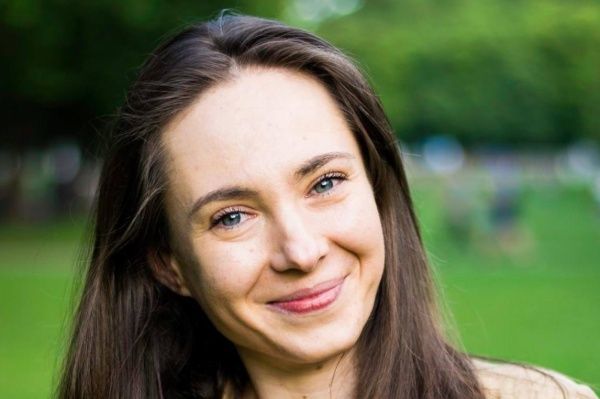
In Bulgaria, journalism goes hand in hand with compromise, and I wasn't convinced that this was my path!
Introduce yourself in a few
sentences. What does your work as daily commitments consist of?
My name is Kristina
Vladimirova, and I am a reporter by profession. I worked for many years in Bulgaria, until
the moment my husband and I decided to try to continue our lives
abroad.
Currently, we live in Geneva,
Switzerland. I work at the headquarters of EBU (European Broadcasting Union), in the news
department. My job involves coordinating the news flow that
comes from all over the world – specifically – preparing it for delivery to
members of EBU. We process videos, and we implement what are called live reports
from various points around the world. Quite an interesting and dynamic job, especially in
recent years of conflicts and tension worldwide.
I work freelance,
choosing my own pace and commitments, which makes me very
happy because I can achieve the long-desired balance between personal life and
career.
In which country and city
are you currently living, and how did you end up there?
After years of working in
Bulgaria, it wasn't exactly coincidence that took me abroad. My husband received a job
offer, and at that moment I had to rethink my path. It wasn't easy,
because I am a person who loves what I do endlessly, and it wasn't just
work, but a passion and a way of life. But in Bulgaria, journalism goes hand in
hand with compromise, and I wasn't convinced that this was my path.
The decision wasn't difficult,
the risk – completely justified, the challenge personally in front of me – great.
After Berlin and Zurich, we
currently live in Geneva. We changed several cities and two countries within 7 years.
What were the biggest
challenges you faced at the beginning of your stay?
The language and administrative
issues regarding the most basic everyday matters – like opening a
bank account and finding housing. It was a big headache, but that is also
part of the adventure. Later, you tell about it with laughter, but at first, it is far
from funny.
How did you overcome the language
barrier (if there was one)?
The adventure for us
started in Berlin. I didn't know a word of German at the beginning, and that depressed me
horribly because I love to talk to people. With daily lessons and a lot of effort,
within a little over a year, I spoke German. And so I lived in comfort
for several years. Then we moved to Geneva. I don't speak French. Now
I am going through the same, but apparently, that is my fate. At least, funny moments are
not lacking, so we laugh heartily at the situations we find ourselves in. Recently, I went to
a store to look for batteries, and since I try to speak French and want
to manage on my own, I asked for batteries. The seller, however, quite indignantly explained to me
that he had no such things in his store. But I see that there are, and I
pointed them out, and he replied, “Madam, you are asking for bacteria, (the pronunciation is
close, and I didn't hit the right one), we don't have bacteria, batteries – we have!” We continued
our conversation in English to prevent further misunderstandings.
Now the big plus is that
my daughter speaks perfect French and I have a 5-year-old translator.
What resources or networks
(local communities, colleagues, organizations) helped you adapt?
Only and solely the
wonderful people I met by chance along the way. I now believe that there is actually
nothing random in life. We left friends in Berlin, Zurich, and found new ones in Geneva. They helped me a lot and continue to help.
What are the main differences
between the work culture in your current country and that in Bulgaria?
The main difference is
attention to detail, generally speaking. Work must be done in the best
possible way. And exceptions are not allowed. Yes, people make mistakes and
that is normal and taken into account – making a mistake is not fatal, it is not
pursued or punished, but approached with understanding. Perhaps this is also a motivation for people
to give their best. And
most importantly – here I have never heard the phrase “There are no irreplaceable people.”
What values and practices
in the workplace impressed you the most?
“Ask!” was the first
thing I heard. For us, it seems that asking is a symbol of ignorance and helplessness,
a sign that we are not capable of handling what we are hired for. Here it is
the opposite. Especially when it comes to someone who is just entering the
work, regardless of their previous experience. Questions here are welcomed as
a sign that you want to quickly delve into the subject, and not as a reason to wonder
why they hired you. Which is quite reassuring and motivating when you are
new.
And not only that – care for
mental health is another key point. Something that in our country still does not stand
among the priorities of most employers. In Bulgaria, it seems that if you choose
to be a journalist, doctor, police officer, it is your job how you will cope with
the stress, which is a big part of your daily life. Your responsibility, your job.
Currently, a large part of
my work is related to what is happening around the world, and it is literally “burning.” As for the
information flow, we are on the second line – after the people who are
on the ground. Every day we publish videos from Gaza, Ukraine, all the so-called
“hot spots.”
These are shots that
are difficult to reach for broadcasting. Because they are too brutal. But it is our duty to provide them.
That is our job. The job we have chosen.
And here comes the role of
our managers. Additional time for rest, various mental health training, specialized help. The moment you feel that you are not feeling well,
a solution is sought for you. Mental health is a priority.
Have there been situations in
which cultural differences have troubled you?
Never. Everyone approaches with
respect and understanding towards others.
Our differences unite us, we love to tell about our customs,
traditions. We have a lot of fun! It is great to work in an environment where every
day you meet people from different parts of the world – it happens that I am greeted in
five different languages with good morning – it’s nice!
How does finding a job
differ in your current country compared to your homeland?
Unlike my husband,
upon arriving I found myself in the situation of NO ONE. A person who is completely foreign and
unknown in the labor market and to find a place under the sun, one must prove
themselves with all their might.
First, let’s clarify one thing.
How does one find a job abroad when your profile is so specific? When
the native language and perfect command of it is the basis of your work. When
knowledge of the local environment and personal contacts are your most valuable resource.
There is a saying – “At
home, even the walls help” – and in the case of journalists, this is exactly the case. Throughout
my career path, we work with our name and face, so for us,
finding a job does not happen on websites or at job fairs, but between
conversations in the newsrooms.
When I started looking for
a job, we were already living in Switzerland. And there, the labor market is quite specific.
The media are fewer in number, international organizations and companies have
their headquarters here, but are mainly situated in Geneva, which reduces the chance. And to all this,
competition must be added, which is indeed from all over the world.
For someone with a profile like
mine, who still wants to continue doing what they love,
the challenge was huge. I think four years passed and a significant
number of submitted CV-s, to reach the moment of an interview for a position that
actually matches my profile. By a happy coincidence, we were already
living in Geneva, where at the headquarters of EBU (European Broadcasting Union), they had an open
position in the news department. (And to clarify – on a civil contract, initially
without a fixed commitment for the number of hours of employment).
Did you have to go through
any additional qualification courses?
Everyone goes through
mandatory training, then there is an adaptation period. The trainings are not
one-time – we have them constantly, because globally trends are
developing, and we need to stay current. So it’s hard for me to list how many
trainings I have gone through, they are simply part of our work.
Have you encountered
prejudices or obstacles because of your foreign origin?
No, I have never faced
prejudices. With curiosity, yes. But everything is very positive. Unfortunately,
sometimes I am not very positive regarding what is happening in
our country. The truth is that Bulgaria is still a rather unknown country to foreigners.
What would you advise
people who want to take a similar step?
To do it, to try.
Even if they don't like it, it is experience. Invaluable experience. Life is infinitely colorful and
interesting if we dare to step out of our comfort zone. A very true
cliché.
If you could go back,
would you choose the same path?
Yes, this is the best
decision I have ever made. I regret not having done it earlier.
What do you miss most
from your homeland in professional and personal terms?
The only thing I
miss is family. There is no way of communication in the modern world that can
compensate for a real hug, conversations until the early hours, or spontaneous
meetings at the last moment with friends.
Have you considered returning
and under what conditions would you do it?
No, firmly. No matter how
much I miss my family, I don't see how I could take a step back. In
life, you never know anything, of course, but at this stage, I see my path outside
Bulgaria.
What do you think about money?
What is their influence on your life? What is your advice to people who
often ask themselves questions related to money and how sufficient they are?
Money for me is a symbol of
peace. I don't need millions in the bank account, just enough so that I don't
have to think about what I will do if an unexpected expense arises or how to save for
vacation. It is important for me to feel adequately paid and secure about the future.
Money is not a goal, but a means to be calm and realize our dreams. In
this aspect, they are important to me.