In the USA, self-promotion is important and being open about your achievements
· Tatyana Bezinska
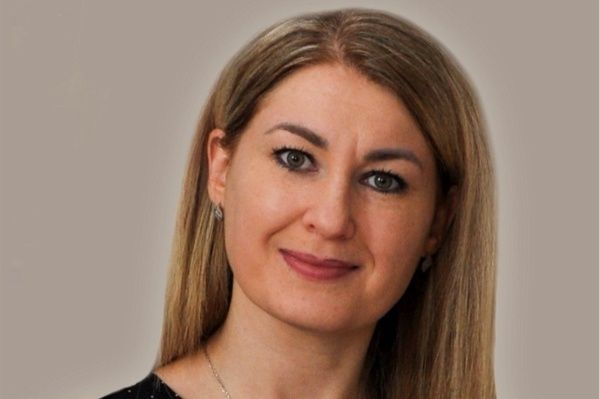
I can't give advice, everyone has to decide for themselves what is important and follow their own path!
Introduce yourself in a few sentences. What does your work consist of as daily commitments?
My name is Tatyana and I work remotely as a Project Manager in a software company. The company develops a CRM product for the alternative investment industry. My job consists of implementing clients and training them on the main functions, so that they can use the software in their daily work obligations. The work is dynamic and you constantly learn something new which makes everyday life interesting.
In which country and city do you currently live and how did you end up there?
At the moment, I live in the suburbs of Chicago, in the United States.
After I won the green card, I decided to start my life in the USA from a smaller city, so I headed to Cleveland, Ohio, where I have close friends. However, after a year and a half, Ohio didn't captivate me, and I always wanted to live in a big city, so I gathered courage and moved to the suburbs of Chicago, again with acquaintances. After that, I found a job and moved into my own apartment. After a year, I found another job in the city and moved to live, study, and work there.
What were the biggest challenges you faced at the beginning of your stay?
Naturally, finding a job is priority number one not only for immigrants but for everyone. For me, it is important for a person to be able to be independent and financially support themselves. It took me about 3 months to find an “office” job. Of course, I didn't have to worry about the biggest expense - rent, during that time, but I also didn't want to be a burden to my hosts. My friends helped me with most of the things I needed to settle down. From how to open a bank account to start a credit history, to buying a car and getting a driver's license (as people know, without a car, there is no way to get around in 95% of the States), to becoming a guarantor for rent and many more examples.
How did you overcome the language barrier (if there was one)?
There wasn't a language barrier particularly since I graduated from the American University in Bulgaria, and I also went on student brigades for two years. Of course, being entirely in an English-speaking environment, people have their local dialect, but I had someone to rely on to “introduce” me to the local expressions.
What resources or networks (local communities, colleagues, organizations) helped you adapt?
As I already said, I mainly relied on the family that “sheltered” me and their daughter with whom we are the same age and who had faced this before me, coming here as a teenager. In Chicago, I also initially relied on acquaintances, but I was already more settled in the States and moved to live in the city where I came across a nice group of young colleagues with whom we became close and spent time outside of work and went on trips together.
What are the main differences between the work culture in your current country and that in Bulgaria?
In Bulgaria, I worked a little, maybe a year and a half after I graduated from university. The companies I worked for were not Bulgarian, and I wouldn't define the culture entirely as “Bulgarian”. Yes, maybe in Bulgaria people are more direct, while here not so much. But as some people say, the “corporate world” has its own culture and language, and to be successful in it, you need to know how to speak “corporate/business English”.
What values and practices in the workplace impressed you the most?
At first, I had the impression that as long as you work hard, everything will develop well. Yes, skills are important and valued, but I started to understand that the most deserving is not always the one who gets promoted. I also realized how important “self-promotion” is. Initially, it was strange to me how people openly talk about their achievements. As far as I understand from friends working in other countries, it is like that everywhere now.
Have there been situations where cultural differences have hindered you?
I can't remember specific cases, but I'm sure there have been such.
How does finding a job differ in your current country compared to your homeland?
I don't have much basis for comparison, but I think the competition here is greater. It is increasingly difficult for your resume to be seen by a real person. We all know of cases where you submit 100-200 resumes and get no feedback at all. Business connections are becoming more important. In Bulgaria, we call it “connections,” and the word has a negative connotation. Here it is called networking, and many people manage to find jobs more easily this way. I think this is becoming a standard everywhere, and for me, there is logic in this. Many companies have “referral” programs because they hope that their successful employees will attract acquaintances who will also be successful employees.
Did you have to go through any additional qualification courses?
No, it wasn't a requirement, but for me, it is important for a person to always acquire new skills, especially if they are in the IT/software field. I wanted to complete a master's degree, so I applied and graduated here with a master's in business administration. Over the years, I have also taken various online classes and certifications.
Have you encountered prejudices or obstacles because of your foreign origin?
Of course, and I think that if someone claims they haven't, they have clearly decided not to pay much attention. Over the years, I have also learned not to pay attention.
What would you advise people who want to take a similar step?
Try it, live a little, and if you decide it’s not for you, you can always return to Bulgaria. Work and money are not everything. I know people who have built a life here - family, friends, successful careers, and still decide to go back after years. Foreign countries and emigration are not for everyone. Recently, there was such a question in Bulgarian Facebook groups from a lady who won a green card, and the comments ranged from one extreme to the other. No one knows how their life will develop, but in my opinion, one should try.
If you could go back, would you choose the same path?
The eternal immigrant question, haha. I don't know how my life would have developed if I had stayed in Bulgaria. No one can turn back time and choose a different path. The idea is that when you have the opportunity, you should try and experience something different.
What do you miss most from your homeland in a professional and personal sense?
In a personal sense, of course, my parents, my sister, and relatives. In a professional sense, maybe the contacts, but I have managed to create such here as well, and at one point, this circle starts to shrink, regardless of where you are.
Have you considered returning and under what conditions would you do it?
For now, I prefer to be here, but I do not rule out the possibility of returning, maybe to Europe where I think there is a better balance of life.
What do you think about money? What is their influence on your life? What is your advice to people who often ask themselves questions related to money and how sufficient they are?
Money definitely makes life easier, but they are not my ultimate goal. Life is expensive everywhere, and I don't think that having much more will still be sufficient. I can't give advice, everyone has to decide for themselves what is important and follow their own path.