Intellectual curiosity is the engine of a meaningful career
· Georgi Momekov
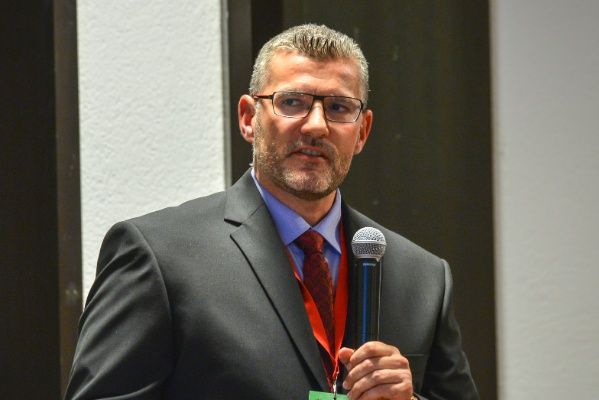
A university career requires not just interest, but a sustained attraction to teaching, science, and working with people, often outside the bounds of 'working hours'!
Introduce yourself in a few words..
My name is Georgi Momekov, professor of pharmacology and pharmacotherapy, at the Faculty of Pharmacy of the Medical University – Sofia, where I am the head of the Department of Pharmacology, Pharmacotherapy and Toxicology, and since May this year, also the dean of this oldest and most authoritative academic unit in the field of pharmacy in our country. I am the chairman of the Bulgarian Scientific Society of Pharmacy, a member of many scientific and professional organizations and expert councils, and from 2024 a corresponding member of the Bulgarian Academy of Sciences.
Outside the academic environment, I am married, with two wonderful children, a proud resident of the Druzhba residential complex in Sofia, a passionate admirer of true metal music (Megadeth, Coroner, Metallica /1983-1988/, Death, Dream Theater, King Diamond, Destruction, Slayer…), an amateur cook and almost a professional guitarist. I have one aristocratic English bulldog and one nervous Pomeranian.
How would you describe your career in a few words?
From an outside perspective, it has been a smooth journey - academic growth in the full sense of the word – from a regular assistant to a professor and head of a department, with constant engagement in teaching, scientific research, expertise, and the public function of a university teacher in the field of healthcare. There are facts that remain in the shadows, which may be important to mention – at every level I have conquered, I significantly exceeded the corresponding criteria, and during an 11-year period, I had to work in an open pharmacy (including four years of night shifts) due to the offensively low salaries in the academic sphere at that time. I consider this period as a significant accumulation of field experience, building teamwork skills and communication with people, something I try to convey to the young people around me – in our first jobs, we receive rewards not only in the form of money but also in the form of competencies, real operational experience, and what is called in boxing ring intelligence. However, I cannot help but share that behind my successful career stand many decent bosses who over the years helped my growth and supported me in every way.
My professional development started with the hospital pharmacy of the National Institute for Emergency Medicine “N. I. Pirogov” (today according to the peculiar native abbreviation MBALSM) where I had the chance to see and learn a lot and to communicate with endlessly erudite clinicians and pharmacists. In 1999, I won a contested competition for assistant, experienced the secret voting of the Faculty Council, and entered the world of academic pharmacology. I defended a dissertation in the field of oncopharmacology and in 2011 I habilitated, becoming a professor in 2014, and in 2019 I defended a dissertation for the scientific degree “Doctor of Sciences”. In 2024, I had the honor to be elected as a corresponding member of the Bulgarian Academy of Sciences, and the undeniable peaks in my hierarchical development are the positions of head of department (2021), deputy dean (2024), and dean of the Faculty of Pharmacy at MU-Sofia (from 2025).
What was the most important choice that shaped your path?
In the distant past – to choose the National Natural-Mathematical High School over the English High School, which somewhat angered my parents at the time. NPMG was, and judging by the students coming from there, continues to be a unique incubator of personalities, with enviable expertise for that age in the respective specialty, and in my time, also home to a number of talented musicians and rock bands. I was admitted to a biology class, but the chemistry education was no less intensive and managed to enchant me forever – my love for molecules and their properties continues to this day.
Another cornerstone was my entry into my alma mater, where I met incredible people and was introduced to the wonderful world of medicines, in which I admit I live to this day, much better than the inhabitants of the false worlds of Meta… The teachers were authoritative and demanding, but at the same time, quite Balkan (in the best connotation), many of them managed to create a wonderful friendly or even quasi-family environment and inspire and stimulate us. I am still friends with many of my professors.
Undoubtedly, the most important stage was to apply for an academic position a little less than a year after my graduation, during an open competition procedure with 6 competitors, including one highly favored. This decision, despite the real competition and the lack of “guaranteed success”, marked the beginning of my teaching and scientific career, as it confronted me with the necessity for continuous development – dissertations, habilitation, participation in projects, building academic authority, and most importantly – participation in a highly effective “forge” for talents, many of whom I believe surpass me and make me proud.
What would you like to have known at the beginning of your career, but no one told you?
That the best is yet to come and that an academic career is a marathon, not a sprint. And that success is not measured only by the number of articles or titles, but by the ability to create a sustainable scientific and teaching culture around yourself – a school, if you will. This requires not only knowledge and dedication but also good orientation in university structures, managerial capacity, and, not least – patience.
How can a person understand which profession is suitable for them?
This is a million-dollar question, and I think that much of the world's misfortune and personal dramas are due to poor career choices.
Traditional folkloric approaches are low effective, although I would speculate that for me, the first step had some predictive character – during the ceremony, regardless of the fierce competition of attractive objects for a small child, I grabbed the cookbook “Wir Kochen Gut”, which…… is full of recipes.
Joking aside, after entering an educational institution, the training should show whether with the respective profession you will build hedonistic experiences or will mutually suffer, and regarding profiling in a multifaceted profession, a rational approach would be consistent exposure to real practice in the chosen field. My personal example includes experience in hospital and open pharmacy, as well as defending a master's thesis as a fifth-year student, which helped me realize that academic work and research work suit me best. A university career requires not just interest, but a sustainable attraction to teaching, science, and working with people, often outside of “working hours”.
Which skills do you think will be key in the next 10 years?
I love to quote a thought attributed to the American writer and futurist Alvin Toffler: “The illiterate of the 21st century will not be those who cannot read and write, but those who cannot learn, unlearn, and relearn,” which fits very well into today's rapidly changing world of science. The skills I find key in my field of professional realization are:
· Adaptability and analytical thinking – in a time of rapid evolution of technologies (AI, pharmacogenomics, exponentially increasing importance of biological therapies and other avant-garde therapeutic modalities, at the expense of low molecular “classical” drugs), the need for continuous learning will be mandatory.
· Scientific and digital literacy – the ability to critically interpret medical information, including data from randomized studies and real-world data from practice.
· Interdisciplinary communication – especially in the interaction between pharmacists, doctors, regulators, and patients.
· Soft skills – empathy, teamwork, and ethical sensitivity will be increasingly valued in medical and academic professions.
How to build a network of useful contacts without appearing interested?
By demonstrating a desire and capacity for partnership, rather than predatory or parasitic relationships. In science, by actively participating in scientific forums, voluntary expert activities, reviewing publications, and national programs, building expert and academic networks. By creating content with added value – articles, lectures, analyses – that position us as reliable and useful collaborators. The most valuable contacts are those created based on joint products, although the ability of banquets to catalyze the creation of successful future collaborations and their maintenance over time should not be overlooked. There is no better team building in the Balkans.
What is the biggest mistake you have made in your career, and what did you learn from it?
In the beginning, I often underestimated the importance of prioritization, and now after more than 25 years of academic career, I continue to overburden myself with teaching, reviews, participation in committees, writing articles and textbooks, and organizing events – thinking that everything is important. This leads to exhaustion and sooner or later to burnout and reduced effectiveness. I try to remind myself that refusal is also an academic skill.
Another fundamentally wrong concept is the expectation of reciprocity in thoughts and actions from others, seeking fair evaluation and appreciation. We must adjust to the fact that we should create and build, guided by our belief in correctness and value system, but not have high expectations from everyone around us.
How to recognize a toxic work environment and when is it time to leave?
When there is a lack of recognition, dialogue, and respect. When distrust prevails, interpersonal tension is the norm, and constructive criticism is taboo. In the academic world, this often manifests through authoritarian management models, absence of scientific ethics, or abuse of hierarchy. Then it is better to seek an environment where you can develop professionally and personally.
However, overly demanding and sanguine leaders are sometimes great mentors and teachers, and we should not expect all successful people in top hierarchical positions to behave like Zen Buddhists or like your loving grandmother in a work environment. Sometimes, in a more temperamental environment, like an “Italian family,” the most successful teams are built.
What would you do differently if you could start over?
Perhaps I would include systematic training in managing academic structures earlier, as the administrative part of academic life is just as responsible as the experimental one, and regarding stable growth and the rise of a unit, it is sometimes even more important. I would most likely have engaged earlier in international projects and networks to build an even broader perspective. Also, if I could turn back time, in some situations I would have behaved more reservedly and diplomatically, because some instant clashes eliminate the possibilities for rational communication with certain individuals for life and push relationships into the dark zone of emotionally-based silly wars.
How to maintain motivation in times of stagnation?
By not viewing stagnation as failure. In science, similar to corporate careers, there are also motivational ups and downs - there are periods without publications, without results, without project concepts and collaborations, but they are part of the process. Motivation is restored through small victories – a successful seminar, an entertaining lecture, a published opinion, even a meaningful conversation with a colleague or student, or the infallible algorithms of quality time with loved ones and dopaminergic experiences with friends (depending on interests – over a beer, at the gym, hunting, or at a Megadeth concert).
How to achieve a balance between professional and personal life?
I definitely do not consider myself successful in this and I can compile advice or behavioral algorithms. The balance is dynamic – priorities change through different stages. There must be a conscious effort to limit overloading and to spend quality time with loved ones, which is not very easy. Academic life, like any career, can be all-consuming, especially in leadership positions, but the responsibility to oneself and to the family is no less virtuous. Again, I share that I am in debt to my family and I would not like to speak as a guru on professional-personal balance.
When is it time to change our career, and not just the job?
When not only the satisfaction is lost, but also the meaning. If you do not feel a contribution for a long time, do not learn anything new, and the work environment has become a source of chronic stress, perhaps it is time to rethink not only the place but also the direction.
If you had to give only one piece of advice to people who are seeking success, what would it be?
Success is not a one-time act, but a sustainable process. Therefore, be ethical, consistent, patient, and respectful. And maintain intellectual curiosity – it is the engine of a meaningful career.
What is your definition of a “successful career”?
A career path in which a person maintains their professional identity and personal integrity, has a specific and demonstrable contribution in their field, has built a network of colleagues, like-minded individuals, and students, striving to provide them with all the opportunities to surpass and build upon it, and is not ashamed of what they will leave behind. It is important to know when, in the phraseology of boxers, to hang up the gloves on the wall and leave the ring with dignity.