Our career development is a time-consuming process of self-discovery and patience
· Blagorodna Miladinova
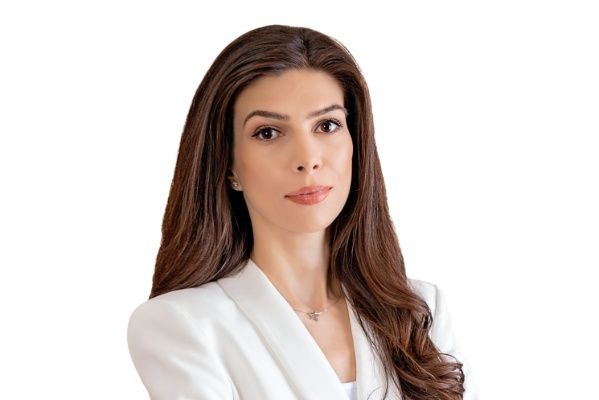
A person must be honest with themselves and not be afraid of change!
Introduce yourself in a few words..
Hello! My name is Blagorodna Miladinova and I am a Strategic Recruitment & Growth Partner at HRLabs, where I combine my experience in personnel selection with participation in the strategic development of the company in the market.
As a natural continuation of my work with people, I am also engaged in career counseling and mentoring - areas that allow me to be there for people at key moments in their professional journey. I believe in the potential of every person and that with the right approach and support, truly significant results can be achieved - both for the individual professional and for the business as a whole.
In my work, I rely on respect, responsibility, and genuine interest in people, because I believe that it is the human approach that makes every professional relationship sustainable and successful.
How would you describe your career in a few words?
A path of trial and error, personal development and increasing clarity and meaning.
What was the most important choice that shaped your path??
My personal path is far from standard, and this naturally reflects on my career. That is why the most important choice I made was to stop following conventional expectations and “correct steps” and to start building my career according to my own values, the right dynamics, environment, and sense of meaning.
When I made the decision to step off the beaten path and take a direction that was not obvious or standard, I felt that I was starting to truly develop - not only professionally but also as a person. It was this courage to choose myself that shaped my overall direction and attitude towards work.
What would you like to know at the beginning of your career that no one told you?
I would have liked someone to tell me at the beginning how important it is to develop the skill to correctly interpret our emotions, to accept them primarily as feedback, and to regulate them. This skill is crucial both in a professional and personal context - it helps you make more mature and thoughtful decisions and not be misled by false arguments. Over time, I realized that calmness is
the best advisor.
But at the same time I believe that nothing can replace going through one’s own path and mistakes. Advice and guidance are invaluable, but true growth happens when you go through difficulties, make your own choices - and take responsibility for them. The balance between support and personal experience is what builds confidence and maturity.
How can one understand which profession is suitable for them?
Let’s start with the fact that few discover their “calling” at an early age and never look back. In most cases, this process takes time, self-discovery, and patience.
The first and most important step is to get to know ourselves - our strengths, values, interests, motivators, and preferred working environment. At the same time, however, it is important to note that interests do not always have to automatically turn into a profession, although we often hear such advice. It is much healthier to consciously explore them and realize which of them have the potential to be a sustainable source of satisfaction and development in a professional context - and which are better left in our personal space.
Practical experience also plays a key role - often true clarity comes only when we immerse ourselves in different environments, roles, or projects. That is why internships, volunteer activities, and short-term projects are invaluable tools for orientation.
In this process, various career tests and self-assessment tools, as well as working with a career consultant, can be very helpful. It helps a person organize their thoughts, see new opportunities, and make a more informed decision about their direction.
The career orientation process should be consistent and systematic - with small, clear steps such as: building a relevant CV, optimizing LinkedIn profile, researching the market, additional qualification if needed, building a personal brand, and job search strategy.
And most importantly - a person must be honest with themselves and not be afraid of changes if they feel they have taken the wrong direction. Life is dynamic and often changes our priorities, needs, and perspectives. And with them, our professional trajectory changes. That is why I believe that flexibility, the ability to think outside the box, and the willingness to adapt are not just advantages, but conditions for long-term satisfaction and relevance in the labor market.
Which skills, according toVyou will be key in the next 10 years?
In my opinion, in the next 10 years, the most crucial skills will be those that combine human qualities with adaptability to technologies.
First and foremost, I place emotional intelligence and communication skills, because no matter how automated the environment becomes, the ability to work with people, understand their needs, and build relationships will remain paramount.
Secondly - adaptability and the ability to learn throughout life. The world is changing rapidly, professions are too, and those who can retrain, adjust their skills, learn new things, and step out of their comfort zone will be more competitive.
And thirdly - critical thinking and the ability to make informed decisions in the face of overwhelming information and often contradictory data.
How to build a network of useful contacts without appearing interested?
I believe that building a network of contacts starts with an open mind, lively curiosity, and good intentions towards people, without expectations for specific returns. People can clearly sense when the approach is authentic and sincere and when it lacks such.
For me, the goal has always been to build long-term relationships, not fleeting contacts with short-term benefits. Time has proven that this approach leads to sustainable and truly valuable professional connections. When you approach with respect and interest towards the person opposite, value comes naturally over time, sometimes in unexpected ways and in unexpected moments.
What is the biggest mistake you have made in your career, and what did you learn from it?
The biggest mistake I have made is to go
against myself and against what I already knew was important to me as a working
environment and values. I believed that over time I would get used to it, that I
could adapt, and that the compromise was worth it… but I quickly realized that when
something is at odds with your inner needs and attitudes, it starts to weigh - every day.
This taught me to be more honest with myself,
more decisive in my actions, and more flexible in finding alternative solutions
that meet my needs without compromising myself.
How
to recognize a toxic work environment and when is it time to leave?
A toxic work environment is most often recognized by
a combination of several signs such as lack of trust and open communication, constant
criticism or accusations, favoritism towards certain people, lack of recognition and
support, emotional exhaustion, and the feeling that whatever you do is not
enough.
If you start to feel anxious as early as Sunday
evening, if your work negatively affects your self-esteem and personal life, and if
you see that an internal change is unlikely, this is a clear
sign that it is time to leave.
What
would you do differently if you could start over?
If I could start over, I would dedicate more and
more purposeful time to discovering my “Why” - that inner
engine that gives meaning and direction to everything we do. No matter how banal
it may sound, I believe that when a person finds their true motivation and reason,
the processes and results begin to develop at a much faster pace and
quality, and the feeling of satisfaction skyrockets.
If then I had a mentor or career consultant
beside me who could help me organize my thoughts, explore different directions, and
ask myself the right questions, I believe I would reach that “Why” much faster
and more confidently. Sometimes just one conversation with the right person can open a door
that we didn’t even suspect existed.
How to maintain our motivation in times of stagnation?
In my opinion, it is completely normal for every person to go
through periods of stagnation and decline in motivation. The most important thing in such moments is
first to realize that this is a natural stage, not a failure. I believe,
that motivation cannot be relied upon as a primary and constant source of
energy and stimulus. It is variable and often comes and goes. For me, a much
more sustainable approach is to develop discipline, established habits, and clarity
regarding our goals.
When I feel stagnation, I try to understand what the
reason is - whether it is about fatigue or lack of
direction. Depending on that, I give myself time to rest or set small,
achievable tasks that can restore the feeling of progress. It also helps me
to return to the "big picture" - to remind myself
why I do what I do. Sometimes an inspiring meeting or conversation with
a mentor can also give an additional boost.
And most importantly - I allow myself to be patient with myself and to
continue with small steps, even when motivation is lacking.
How to achieve a balance between professional and personal life?
In my opinion, true balance between professional and
personal life is difficult to achieve if we strive to give our maximum in both
areas. A more realistic approach is to learn to prioritize one or
the other at different stages of our lives, taking into account the
current needs and circumstances.
Balance does not mean an even distribution of
time and energy, but rather a conscious choice and acceptance that compromises are inevitable. It is crucial to be flexible, to allow ourselves to adapt our
priorities, and to take care of ourselves so that we can be effective and
satisfied both professionally and personally.
And
most importantly - to
be honest with ourselves, with our desires and goals, without imposing foreign
expectations or commonly accepted standards. Only then can we find our own
path to harmony and satisfaction.
When is it time to change our career, not just our job?
It is time to change our career when we feel a deep
and lasting lack of meaning, satisfaction, and desire for development in the
profession itself, regardless of the company or position. When we do not feel an internal
motivation to improve, to learn, and to become better at what we do -
this is a clear sign that the problem lies in the chosen direction, not in the specific
employer.
At the same time, however, it is important for a person to be honest with
themselves about what truly motivates them. For some people, the main
priority is the reward - and that is completely normal. If the salary is the main
driver and a person has consciously accepted it as their leading motivator, there is nothing wrong
with staying in a field that is not a “passion,” but provides the financial security they
are looking for.
The problem arises when there is a discrepancy between
our internal priorities and what we tell ourselves we “should” want - whether due to
external expectations or social stereotypes.
Therefore, my advice is: first to honestly answer the
question “What is most important to me at this stage of my life?”, and only after
that to decide whether a change of employer is needed… or a change of the entire professional
direction.
Before
making a
big step, however, it is
important to explore the
new field, to gain knowledge and skills - through
courses, volunteering, or mentoring and to have a clear plan for transition. Changing careers is not
an impulsive decision, but a strategic process that requires preparation and
awareness.
If
you had to give just one piece of advice to people seeking success, what would it be?
Do
not view success as an end in itself. It is more important to discover the thing that makes you feel truly fulfilled. Success is not a universal formula, it looks
different for everyone. For one, it may mean a high position and responsibilities, for
another -
creativity and freedom, for a third - stability and income. The important thing is that the choice is
conscious, aligns with personal values and goals.
Only after that should they fully commit to developing their
skills and knowledge in that area or focus. When you do something with desire and persistence, success inevitably follows
as a natural result.
What
is Your definition
of a “successful career”?
For me, a successful career is not measured only by
achievements or titles, but by being able to express yourself through your work,
to unfold your full potential in a direction that you have chosen and that makes sense for
you. It is a career that brings you inner satisfaction, a sense of contribution, and
personal significance. It is an organic part of your life.
I believe that such a path is possible only when
you remain authentic. When you do not try to fit into someone else's frames, but create your own
-
in sync with your needs, character, and even vulnerabilities. Because it is precisely
authenticity that is at the core of long-term motivation, stability, and
true success.
#Blagorodna_Miladinova #Karierno_razvitie #Laboratoriya_za_talanti