Our greatest strength is the ability to understand people – not technologies and strategies
· Konstantin Bŭchvarov
If you improve yourself by 1% every day, success will have no choice but to catch up with you!
Introduce yourself in
few words..
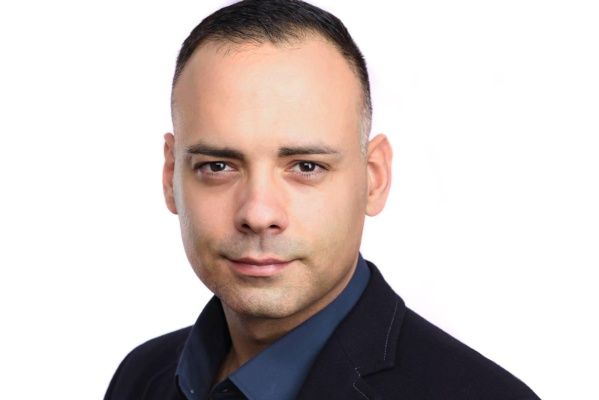
My name is Konstantin
Bachvarov. My professional path over the last 15 years has been related to
building and leading marketing teams and strategies in some of the most dynamic
companies in Bulgaria – including Ozone, Ebag, Abrites, Realto Group, Netinfo, and
others.
I have worked in
various industries – e-commerce, SaaS, automotive electronics, media – and
throughout, my guiding principle has been the same: to create value through
strategies that combine data, human behavior, and inspiration.
My leadership style is
results-oriented, inspiring, empathetic, and flexible. I believe, that
true leadership is not about control,
but about creating an environment where people become the best versions of themselves.
How would you describe
your career in a few words?
I would describe it as
a consistent search for depth and meaning. I have not pursued only titles or
companies – I have sought a context in which I can make a real contribution, lead
people, and build culture. It has been dynamic, full of changes, sometimes with
difficult decisions, but always – driven by the desire to leave a mark.
What was the mostimportant
choice that shaped your path?
The most important choice was
to get involved in building Ebag.bg – an online supermarket,
built in the context of the future, not the present. This was a moment when
the market was still not ready, and our task was to educate, build
trust, and create new behavior in the consumer.
I accepted the role in one
of the companies without a pre-established framework – everything had to be
created from scratch: brand identity,
commercial strategy, communication logic, customer
experience. This taught me
the most important lesson in my career: to work not just in a system, but on
the system. There I learned to lead without a roadmap, to take responsibility in
uncertainty, and to build trust from the inside out – with the team, with the client, with partners.
What would you
like to know at the beginning of your career, but no one told you?
That success is not a
competition with others, but with yourself. No one told me, that there would be moments of stagnation, disappointment, even loneliness – and that it is precisely in those
moments that you build yourself as a professional. My young “self” believed that everything
should happen quickly – now I know, that the most-valuable comes through persistence, maturity, and patience.
And one more thing: no one told me, that the most-important skill will be the ability to
understand people – not technologies, not strategies, but people.
How can a person understand
which profession is suitable for them?
Most often, you do not understand
this through thinking, but through doing. You try, you collide, you fail, you return. The true profession is not
just what you can do well – it is what you want to continue doing
even in difficult moments.
If you feel
“alive” even when it’s hard, if you seek knowledge outside working hours, if you can’t
imagine stopping – that’s a sign. And one more thing: don’t be afraid to
change direction, if you feel,
that you have grown beyond your old framework.
What skills do you think will be key in the next 10 years?
1.Adaptability to change – the world will not
stabilize; it will accelerate.
2.Self-management – the ability to
manage yourself, is more-important
than ever.
3.Emotional maturity and empathy –
especially with the advancement of artificial intelligence, human qualities will become
increasingly valuable.
4.Strategic thinking and systemic
approach – to see not just the detail, but the whole.
5.Storytelling skills – because people buy ideas when they feel them, not when they understand.
How to build a network of useful contacts without appearing interested?
By starting from
the idea that the network is something, that you give,
not something, that you take.
Start with the question: “How can I be helpful to this person?“, not: “What can I get from him?“.
Connect people with each other, recommend good ideas, support projects, share knowledge.
True contacts
are not “made” – they are built through consistent human authenticity. And remember: every relationship is a living system – you do not
create it once, but maintain it with time and attention.
What is the
biggest mistake you have made in your career, and what did you learn from
it?
The mistake was waiting
too long before expressing disagreement when something in the team or project was not
working. I was afraid that I would be “destructive,” when in fact the truth is:
sometimes silence destroys more than voice.
I learned that
constructive courage is the most valuable currency in a team. Since then, I speak
earlier, clearer, and with respect – because leadership begins with taking
responsibility not only for the result but for the culture in which it is achieved.
How to recognize
a toxic work environment and when is it time to leave?
A toxic environment is not
just a place where hard work is done – it is a place where efforts do not lead
to recognition, development is hindered, and fear replaces trust.
If you often feel, that you are
shrinking, not growing, if you lose your voice, not find it, if you come home exhausted, but not
satisfied – these are signals. It’s time to leave when you stop recognizing yourself in the person, who you have become there.
What would you
do differently if you could start over?
I would start earlier to
invest in conscious self-discovery. I would seek mentors early in my
years. And I would trust my intuition more when it says that “something is not
right” – whether it’s about strategy, culture, or direction.
How to maintain
our motivation in moments of stagnation?
When I feel stagnation,
I return to movement – but not necessarily professionally. I take short
morning walks without my phone, I exercise, I incorporate physical activity into breaks
between tasks. This is my “reset”.
Additionally, I seek
inspiration outside the industry – I read biographies, play video games, explore design and automotive
aesthetics. Motivation often comes when you turn off the noise and return to the joy
of small discoveries.
How to achieve balance between professional and personal
life?
I create a personal “framework”:
a morning walk, no screen; physical activity during the day; time for loved ones
evening. I am learning not to be always available, but always engaged at the right
moments.
Balance is not
perfect symmetry – it is a conscious choice of when, how, and to whom to give
the best of yourself. And the truth is, if you do not take care of the personal,
the professional will sooner or later fall apart.
When is it time to
change your career, not just your job?
When even in
the best possible scenario of your profession you feel that you do not want that future.
When you have achieved “everything,” but internally do not feel satisfaction. When you not
only want change, but need
a new identity.
Changing careers
is not a weakness, but maturity. It is the ability to say: “I am no longer the one
I was, and I have the right to choose a direction in which I will be closer to myself.“
If you had to
give only one piece of advice to people who are seeking success, what would it be?
Do not seek success –
seek value. Value,
that you create, for the people you work with, and for yourself. If every day
you improve yourself by 1%, success simply will have no choice but to catch up with you.
What is your
definition of a “successful career”?
A successful career is one
where you can be yourself without compromising on meaning. One where you have
the freedom to choose, the contribution to change, and the happiness to grow – even after
years.
It’s not about the CV,
but about the feeling that you have given something real to the world and have grown as a person. For
me, that is success.