People, technology and trust – three pillars I stand on every day
· Milena Ramcheva
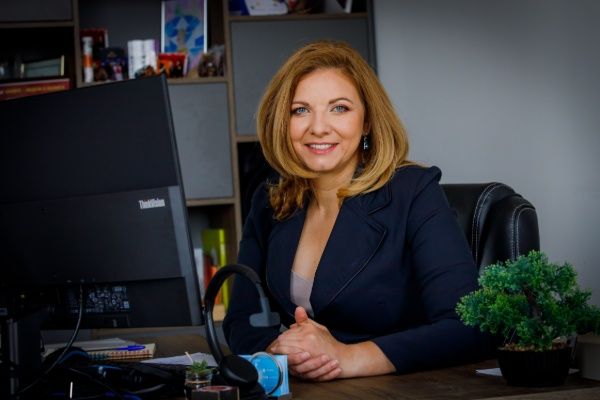
People are better at their work when they do not live in tension!
Introduce yourself in a few sentences..
My name is Milena Ramcheva and I am the executive director of Metrika – a company
with over 20 years of history, part of the French group La Poste. We are engaged
in logistics, fulfillment, and customer service – the things that are not visible, but
drive the business. I have been leading the company since 2016 and I am still interested. Maybe
because in my work I use everything I have learned so far.
What are the philosophy and values of the company you represent?
We work honestly and long-term – without theater. We do not chase “one hit”, but build
stable relationships with clients and partners. It is important for us to be useful,
to be precise, and to solve problems, not to pass them on. We believe that expertise
and trust are not proven by words, but by daily actions. The people in our team
are different, but we are united by the desire for things to happen well and on time.
How long have you been developing your current company? What are the most valuable lessons that the events of this period have taught you?
For 9 years now. And I learned that even if you think strategically, you need to be in
reality – here and now. Sometimes decisions are made not according to plan, but by
conscience. I also learned that people come to you not for motivation, but for
stability, and if you
create it, motivation comes by itself. Last but not least – sometimes things do not go
as you want, but that does not mean you are not on the right path.
If you personally had to write a job advertisement, how would you attract the attention of a future employee?
The truth is that in most cases I write it. Because I want to say things
as they are. We have work – dynamic, real, and without shiny promises. We are looking for
people who have the desire to learn, to develop, and do not wait for someone to “pass
the ball”. I like active people – those who ask, suggest, and are not
afraid of the new. Not everything is “written”, a large part happens on the go.
What does your company do to organize a constructive and fruitful working environment for everyone? Do people in the team need to be friends?
We create a place where people can express what worries them, without
wondering if they will be understood. It is not necessary for everyone to be friends, but it is important to
have respect, normal human relations, and a willingness to help each other if someone
is struggling – at work or outside of it. No one should play a role in the office.
The real working environment is one where you are not afraid to be yourself.
What makes you go to work with pleasure? How do you deal with difficult and tense moments?
I go with pleasure because I see how people develop – they cope with
something new, take on more responsibility, work more boldly. This energizes me. In
difficult moments, I do not isolate myself, but rely on the team. I believe that strong
results come from collective work, not from heroism. I am a team player. If
there is tension, we talk. If something is unclear, we clarify it. It seems simple,
it works for us, but it is not easy to achieve.
What work model does your company adhere to – office or remote? What do you think about the possibility of giving options for flexible working hours?
We have a hybrid model – some positions are on-site, others allow remote
work. But everywhere we strive for flexibility and understanding. If someone has
a personal commitment, we adapt the schedule. I support the balance between personal and
professional life, not because it is trendy, but because people are better at their
work when they do not live in tension.
How do the continuous technological changes on a global scale affect your business?
We do not fight against them, but use them. We implement automation where there is repetition.
This does not mean fewer people, but more meaningful work for people. When
systems handle the routine, teams have more space for thinking,
reaction, and ideas. For us, technologies are a partner, not a substitute. And there will always
be a need for human intuition and judgment.
How important is hierarchy and what does it mean to you? What kind of communication do you advocate in your company?
Hierarchy should provide clarity, not distance. I believe in communication with
people, not with job descriptions. I strive to create a safe
space where people can express what worries them, what does not work, what they suggest. Without overtalking and without fear. This does not mean that
all decisions are made collectively, but opinions are heard and respected.
What is your career advice for all people who are building a strategy for their professional development?
Do not ask yourself only “what am I good at”, but “what do I really want to do”. And
if it seems difficult to you – even better. I have always been driven by the question
“Why not?”. If something comes to your mind that seems a bit crazy, try it.
Sometimes the most meaningful solutions and the strongest turns come from those “uncomfortable” ideas. Do not wait for everything to be sorted out – get in the game.