The balance between work and personal life in Belgium is a deeply ingrained value
· Ivelina Atanasova-Genchev
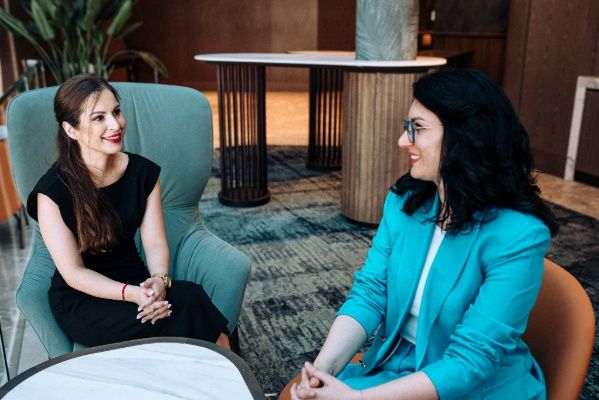
The beauty of digital business is that you can work from anywhere, as long as you have a good internet connection and a creative mind!
Introduce yourself in a few sentences. What does your work as daily commitments involve?
Ivelina
Atanasova-Genchev - senior business consultant in market strategies, digital
transformation, and growth marketing. Author of “BRAVO™️", certification and mentoring
programs for developing leadership skills, product innovations, and business
development. Three-time TEDx speaker.
I connect
my life mission with the creation and management of business organizations that
contribute to the economic empowerment of women through
information and communication technologies and access to quality education from
early childhood.
In a work plan, my daily includes strategic consulting with
clients from various industries, team training, developing new business
models, and, of course, continuous learning and adaptation to the rapidly changing
business environment. I work with public companies on three continents and help
businesses discover their unique identity and build sustainable growth
models.
In which country and city do you currently live and how did you end up
there?
Brussels, Belgium
and my short answer is “for love".
My husband
received a job offer in Belgium, and I - after 25 years of building a
business in Bulgaria and international projects that often kept us in different - decided it was time to combine
professional opportunities with personal happiness and besides
helping my clients build successful business models, now also to apply them in
different markets. Thus, our office in Belgium became the center of
European operations, and I added to my titles and positions the
"ambassador of the British Chamber of Commerce in Belgium"
The beauty of
digital business is that you can work from anywhere, as long as you have a good
internet connection and a creative mind.
What were the biggest challenges you faced at the beginning of your stay?
If readers
have already read other interviews with me or know me, they will understand why I
answer with a smile. I have no definition of “challenges” in my mind – and it is
extremely difficult for me to associate with such. Every change is an invitation for growth.
Yes, the French
language is difficult for me. In Brussels, it is preferred for communication, and I
speak German, English, Bulgarian (of course) and Serbian. But I started learning
French the day my husband signed his contract. I still don’t speak it fluently, but I
understand more and more. I turned learning into a game – like a child, I ask on
every walk: “what is this?”, “how is it read?”, “why is it like this?”
When my French teacher tells me “you are doing well”, I always reply:
“Great. Because after that, I have Dutch waiting for me.”
In Belgium,
the official languages are French, Dutch, and German. English, although widely
spoken, is not an official language. And yet, people are incredibly open and
this facilitates adaptation.
Housing was also an interesting topic.
My husband and I are lucky – we have friends who love and support us.
We ended up “for a little while” in the home of some of them… and almost a year later, we are still there.
Cultural
understanding of “urgency” is also
different. In Sofia, you can schedule a technician for two days and submit
documents the next day. In Brussels, this can take… two months.
The weather and
seasons are also
unique – in Brussels, there are two forecasts: “it will rain today” and “it is sunny today”. As
a woman, the change in dress code and attitude towards “fashion inconveniences” that rain
brings was a real adaptation.
There are probably other “challenges”, but I choose to focus on everything positive,
that the change brings - I will
learn not one, but two new languages; focus on the fact that the sun is shining today, not on
worries that it might rain tomorrow; my
husband and I are no longer chasing each other at airports, but we are together and my son will study at one of the best technical universities in Europe – and it is only 40 minutes by bus from us.
How did you overcome the language barrier (if there was one)?
With a lot of laughter, shrugged shoulders, and the first word I
learned in French... desolé (fr. sorry).
My strategy for overcoming the language barrier is
multilayered. I don’t rush. I don’t create unnecessary stress – especially in
the context of all the emotions that a move to a new country brings.
I attend an individual French course at Institut
Français with a teacher who is patient and understands the challenges
faced by adult learners. I try to immerse myself in the language – I read comics in
French, watch children’s books, and on weekends we often hop over to France.
In the Flemish part of Belgium, I use German to
understand what is written and what they are saying. Generally, I communicate in a
kind of “Belgian mix” – German and English in Flanders, English with elements of
French in Wallonia.
But my most important language resource is not the dictionary, but
the courage to make mistakes. I gave up perfectionism and fully accept that I do not
speak fluently. Nevertheless – I try. Sometimes it’s just a “Bonjour”, other
times it’s five sentences. But I always do it with love and respect – and people
respond to me with the same. A smile and a sincere attempt open more doors than
perfect English.
And... Brussels is full of international circles – and
surprisingly many Bulgarians who are always ready to help – with translation, advice,
or just a kind word overheard on the streets.
What
resources or networks (local communities, colleagues, organizations) helped you to
adapt?
I couldn’t recommend anyone specifically, but my friends - Brussels is a city where I gathered
with many old friends and found many new ones. But also something important... I stop
visiting new places, new events, new communities and like a child, I allowed and still
allow myself to experiment and seek new experiences. My goal
was to immerse myself in the spirit of the city and let it become my home.
The Bulgarian
community in Brussels is extremely close-knit and active - from informal coffee
meetings to professional events organized by Bulgarian MEPs and
staff in EU institutions. This network of compatriots is an invaluable resource not
only for emotional support but also for practical information - from recommendations for
doctors who speak Bulgarian to contacts with reliable local specialists.
Groups in social media are another valuable
resource - especially those focused on women entrepreneurs or professionals.
They often organize business breakfasts, lectures, and networking events where you can
meet people with similar interests and challenges.
For families
with children, school communities are a natural environment for integration - parent
meetings and school events create opportunities for acquaintances and friendships.
What are the main differences between the work culture in
your current country and that in Bulgaria?
Balance
between work and personal life here is not just a corporate slogan, but a deeply
embedded value. Meetings after 5:00 PM are rare, working on weekends is
considered an exception, not the norm, and no one expects you to respond to emails at
10:00 PM.
Hierarchy
exists, but it is flatter. Even in large organizations, access to senior
management is more immediate, and feedback flows in both directions. This
contrasts with the more authoritarian style that can still be observed in some
Bulgarian companies.
Processes
are more formalized and structured. While in Bulgaria speed and flexibility
are often valued more than procedures, here adherence to established protocols is
of paramount importance. This leads to slower decision-making, but also to
more stable and sustainable results.
And when I say “slow”, I really mean slow... the bureaucracy here is on a completely different
level. Processes that in Bulgaria can be completed in days take
weeks or months here. This requires longer-term planning and really
“ox-like” patience,
which at first can be a real challenge.
And finally, although
it sounds like a cliché, diversity and
variety is a
reality, not just a policy. Belgium and Brussels in particular are like
“the Tower of Babel” – people from dozens of nationalities and countries with different religious and cultural backgrounds coexist
and collaborate. This teaches tolerance and builds intercultural
competence, which are key to life here.
What
values and workplace practices impressed you the most?
The flexibility of
working hours and places deserves special attention. Maternity leave in the country is
relatively short – usually around 15 weeks (about 3.5 months), which
poses additional challenges for working parents. Therefore, many
Belgian companies implement flexible working models that allow employees to balance
their professional commitments with personal and family
life.
Hybrid
work – a combination of in-person and remote – is already a common
standard.
One of
the reasons for this is that many Belgians prefer to live in houses in
more remote areas outside the city center, which often makes daily
commuting to administrative quarters and offices time-consuming and burdensome.
Last but not
least, impressive is also the investment in continuing education and professional
development. Belgian employers allocate significant resources for internal
training, mentoring programs, and funding for external courses and certifications – with
a clear focus on enhancing skills and long-term employee engagement.
Have there been
situations where cultural differences have challenged you?
Undoubtedly,
cultural differences sometimes create unexpected obstacles. The most common
source of misunderstandings is the direct communication typical of Bulgarians, which
in a Belgian context can be perceived as rude or tactless. In Belgium,
especially in the French-speaking part, where Brussels is located,
communication is more indirect, with more polite formulations and nuances.
Another area of cultural differences is the attitude towards time and deadlines. While in Bulgaria we often work with ambitious deadlines and then take pride in our ability to perform under pressure, in Belgium planning is more conservative, with more buffers and the expectation that everything will happen exactly according to schedule. This sometimes leads to misunderstandings regarding the pace of work and realistic expectations.
The concept of building professional relationships also differs. In Bulgaria, business relationships are often built quickly, with an emphasis on charisma and personal impressions. In Belgium, this process is more gradual, with more emphasis on proven competence and reliability over time. I have learned to be more patient in building professional contacts and to invest more time in establishing trust.
Last but not least, the culture of decision-making sometimes poses a challenge. In my experience, in Bulgaria decisions are often made by key individuals, sometimes quickly and intuitively. In Belgium, the process is more collective, with more consultations, analysis, and reaching consensus.
How does finding a job differ in your current country compared to your homeland?
As an entrepreneur and consultant, I continue to work with my existing clients in Bulgaria and Germany while simultaneously building a new network and client base in Belgium. This has provided me with an easier and smoother transition, for which I feel privileged.
But what truly impressed me are the language requirements when applying for jobs in Belgium – especially at managerial levels. In many cases, perfect proficiency in three languages is expected: French, Dutch, and English. Often, German is also listed as “recommended,” which effectively raises the bar to four Western languages.
In comparison – in Bulgaria, a significant portion of employees still do not speak English at a working level, and additional languages are rarely required, except in specific sectors.
This language barrier is indeed a challenge for many Bulgarians with excellent professional skills and experience who would adapt wonderfully but find themselves in a cultural and administrative environment where diplomas, certificates, and language proficiency are viewed as a mandatory minimum – not just an advantage.
In Eastern Europe, unfortunately, we still do not place enough importance on this.
Did you have to go through any additional qualification courses?
I wouldn’t say that Belgium is the reason I undergo additional training – I just never stopped learning.
Last year, I completed a two-year Executive MBA program in Vienna, and this year I certified as a LEGO® Serious Play® facilitator to support companies in creating product solutions from their services – as a strategic measure against the competition that AI inevitably poses.
Currently, I am training on the topic of algorithms and the dynamics of AI agents, which I believe are the inevitable future for business organizations. This is directly related to our work on developing the BRAVO method™️ as an AI model for marketing optimization and online commerce management.
I am studying French intensively, after studying Serbian for two years, and Dutch is now next on the list.
Although I am an entrepreneur and consultant and the formal recognition of my diplomas has not been critical, I believe it is my duty to adapt my expertise to the needs of the time and my clients. That’s why I constantly invest in myself – not only in language training but also in understanding the cultural, economic, and legal context of the market I am in.
I participate in seminars on the Belgian tax system, labor legislation, and peculiarities of the local business culture, organized by local business associations – this knowledge is invaluable, both when consulting clients entering the Belgian market and when adapting my own models.
I plan to invest in training on intercultural communication because I realize that life in Bulgaria is a bit “under a lid.” We do not have daily exposure to such diverse cultures – while in Belgium, the communication style of Francophones, Dutch speakers, and German speakers can be quite different. And the ability to read and respect these nuances is key to building long-term, trusted partnerships.
Have you encountered prejudices or obstacles because of your foreign origin?
Prejudices related to Eastern European origin are more of an exception than a rule – especially in the international environment of Brussels.
But in Flanders, outside the capital, they can still be encountered. Not in a rude or open manner, but rather in the form of preconceived attitudes or slight underestimation, especially regarding education and experience gained in Bulgaria.
Unfortunately, this is not new to me. Even in Eastern Europe, women entrepreneurs and leaders often face unspoken prejudices – hidden behind polite
smiles and seemingly professional attitudes.
In Flanders, the label “Bulgarian” or “Eastern European” is sometimes associated with lower education or insufficient qualification – largely a result of limited knowledge of the Bulgarian educational system and business culture. Adding to this the fact that we as a society speak fewer Western languages, creates an attitude that requires me to constantly prove my expertise, regardless of what I have achieved over the past 25 years.
The language barrier sometimes also leads to practical difficulties – especially when communicating with administrative services, where the lack of fluency in French or Dutch can limit access to certain services.
But for me, this is not a reason to complain. These are just the rules of the game – and I believe it is better to accept them, adapt, and work within their framework than to rebel against them.
What would you advise people who want to take a similar step?
When I was a child, my father often said: “Those who are afraid of bears should not go among people.” This taught me that preparation is the most valuable thing a person can do before embarking on a new path – whether changing cities, countries, or even continents.
Success starts with good planning.
Personally, I would never emigrate just for the idea. I have changed my residence twice – first from Varna to Sofia when my work and clients required my constant presence there, and then from Sofia to Brussels – because my husband got a job offer, and our son was accepted to study at KU Leuven (only 40 minutes from the capital).
Overcoming the language and cultural barrier is the second step.
I would recommend everyone to invest in language training before leaving – even a basic level of French or Dutch (depending on the region) gives a serious advantage. This is not only for professional purposes – often in stores labels are only in the local languages, without English, German, or Balkan translations. Yes, Google Translate and ChatGPT can help, but real integration starts with respect for the language and culture of the host country.
Be realistic about the financial aspects.
Life in Western Europe, including Belgium, offers high quality – but comes with high taxes, rents, and expenses. It is important to have a financial plan, buffer, and savings for at least a few months while you settle in.
Bureaucracy in Belgium is... real.
Registration, administrative procedures, technical services – everything requires patience and time. It is better to be mentally prepared than to be surprised.
And last but not least – keep the connection with Bulgaria.
Maintaining professional and personal contacts with your homeland is not just sentimental – it is also a strategic advantage, especially if you are a consultant or entrepreneur. Bulgaria can remain your stable core while you confidently step into a new environment.
If you could go back, would you choose the same path?
At the moment, I am at a stage where – if I could choose only for myself – I probably would never have taken this path. But my faith in my husband and the importance of his professional development in Brussels are so strong that I have not a gram of hesitation – this is the right decision.
I choose to see this change as a benefit - to be a bridge between Bulgarian business and Western and Central Europe.
I already have the expertise. My team has long been positioned in England, the Netherlands, and Germany – the three key markets. And now I am also in Belgium – much more mobile, adapted to local requirements, media environment, and business conditions.
I can combine my knowledge in strategic marketing with real territorial expansion, cross-border cooperation on European projects, and – most importantly – sustainable scaling of businesses with potential.
Living in the heart of Europe is an exceptional advantage.You have access to a global network of contacts, innovative projects, and the opportunity to work with clients from all over the world. At the same time, this enriches my own methodologies, approaches, and understanding of the market.
On a personal level, this international experience has made me more humble, more accepting, more patient. It has broadened my worldview in ways I could not have imagined.
And the opportunity to share this journey with my husband, instead of maintaining a long-distance relationship, is priceless.
If I had to give one piece of advice to myself – not as Ivelina, but as a friend, it would sound like this:
Forget your fears. Smile. Say “désolée, je ne parle pas français” – and move forward.
Life so far has never let me down when I have followed my heart.
What do you miss most from your homeland in professional and personal terms?
Professionally, sometimes I miss the Bulgarian entrepreneurial energy and speed. In Bulgaria, ideas often turn into actions with impressive speed - from concept to realization can take only weeks. This dynamism creates an exciting business environment where innovations can happen quickly and with fewer resources.
Personally, of course, I miss my loved ones and friends the most. Technology works wonders for maintaining connections, but nothing can replace a shared dinner, a spontaneous walk, or a hug in a difficult moment.
Last but not least, I miss the small cultural nuances - the specific Bulgarian humor, the shared cultural reference framework, the ability to express oneself in one’s mother tongue with all its nuances and idioms. These are things we take for granted until we find ourselves in a foreign cultural environment.
Have you considered returning and under what conditions would you do so?
Life in Brussels gives me a sense of globalism – as if I live in ““The Tower of Babel” (1563), in the best possible sense. Here, all cultures, religions, and communities coexist together – equal, respected, supported. (I have always loved the paintings of Pieter Bruegel the Elder – maybe that’s why.)
Additionally, the fact that Brussels is the “capital of Europe” gives you the opportunity to reach almost any point on the continent in two to three hours. Geographic boundaries blur. The concept of “my country” / “foreign country” loses its sharpness. In return, you gain the opportunity to take the best from both worlds.
So, when I think about “returning,” I actually think about presence – both here and there.
Modern technologies and transport connections allow us to maintain a significant, active presence in more than one place.
I am not just considering a hybrid model – I am already living it. I maintain business projects, professional contacts, and personal relationships both in Bulgaria and in Belgium.
I believe that in the modern world, geographic location matters less and less for our realization. The future belongs to digital nomads, to people who create value beyond borders, combining the best of different cultures, models, and markets.
For me – as a business consultant – this mobility is not just personal convenience.
This
is a professional advantage: to connect businesses, to transfer
knowledge, to create value in both directions.
This is a privilege for which I am deeply grateful.
Maybe...
some day – after 30 or 40 years, when I no longer feel the need for dynamics,
traveling, languages, and people – I will return to my apartment in Varna.
I will sit with
my wife with a glass of wine, gazing at the sea and the seagulls.
And I will know that I have lived fully.
What do you think about money? What is its influence on
your life? What is your advice to people who often ask themselves questions,
related to money and how sufficient they are?
I was born in
1983 and grew up “during the transition”. I remember the “Videnov winter”,
the power outages, the food coupons, and the long lines in front of the stores.
I remember how
we waited with my mom in the cold for oil or bread. I remember the bananas that were “released” only
at Christmas.
I remember doing my homework by gas lamp, how my father loaded the stove with
a gas bottle.
I remember the lines for gas. The lines for salaries. For salami. To pay our bills.
My childhood
was one endless waiting – for the transition that would bring
“a brighter future”.
While I was waiting for it… I grew up.
Then I had
everything. Then I lost it.
Then I built it again. Alone.
To learn how
to manage and expand my clients' businesses, I went bankrupt
my own – twice.
It wasn't easy. Especially when you are paving a path without a role model and
without a mentor.
These lessons taught me that money is a tool – not an end in itself.
Sometimes they are also an indicator – of how well you are doing, not only with
the business but also with your own traumas and fears.
For me, money
always carries personal emotion and untold stories. Stories of a person who has not had, but has built themselves. Raised a child. Learned to manage, to
have, to respect money – without idealizing it.
Today I believe,
that money has no value in itself, if it does not bring freedom,
safety, opportunities, or joy from sharing it with people.
I learned,
that the question is not how much you have, but what you do with what you have.
And most importantly – how you define “enough” yourself.
For me,
“enough” is to be able to take care of my child and my parents, to travel and learn, to invest in projects of
women who dream to change the world ..and to be able to refuse an offer
that does not align with my values.
As
an entrepreneur and business consultant, I have seen both people with a lot of money and people with a lot
of ideas.
But those who succeed are not necessarily the richest.
People succeed who create value.
People who care. People who believe.
That’s why I always
say:
The success of
a project does not depend on its (marketing) budget.
But on the answer to the question:
“What kind of life do I want to live?”
and “Can I
pay the price for it?”
Then money
becomes what it should be:
not an end, but a means.
not fear, not shame, not ego,
but pride in
a job well done.