The secret to getting ahead of others is to start acting before them
· Vladimir Milev
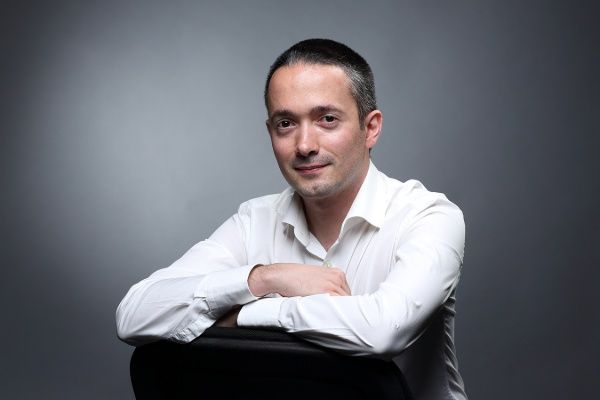
Money can buy time, but it depends on us how we will use it!
Introduce yourself in a few sentences..
My name is Vladimir Milev and I have been part of the IT community in
Bulgaria since 2003. I have worked as a programmer, team leader, chief
architect, and engineering director.
What did you dream of becoming in your childhood?
Computers, and especially software creation, have always attracted me since high school. I always knew I would become a programmer, but it was only later in life that I discovered I was also good at leading people.
At what age did you earn your first money? Tell us
about an interesting incident?
A rather trivial story for a child in the 90s. I was in 5th
or 6th grade, it was spring, and there were some ripening plums in the neighborhood. I picked the plums, took some old newspapers, made cones from them, and started selling to whoever passed by. I remember I earned enough to buy a box of ice cream –
something I loved back then.
What are the main factors and examples that shape us
as individuals at an early age and form our interests? What is your
recipe for curiosity, sources of information, and inspiration at
this stage of our human development?
What greatly contributed to the formation of my
interests from an early age was boredom. Literally! When a child is bored, their
brain starts looking for ways to turn the dull home environment into
something exciting. I had a few children's encyclopedias that focused on sciences,
technologies, and I read them dozens of times. Accordingly, when I later
encountered computers, this curiosity propelled me on my current path.
Did any significant change occur in your perceptions
in adulthood regarding what motivates you to do or not do something?
Yes, definitely. At an earlier stage, motivation
came from the desire to satisfy my curiosity as well as
the ambition to prove myself professionally. At a later stage, this continues to be
valid, but now that I work a lot with people, a huge part of my motivation
comes from seeing that I have managed to contribute even a little to someone’s
growth and they say – hey, I learned a thing or two from you!
Also, now I am at a stage in life where I think about the more global
impact of what we do. In this sense, I am motivated by the desire to be
one of those who change our environment for the better place to live.
Whose decision was it where to pursue higher education and
what to study? Was that decision correct, looking at it from today’s perspective?
It was my personal decision and I feel very lucky that
actually yes – this decision turned out to be right for me.
Share more about your interests, knowledge, skills, and
hobbies?
It may sound trivial right now, but lately,
a big interest of mine is artificial intelligence. This is in a professional and personal sense.
I enjoy immersing myself in my thoughts while being in nature and I am thinking
of trying fishing.
Would you change your profession today and which fields of
activity capture your interest?
I feel extremely lucky because I really
like my job. There is nothing more energizing than working with young and
intelligent people. So – I have no such plans.
They say that personal branding is everything people say
about you when you are not in the same room with them. What would you like to hear
today?
I would like to hear that I have managed to change the people around
me. That I have inspired them to give their all and to create software
sustainably and correctly. I would like to hear that the people who work with me feel
safe to experiment and innovate.
Emotional intelligence, adaptability, and flexibility,
as well as our soft skills, are key conditions for success in the last
few years. How do you cope with the daily challenges of life to
stay in good shape and mood?
Over time, I realized that good mental and emotional condition does not depend on the absence of challenges, but on how we meet them. To cope with daily stress and maintain my motivation, I have developed a few useful habits. I give myself time for active rest - a short walk, sports, or just a moment of silence to disconnect from the dynamics. I am learning to recognize and understand my emotions instead of suppressing them, because I believe that self-reflection is the foundation of emotional intelligence. I also pay attention to the environment around me - I seek communication with positive and meaningful people who inspire me. All of this helps me stay resilient, adaptable, and in a good mood even when the day is stressful.
What are the most important conclusions you have drawn so far about
maintaining proper communication considering the different characters of the people
you meet daily – colleagues,
friends, close ones?
It’s very simple (and at the same time effective) – I always try to
look at things from the perspective of the person I am communicating with.
This is the main conclusion; we must always be conscious of what kind of person is
on the other side.
What do you think about money? What is their influence on
your life? What is your advice to people who often ask themselves questions
related to money and how sufficient they are?
Money is an important tool, but it is not a goal in itself.
They provide freedom, security, and opportunities, but do not guarantee happiness or
satisfaction. For me, it is important that money serves life, not life revolves around them. I believe that financial literacy and responsible attitudes towards
money are key, but it is also important for a person to know when 'enough' is
really enough. My advice to people is not to seek value only in
numbers, but also in what brings them joy, meaning, and peace. Money can
buy time, but it depends on us how we will use it.
What is the most valuable career advice you would give to
people?
Don’t procrastinate! If you have a goal or desire to achieve
something, start today. The secret to getting ahead of others is simply to
start acting before them.