The thinking of each one of us changes when encountering a new culture
· Irena Komitova
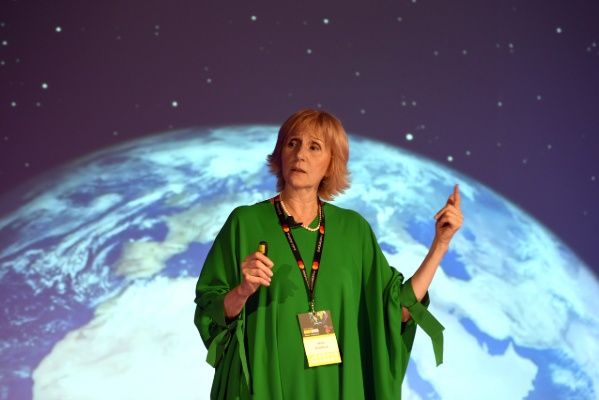
Every adventure in the world builds your character – take on those traits that you want to have!
I am Irena Komitova, a girl who dreamed of becoming an architect, but could not draw. And that's why, after a successful corporate business career in cosmetics (Oriflame), insurance (Allianz) and the automotive industry (BMW), I created my own company and became a publisher of books and magazines, an author, producer, teacher, and mentor. Also - a demanding creator of teams and projects. Today, I gladly accept thanks for the events TEDxVitosha and The Economist Impact; for the articles in the magazine PREMIUM Lifestyle, for the mentorship in the Women's Forum and for the innovations in Selected Product of the Year.
What is your journey around the world?
An adventure, a discovery, and proof that I am alive.
A conscious necessity and an unchanging motivation.
How many different countries have you seen so far? Tell us
a curious incident or highlights from your travels?
I have been fortunate to visit over 60 countries; at one
time I marked them with pins on the world map, now I no longer count them.
India, Australia, and Mexico are still on my list of unvisited destinations.
I felt happiest one September morning,
when bouncing along El
Camino Real (a boulevard from Palo Alto to Mountain View), I was going to buy a
car for my upcoming year of study at Stanford. I was filled with
anticipation for wonderful meetings, new knowledge, and magnificent prospects!
And I was most scared in Addis Ababa, Ethiopia, when a
boy, in an attempt to steal my handbag, yanked it sharply behind my back. When
he failed, he immediately ran down the street and none of the people around me came
to my aid, nor did they chase him. In the other hand that day, I was holding my 7-year-old
daughter, who cried out of fear.
Do you like to repeat destinations? Give examples and
motivation “for” or “against”?
There are eternal cities and places to which everyone longs to
return. For me, recently it was South Africa with its towns, wineries, golf
courses, and magnificent restaurants around Cape Town and Stellenbosch. I love to
stroll in central Vienna and recall my first amazement at this
magnificent city. Recently, after a 12-year break, I was again in Brussels and
walked in the footsteps of all the “normal” tourists who invariably fill Grand Place, taking insatiable photos of
the magnificent facades, eating waffles with cream, chocolate, and strawberries, and enjoying
life! And when I daydream, I wish to return to Patagonia and once again
find myself in Shao Shao – high in the mountains of Argentina, where the bright blue lakes and
the sky kiss, and the light streams from everywhere, making me feel both
miniature and blessed. I am enchanted by life along the Amazon, I didn’t
have enough of the 5 days there and I would return again.
What was your first trip that truly changed you
as a professional and can be said to have changed your thinking?
My first international trip was while I was still a
student – my parents took me to Leningrad (now St. Petersburg) to
be there during the “white nights” and to visit the Hermitage and Peterhof; after
that from high school we traveled by train to Warsaw, Leipzig, and Berlin, which was
my first glimpse beyond the familiar. Undoubtedly, the 2 months during which I taught
AutoCAD to
architects in Addis Ababa, Ethiopia, were remarkable in that they gave me
the confidence of a lecturer and teacher who, despite her youth and different
skin color, is respected and honored for her technological knowledge and methodology
of sharing it.
The thinking of each of us changes when exposed to
new culture. The six months at the School
of Foreign Policy at Georgetown
University, Washington
DC in the year when Bill Clinton became president of the USA , were significant for me and my
professional growth. Each subsequent trip added and built upon –
knowledge, experience, attitude towards the world, contacts, and friendships.
What do you learn about yourself and your professional skills,
when you are in a new cultural environment?
It is natural in your first travels for everyone to feel
uncertainty, even fear, of the unknown; to compare oneself with others and to
strive to “fit in” in the new environment. For me, studying at Stanford was a desired and sought-after
adventure, because our class consisted of 20 nationalities, each of which
added a stroke to me. I realized that I am persistent enough and can read
over 100 pages of business cases every day, that I do not fall behind in
inventiveness and richness of expression compared to Brazilians, Japanese, Chinese, and Germans; that I can clearly defend my
position and without fear ask questions when I do not understand something. I was particularly
enchanted by the so-called Honour
Code at Stanford – according to which you can take an exam with all your textbooks or notes from your classes, refer to them
while answering questions on the test. And this removes (in its infancy) the thought that you can
pass the exam if you cheat.
Have you
met people or ideas during your travels that have influenced your career Vand path?
Yes, of course. While studying in Washington (1993) I was
invited to the home of one of our lecturers, Bob Lawrence. The dinner was
organized on the terrace of his apartment, we looked out over the Potomac River and I sincerely
wondered where the light around us was coming from. It turned out that small lamps were placed everywhere, with “hats” made of photovoltaic elements that collect
energy during the day to shine at night. Until then, I had never seen anything like it! When
I returned to Bulgaria, Bob sent me one of those lamps as a gift and encouraged me to try to develop a project for improving street lighting in
the large cities of Bulgaria using this technology. The project did not materialize, but Bob and I subsequently started another joint company (again too
early for its time), for irrigating agricultural areas.
Another person who undoubtedly directed my professional
development in the last 25 years is my mentor from Stanford, who recently
turned 97 years old. He is one of the pioneers in venture capital - his
experience and advice have always been of immense help to me. After I graduated
from my studies there and received my diploma, I found out that he had hired one of
the boys from our class to work for him. I was truly gnawed by envy because
I also wanted very much to work something similar. And I asked my mentor: “Why did you hire
Skip in Asset Management, but did not offer me a position with you? I am just as smart as he is, I graduated
from the same program, I will work very diligently and hard.” And my mentor said: “Yes,
that’s true. But you can’t fly a plane.” And Skip was a pilot, with many flying
hours before his training at Stanford. J
It was my mentor from Stanford
who recommended me to the owners of Orgachim and since 2003, thanks to this
recommendation, I am and continue to be a member of the Supervisory Board of this
company.
Do you think
that your travels help you expand your professional network? How?
Of course, the above incidents only confirm this. We are still friends with an entrepreneur from Texas, whom we later
visited in Corpus Christi and whom we met on an “investor cruise” organized by Steve Forbes
in 2008. Since we started playing golf, we regularly meet and
become friends with remarkable people from all corners of the world, including a
billionaire. When at such meetings people find common ground, it leads to
new projects and ventures, to new travels and discoveries.
What skills
do you develop the most when you travel, and how do they reflect on your work Vand?
The most important skill we need in an unfamiliar and
remote destination is the ability to communicate with the local
population of the respective country. I remind myself that a smile is a universal means of “melting
the ice,” and sincere curiosity about the interlocutor enriches you endlessly.
When you do not know the language (for example, in Peru, where the locals speak only
Spanish, which I do not master) it is even more important to be friendly and patient, not to
show aggression and irritation, because only then will you gain a new friend and
a person ready to help you in a difficult situation.
Is there a city
or country that has Vand inspired you to start a new business or project?
Yes, my visit to Vancouver, Canada, in 2016 was
the reason I wanted to recreate the community and spirit of TED in Bulgaria. Since then
we have organized 20 editions of TEDxVitosha and
continue to grow, with hundreds of speakers and thousands of followers in
social networks.
When you are in
an unfamiliar country, do you feel more motivated or more distracted? Why?
Neither one nor the other. In my early travels, I
felt insecure, later curiosity prevailed. And now, thanks to technology (of course) I know in advance where I am going, I note what
is worth seeing and what is valuable to learn. I seek the local and authentic,
because huge international conglomerates are now everywhere and (unfortunately)
smother the original local producers of food, clothing, and home goods.
I seek cultural expressions that do not repeat and are unique to the respective settlement.
Are there
destinations that act as a “restart” for your creativity and ambition?
Usually, the farthest destinations affect me just like that. I remember the trip to China, Myanmar, and Cambodia, as well as the visits there to architectural monuments and treasures that have no equal in Europe. I remember my amazement at the power and roar of the Iguazu Falls (on the border between Brazil and Argentina) and the concentration of a heron standing in perfect balance and unperturbed while fishing,
at the edge from which the water poured into the abyss. A smile (and understanding) is still evoked in me today by a scene that took place on the top floor of the hotel Marina
Bay Sands in Singapore - “luxurious posing”, obviously for Instagram, of two young ladies who were taking a selfie at the edge of the pool. Many similar details remain in memory to nourish both your creative thinking and subsequent ambitious endeavors. You see that someone else can do it and is doing it. And you say to yourself: “I can do it too, I will even do it better.”
How do you manage the balance between work and pleasure when you travel?
I combine them. The time has passed for me when I traveled only for work (then the “bill” for the trip was paid by my employers and they dictated the schedule). Now I try very hard (because I now pay my own bill) to have a bit of everything and immediately. Isn’t that the spirit of the 21st century? J
If it’s a conference – it should be productive, but it shouldn’t steal time from visiting the local museum or a walk in the nearby park. If it’s a golf vacation, it must be complemented by culinary discoveries and new inspirations. If it’s a business meeting - it should be within the time allocated for it, and to be successful, it should have emotional moments and time for sports.
How have travels changed the way you perceive the value of money?
In my youth, living abroad taught me to be more frugal and to try to be prepared for critical situations. I will never forget how at one of the European airports I wanted to buy a drink – tea or water – for which I was short 25 cents. We didn’t have credit cards at that time, we only had cash. The waiter looked at me with indifference and refused to serve me. A gentleman sitting nearby, who didn’t know me at all, gave him 1 dollar and said: “I will pay those 25 cents that the girl is missing.”
After a 6-month stay in the USA in 1993, I told my sister (who had just won a Green Card and was preparing to leave for “the land of endless opportunities”): “In America, when you have money, you have no problems.” This seems to be becoming valid for the whole world.
Do you travel to find new ways to make money?
Making money is not the goal of any of my travels. I love to participate in conferences, seminars, trainings – and all of them, indirectly and not immediately – add to my ability to understand “how”, “when”, and “from what” money is made.
In 1998, at the annual meeting of the World Economic Forum in Davos, Nathan Myhrvold, who was then the Chief Technology Officer of Microsoft, asked us: “How many of you buy online, at least one book from Amazon?” A forest of hands went up. “And how many of you,” Nathan continued, “have bought shares of Amazon?” Very few hands were raised. I didn’t pay attention to him then! (the shares of Amazon
were worth less than 1 dollar. Today they are 223 dollars and continue to grow). Here’s an example of an unlearned lesson…
What lessons about financial independence have you learned from different economies and cultures?
America taught me to be very careful with my finances, not to accumulate debts that I cannot subsequently pay off and “to stretch according to my cover”. It helped me realize how credit cards work and to never, ever, ever let an unpaid bill accumulate that I would later have to cover (even at “minimum payments”) at an interest rate of 18% or more.
According to You is it better to spend on experiences rather than material possessions?
When you are young and “have not”, you first strive to buy – a new dress, shoes, a bag, a belt, a watch, a car. They create in your mind the image of someone who is “successful”. Over time and with accumulated experience, you want to “play another leading role” and experience the beauty and wonder of discovery.
How do you see the future of digital nomadic life?
Everyone assesses whether this type of life is for them. It is probably very tempting to imagine that you can travel and roam the world, while at the same time working from anywhere. Such a practice would deprive me of live contacts with my closest friends and family. And that’s why I allowed myself to do it once, for no more than a year.
Are there specific countries that are more favorable for work and investments?
Economic analyses say that such a place is the USA, and more specifically - Silicon Valley. But I didn’t stay there, my daughter also returned to Bulgaria after a 10-year stay and work in San Francisco. Emotion and connection are two very important forces that guide us in our professional realization. I chose to do what I do here – in Bulgaria. And I am very happy with such a decision. I did not set a goal to “conquer the world”, I wanted to do “small good deeds” and see the results of that.
If you could choose one place in the world to develop your next big idea, where would it be and why?
I would choose Plovdiv – because it is a city with culture and traditions, boldness, and a magnificent climate. My project would be called “Museum of Architecture and Arts”, and there is none like it in our country.
What are the destinations you would definitely recommend to be visited and why?
Every destination is worth it, especially if its individuality matches your aspirations. Tuscany and Umbria are wonderful if you want to return to the Renaissance era; the French Riviera enchants you with “the legends of the lives of the rich and famous” and invites you to follow in their footsteps; Japan enriches you with the art of contemplation and attention to detail; Rio de Janeiro attracts you with that vitality and splendor of the Carnival that is unique in the world!
What is the career advice you would give based on what you have seen around the world?
Rejoice and be thankful for every moment, no matter where you are in the world. You will always discover something that will charm and surprise you – but you have to want it to happen. Realize how little you know and add grains to your treasure trove of skills. It may be the skill of driving unperturbed among dozens of cars on Highway 101 from Palo Alto to San Francisco; it may be the endurance of a 10-hour bus ride to reach Karnak and the Valley of the Kings in Egypt; it may be the wonder of the white nights behind the Arctic Circle in summer, when walking through the forest you see that the deer are not afraid of you (nor are you of them).
Every adventure in the world builds your character – take those traits you want to have.