What are the topics I can talk about for a long time, honestly and with passion?
· Anna Manukyan
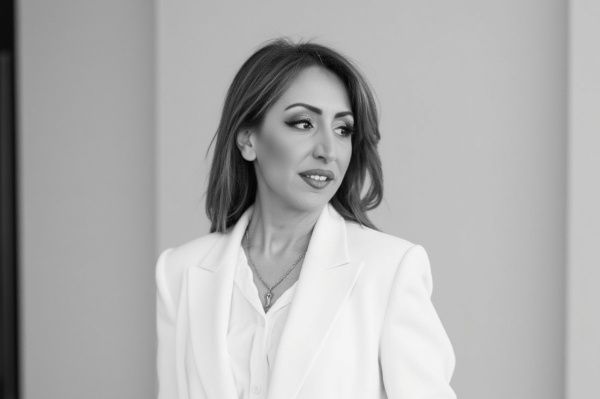
The personal brand does not start from the outside. It is built from the inside – with self-observation, clarity, and a dose of courage!
Introduce yourself in a few words..
My
name is Anna Manukyan, I have been working in the field of communications for 13 years.
My professional journey started as an intern at a newspaper, and since 2022
I have been developing my own agency - Segmento.
My
passion is creating concepts and telling stories.
I
believe that it is precisely stories that bring meaning
in the relationships between brands and people. Especially in the dynamic world we
live in today.
How
would you define a personal brand and why is it so important today?
A
personal brand for me is a aftertaste that
we leave in others when interacting with us. A combination of all the associations,
that our thoughts, values, and choices evoke when we share them.
How
did you start building your personal brand? What motivates you?
In a very
natural way – I first shared strictly expert advice.
Later,
I realized that this was too narrow a framework for me. I allowed myself to tell stories,
that I considered important. Stories from “real life” that showed me not just
as a thinking and searching person, but also as someone who can be vulnerable. For
a perfectionist like me, this was far from easy. But it was precisely thanks to these
stories that I saw what I was actually building around myself – a community.
What are
the most important elements of a successful personal brand?
I
would highlight a few key elements.
Clarity – who
you are, who you are for, and why you do what you do.
Consistency – in
the messages, values, behavior. People do not believe what we say once, but what we
repeat with actions.
Authenticity – in
the digital space, it is easy to put on a mask or take on the role of someone,
whose approach seems “working”. But this is not sustainable. Others sense when
we are not ourselves, let’s not underestimate them.
Usefulness – how
the story we tell or the product we create solves a real
problem for another person.
Recognizable voice –
the way we speak is no less important than what we say. The style of
expression is often what leaves the deepest impression. I notice that
this is often neglected.
How to
find our niche and unique value?
For me,
the niche is the intersection point
between skills, knowledge, and our experience with
the solutions we can provide to someone else.
What are
we good at? What ways can we “heal” someone’s “pain”?
I think,
that focusing on the answers to these questions is worthwhile.
These
answers cannot be templated.
Should the
personal brand be built around personality or around expertise?
I
strongly believe in balance – for me, the two things cannot be
separated.
We are
personalities and experts at the same time. And
the magic is in combining the things
we know with who we are. People do not just buy our experience – they buy our way of thinking, our energy
and the worldview we have. And that
is already a personality.
What
first steps would you recommend to someone who is just starting?
First
of all – to look within themselves, not at the algorithms. The first steps are
not related to strategy, but to clarity:
●
What
do I want to provoke in others through what I share?
●
What
are the topics I can talk about for a long time, honestly and passionately?
●
Who do I NOT want to talk about – because this is also positioning.
After
that – to choose 1-2 platforms that fit their goals and communication style. And most importantly – to allow themselves to change. Because a personal brand is not
an endpoint, but a process of unfolding.
What
platforms are most suitable for developing a personal brand today?
The choice
depends mainly on two things: where the audience we are aiming for is located,
as well as which communication format is natural for us.
For
some, this will be Instagram – as an emotional channel. For others – a professional environment, like LinkedIn. For
thirds – YouTube and the podcast format.
It is
important not just to choose a platform, but a space,
in which we are present with ease.
What
role does authenticity play in a personal brand and how to maintain it?
Authenticity
is a foundation. It is the component that cannot be reshaped,
replicated, or optimized according to someone else's model. Internal hygiene is needed to maintain it – with the question: “Is this mine? Or is it someone else's expectation?”
The more
layers of foreign perceptions we remove, the stronger our brand becomes –
not because it “shouts”, but because it resonates.
How to
create content that engages and builds trust?
By
writing and speaking about the things that excite us and provoke emotion in us.
By not
trying to sound and look “smart”, “correct”, “perfect”.
Content
that engages is simple, sincere, even infused with
vulnerability.
Trust
is born precisely in the moments when
we share a story that someone else says: “Oh, it has happened to me too,
but I didn’t know how to express it. Not like this”.
What are
the most common mistakes people make when building a personal brand?
I would
highlight a few that I encounter often. For example - imitation of someone else's style – in an attempt to be “like that person who already
succeeds”.
Yes,
it's easier, but it's not sustainable. And most importantly – it’s not yours.
Fear of disapproval – which
paralyzes. Many people do not take the next step because they are afraid to
be criticized. And that is inevitable. We will be liked and not liked at the same time – and that is completely
normal.
Desire to be everything for everyone
– which often leads to not being anything for anyone. A true brand is not
built through being liked, but through position.
How to
cope with negative comments and criticism?
Negative
comments can sometimes be helpful – something we often forget.
If
they contain constructive feedback
– we can thank and take note.
If they are unconscious projection – we ignore.
What is said then has nothing to do with us, but with the experience of the person opposite.
If they are real hate – this is a test of our
boundaries.
In such
cases, my response is short: “Thank you”
– because not everything deserves an explanation. Sometimes the boundary is silence.
How to
avoid burnout when we invest a lot of effort in our personal
brand?
By observing
ourselves and being honest with ourselves. If something stops bringing us pleasure,
I think it’s valuable to ask ourselves:
“Why does what used to bring me pleasure no
longer bring me anything?”
Personally,
it helps me to set boundaries – especially in what I share.
I use a technique that my mentor taught me – “Traffic Light”:
●
In green:
topics I have no hesitation to talk about.
●
In yellow:
topics that are personal, slightly controversial - but still comfortable for me.
●
In red:
topics I do not touch – because they affect other people whose boundaries I respect.
How can a
strong personal brand lead to more opportunities (jobs, partnerships,
clients)?
People
buy from people. That’s the simple formula.
When
we provide value – consistently, honestly, and with care – it cannot go
unnoticed. All the clients I work with are our long-term
partners. Over time, our relationships have transcended the “client –
contractor” framework. I often receive calls or inquiries because someone has given
a recommendation.
The world
works precisely like this – we attract
like-minded people, when our values and principles are clear.
What are the best ways to monetize a personal brand?
Before we look for monetization, it’s important to create value.
Structured. Consistent. Thoughtful.
The rest
is a matter of format – consultations, training, digital or physical products,
hybrid models. But the format is not what
brings results. Trust does that. Monetization is a natural
consequence of a relationship we have built through value.
When is
the right moment to start offering paid services or products?
When
we have built a real connection with
our audience. We know its needs, we have listened to it, we have created a solution
that leads to tangible change for it.
It’s
important to be aware of the following:
●
What assets do we currently have?
●
Who exactly is this for, what we offer?
●
What is the result it leads to?
Segmentation
and clear value are very valuable. Without them, time does not work for us, but against
us.
How to
maintain resilience and long-term growth of the personal brand?
With
a system – not fixed, but flexible enough to grow with us.
We
change. Our priorities do too. Sometimes we stop talking about certain
topics because they are no longer relevant to us. And that is completely normal.
But
the foundation always remains unchanged: honesty.
If it exists, every subsequent version of the personal brand is a natural evolution, not
replacement.
What
habits and discipline are needed to build authority?
Not to
expect from others what we would not do ourselves.
Not
just to listen, but to hear.
Not to
allow the superficial to take precedence over the depth.
Sometimes
it will be difficult because the world today is a world of "fast consumption", but I believe that the three conditions above are the key
to staying curious about this very world and creating lasting
relationships.
This is how
not just authority is built, but trust – and trust is the real capital of
the personal brand.
Which
personalities with a successful personal brand inspire you and why?
Richard
Branson, Jeff Bezos, and Steve Jobs – because they are creators, not just of business, but of
culture.
Three
different men. But all three are proof that a strong personal brand does not start and does not end with the logo of the companies they have created. It is a symbiosis -
how they think, how they live, and how they create a completely new world, provoking change
for and in others.
What
three specific things can people do today to improve their personal
brand?
I really
want to emphasize first that the personal
brand does not start from the outside.
It is built from the inside – through
self-observation, clarity, and a dose of courage.
Here are
three things that I believe would lead to valuable insights:
First - to
have an honest conversation with five people who know us well, and ask them: What do I do easily that you find to be my superpower? If you could
describe me in three words, what would they be?, In what situations do you think of me – what do you intuitively associate me with?
Sometimes
our own gifts are so natural to us that we do not recognize them as
value.
Second - to
try to define your essence in up to 150 characters, by answering the
questions: Who am I? Who is this for that I do? What is my
method? What change does it lead to?
Third - to
share a story – personal, significant, transformative. Not to impress, but to
connect.
Every
change begins with a specific step. Take
it today.