When people are satisfied, they give much more of themselves
· Milena Videnova
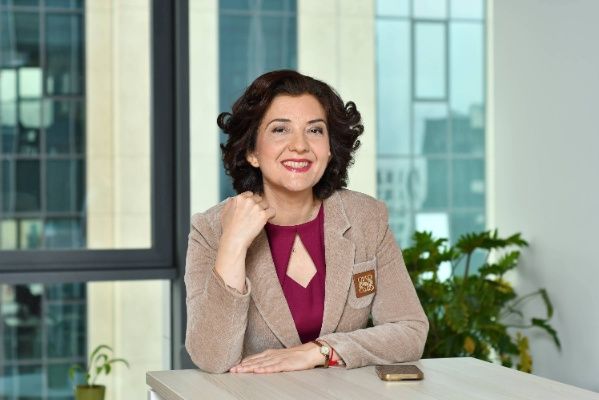
Life is a marathon, not a sprint!
How
would you describe your career in a few words?
My career is transformative,
entrepreneurial, and focused on building high-performance teams.
Since 2020, I have been the executive
director of Axpo Bulgaria. Before that, I held leadership positions at
HypoVereinsbank, UniCredit Bulbank, HYPO NOE Gruppe Bank, Coface, and KONE. I have
a master's degree in international economic relations from UNSS.
What
was the most important choice that shaped your professional path?
To have the courage to change three
industries - banking, insurance, and energy trading, – as well as to restructure
companies sustainably by forming solid new structures and teams. I also had
the chance to be in the right place with the right people. My path was
shaped through a series of gradual steps. Among the most practical
lessons for a leader is participating in mergers and acquisitions. In the banking
sector, I participated in three mergers and one split. This was invaluable experience that
turned out to be foundational for my further career development.
What
would you like to know at the beginning of your career that no one told you?
Over time, I realized how strong
an influence positive feedback and recognition at work have –
especially in Bulgaria, where self-praise and recognition among colleagues do not come
naturally. I also realized how important it is to build the right team and take care
of the people in it, so they feel good at work. Another important
aspect is to value the lessons learned. To accept mistakes as part of the journey -
as long as you make them in time, with measure, and learn from them. Experimentation and
well-measured risks lead forward, both professionally and personally.
How
can someone understand which profession is suitable for them?
For me, this is a job in
which you can make “things happen.” A profession where I achieve
results, work with people, and learn continuously - this is what brings me
satisfaction and never feels burdensome.
Which
skills will be key in the next 10 years?
Adaptability, emotional
intelligence, creativity, empathy, and the ability to foster innovation and
collaboration. An environment that values continuous learning, strong teams,
as well as the ability to navigate complex situations and give freedom to
employees - this is what is promising in the near future.
How
to build a network of useful contacts without appearing interested?
My leadership and
negotiation style includes investing time in people, open and transparent
communication, seeking ideas from everyone, and empowering the team. This naturally leads
to strong, genuine relationships and a valuable network of acquaintances. The emphasis on care
for employees and their well-being creates an environment where
contacts are built with ease.
What
is the biggest mistake in your career and what did you learn from it?
From a leader's perspective - I underestimated the importance of people's integrity. What was the conclusion - you must adhere to the 4 P's: The right
Preparation is a prerequisite for Achievements. Especially regarding integrity –
you must do your homework. Sustainable change is achieved only with a team that has integrity and shared values.
How
can you recognize a toxic work environment and understand when it’s time to
leave?
I do not accept an environment where people
only complain, grumble, and see the glass as half empty. For me, every
team member should have a positive attitude. You don’t need to know everything -
it can be learned. But complaints and excuses are not tolerated. If there is even the slightest sign of toxicity, I address it directly and encourage all
leaders in my team to do so according to the code of conduct. A lack of
transparency and empathy from management is a red flag. People need to know that they can freely talk to
management, share ideas and opinions, and be heard.
If
you could start over, what would you do differently?
I would listen more to the lessons
from the past. But regarding passion and
attitude and flexibility - I wouldn’t change anything. I always see the glass as full.
How
do you maintain motivation during periods of stagnation?
I love challenges,
because they make me stronger. When someone tells me that something cannot be
done, it strongly motivates me - I want to prove the opposite. This
entrepreneurial spirit drives me to find a way to achieve even the impossible, both
as an individual and with my team.
In a crisis, timely and clear
communication is key. It is important to have a clear vision of where you want to go – and how you will get from point A to point B,
and how long it will take to travel this path. Because nothing happens with
a magic wand. You need to see the big picture, share it with the team,
making them believe, and then break it down into a series of small steps. And
at each step, you should mark and celebrate the achieved success.
Our corporate culture emphasizes openness
and transparency among colleagues. If there is a problem, it should be voiced. Ideas
should be sought from everyone, and a “brainstorming” session should be organized.
Then we develop an action plan and follow it. I also leave room for flexibility and I always have Plan B
and Plan C, because we live in interesting, unpredictable, and dynamic times.
Moreover, positive feedback from colleagues and partners is a strong motivating factor. The focus should be
on the positive aspects, not the negative ones, as well as ensuring that
the right people are in the right place in the team.
How
do you achieve a balance between work and personal life?
The feeling of well-being at work
is crucial. When you feel good, you are much more effective. Life
is a marathon, not a sprint. The balance between work and life is necessary. When
people are satisfied, they give much more of themselves. This is also the way to
maintain motivation and loyalty in the team. I will
repeat it - mark every achieved step as a team. In both work
and life, goals should be achievable. Personally, I balance a busy
work life with sports. Even a simple walk in the park helps to organize
my thoughts and see things more clearly.
When
is it time to change not just jobs, but also professions?
Before I took
my current position, I worked in finance - commercial and
investment banking, as well as insurance. When an opportunity for something
new and significant arises, it is hard to pass it by. I am used to learning throughout my
life, discovering new opportunities, and therefore I do not fear, but rather
get excited about such big changes, especially when opportunities for
influence and leadership arise.
If
you could give only one piece of advice for success, what would it be?
Create
all the prerequisites for it to happen, believe in yourself and in the team, and work with
your whole heart. That’s it. Do what you must - let it be what it will. Stay
honest. But you must be prepared. Do not forget the 4 P's: The right
Preparation is a prerequisite for Achievements.
What
is your definition of a “successful career”?
My definition of a successful
career is to make things happen – with efficiency and tangible results,
to invest in innovations, people, and collaboration. Strive to create
the future - and you will already have a successful career.