12 years of love and harmony in Bangkok: the story of a journalist and a financier
· Pancho Blagoev
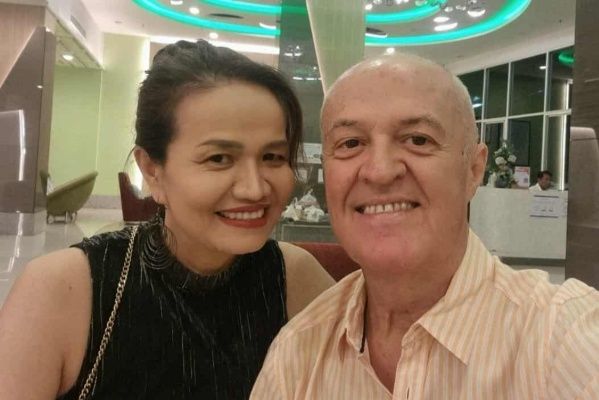
The Western world encourages individualism, while for Thais, harmony in the group is important!
Introduce yourself in a few words..
I am Pancho Blagoev. My entire professional path is connected with the media. I have been a journalist, deputy editor-in-chief of the newspaper “Maritsa”, editor-in-chief of the regional publications of the press group in Haskovo and Pazardzhik. I have participated in the creation and development of other media projects in print publications.
In 2013, fate brought me to Thailand and since then this country has been my home. My wonderful wife and I live in one of the most exciting cities in the world – Bangkok.
What are the main differences between working in Bulgaria and Thailand?
Anyone who has traveled to this part of the world knows how different life is here. Corporate culture is no exception and is heavily influenced by local traditions, Buddhist values, and hierarchical social norms. It often differs from the dynamics of processes in the Western corporate model. Of course, as everywhere in the world, professionalism and loyalty to the company are valued here as well. Western practices, teamwork, innovation, and open orientation are leading in many international companies with offices in Bangkok. The expectations regarding results and effectiveness are identical.
How do Thais treat their bosses and what is the level of hierarchy in companies?
Unlike the Western model, which emphasizes direct communication and quick decision-making, here key decisions are made by managing managers. Employees rarely challenge their authority, confrontation is more of an exception, and criticisms, if any, are expressed indirectly. In Western companies, communication is direct and often critical, and teamwork is the usual way of seeking solutions. In Thailand, the process is slower and concentrated in management. The Western world encourages individualism, while for Thais, harmony in the group is important.
Is there a customary early arrival or long hours in the office?
If you ask me if there is something similar to Japanese corporate culture, where workaholism is the norm – probably not. Thais emphasize a good balance between work and personal life. It is coded in their mentality that every activity should bring pleasure and ease, and this defines a more relaxing approach to the rhythm of life. Of course, global pressure also places companies in a competitive environment that imposes compromises in personal terms. But Thais find a way to achieve a balance between work and leisure. Often after work, they sit in establishments around the offices and have fun together. In a huge city like Bangkok, people often travel for an hour or two to get home, there is no time for late meetings. You will easily recognize them by the company dress code, which is followed here. Free improvisations in clothing are rather an exception.
Are there days with more special attire (for example, “casual Friday” or wearing traditional clothes)?
Usually, government employees are required to go to work dressed in uniforms on one day of the week. When I came here 12 years ago, I thought they were police officers 🙂. On another day, the dress code is yellow polo shirts with the department's logo. Yellow is the royal color. As you know, Thailand is a constitutional monarchy. My wife, who is a financier in the health department of Bangkok Metropolitan Administration, wears a uniform on Mondays. On Fridays, the requirement is to wear traditional clothes. We are not talking about “folk costumes”, but about details from traditional Thai clothing. By the way, teachers here are also government employees and go to work in uniforms.
What are the most typical professions for foreigners in Bangkok?
Bangkok is a global city, a natural hub for many international businesses and organizations where thousands of foreigners work. Many global companies and banks have offices here, and their teams are a mix of Thais and specialists from abroad. Senior managers are usually foreigners. Of course, there are also many English teachers in regular and private schools, which are very expensive. There are also many foreign lecturers at universities.
What impression did you get about the work ethic of Thais?
As I mentioned, the structure is pyramidal, decisions are made "from the top", employees are expected to show loyalty and dedication to their work. Respect for managers in leadership positions is the norm. With similar respect, younger employees treat their older colleagues. But this is part of their culture and is valid in all areas of life.
Are there differences between younger and older employees in terms of style and behavior?
Loyalty to work is an important element of the "job description" of everyone. In this sense, the attitude towards solving a particular case is identical. Respect for the elderly here is the norm. Regardless of whether in the office or on the street, younger people address older ones respectfully by using the word "pi" before their name, which in Thai means older brother or sister.
Are there massages or other wellness practices at the workplace?
In Bangkok, super-modern multi-story offices are constantly emerging, where not only a perfect working environment is created, but also a whole system of amenities to facilitate employees. As I said, the distances here are huge – if you need something, there is no time to go to the mall or the store. Therefore, usually on the first few floors of the offices, there are cafes, restaurants, small shops, beauty and massage salons, gyms, etc. The rule is that employee comfort contributes to the overall success of the company.
What customs or rituals are observed in the office – for example during holidays or New Year?
Thais love to have fun together and do not miss holidays. Especially at the end of the year – from Christmas and New Year, through the lunar (Chinese) New Year, all the way to mid-April, when Songkran – the Thai New Year, is an endless celebration. It does not matter that Christmas is a Christian holiday – as long as there is fun. During this period, companies distribute annual bonuses to their employees, which are often between 3 and 6 monthly salaries, depending on the company's results. Well, how can you not be happy 🙂.
How are important events celebrated in companies (birthdays, successes, New Year)?
Tight-knit and noisy! Companies often organize trips for some of their employees around the country for important occasions. As I told you, my wife works at Bangkok Metropolitan Administration or as it is called here Government of Bangkok. Every year, usually in March, one of the banks they work with organizes a several-day team building trip around the country. Usually to the south in nice hotels along the Andaman Sea or Gulf of Thailand. Last time they were in Krabi in March. They cover everything – plane tickets, hotels, banquets. This year they traveled around the islands on a large yacht rented for the occasion. They do not skimp at all, especially when the year is successful.
How is technology developing in Thailand compared to Europe?
Technologically, Asia and Thailand in particular are developing at a very fast pace. The country is one of the largest producers of chips and electronics in the world. It is no coincidence that Google intends to invest 1 billion dollars in a new data center in Chonburi province, and a hub for cloud services will be built in Bangkok. Most of the world's technology companies have offices here.
How is digitization changing everyday life – payments, applications, services?
Money is gradually disappearing. Thais pay with QR codes through their banking apps everywhere. Even at markets, each stall has its own QR code. Street musicians place a sheet with the code in front of them – you scan and transfer some amount, there is no need to drop cash in the box. Even at traditional dining places, cash is disappearing. Not to mention McDonald's, Kentucky Fried Chicken, etc. – everything is ordered and paid digitally. Cash is a last resort.
Does tourism help the economy and how does this affect jobs?
Tourism accounts for between 12 and 20 percent of the country's GDP. We know that Thailand is a global tourist destination that attracts millions of people from everywhere. Annually, the country is visited by between 35–40 million people. This creates millions of jobs and pours billions into the economy. Thailand does not skimp and invests in the country's image. Currently, negotiations are underway to hold a Formula 1 round in Bangkok. It has just been announced that Thailand will host Tomorrowland for 5 years, with the first festival planned for 2026 in the Widhum Valley near Pattaya. The iconic electronic music festival turns the kingdom into a global event destination. Thailand paid about 62 million dollars for the rights.
Are there many international conferences and events for specialists – and what are the most significant?
Thailand often hosts global forums, and Bangkok is the ideal place with its modern convention centers and vast hotel base. North of the city, in the suburb of Nonthaburi, there is a huge fair and convention center where various forums are continuously held. By the lake in one of the most beautiful parks in the center of Bangkok – Benjakitty Park – is the Queen Sirikit Centre, an ultra-modern convention center hosting global meetings and events. I couldn't believe my eyes when they demolished the old center and built a new one in just 2 years for the ASEAN summit in 2020. To give you an idea – it's like demolishing and rebuilding the National Palace of Culture (NDK).
Is the participation of foreigners in these events easy or are there barriers?
I wouldn't say so, Thailand is a hospitable country in this aspect.
What was the most surprising thing for you related to the work culture?
As I mentioned, Thailand is a different universe with many cultural differences and peculiarities. The mentality of people in the professional environment and on the street is different. Elementary things from everyday life sometimes take time to adjust. But the most important thing – people are generally good. If you respect their culture and show respect – you will receive the same attitude. I think I don't need to tell about the eternally smiling people. It's no coincidence that they call Thailand the land of smiles.
What would you advise a Bulgarian who wants to start working in Thailand?
To those who have the desire and opportunity to work here, I would recommend to carefully research not only the company but also the corporate culture. There is a lot of information on the internet. Certain professions are reserved for locals. Starting a business always involves Thai partners who must own 51% of the company. There are many requirements for obtaining a work permit, etc. It's not easy, but once a person adapts, Thailand is a wonderful place to live, do business, and relax.
How do locals view foreigners in a professional environment?
Overall positively – foreigners are seen as an important part of the development of international business and often hold key positions in large companies.
In your opinion, what can Bulgaria “learn” from Thailand and vice versa?
The first thing that stands out when you arrive here is the positivity of the people. The so-called mai pen rai culture (“let it go”) is deeply rooted in the life philosophy influenced by Buddhism. Thais believe in karma and the predestination of events, which gives them the ability to live peacefully and in harmony with themselves and others. I really wish we could take at least a little of their positivity – to smile more instead of frowning and making dramas out of everything. To achieve softness in relationships instead of the roughness we are used to at home. And last but not least – Thais are extremely united as a nation. Basically the opposite of what we are, unfortunately.
What are the differences in retirement and the attitude towards elderly people?
One of the things that struck me here is the respect for elderly people. Not only in the family but everywhere. I can talk a lot about what I see around me every day... Otherwise, Thais currently retire at 60 years old, both women and men. But there is a gradual discussion about raising the age to 65 years. Unfortunately, most people do not have social security and rely on miserable state aid when they grow old. Here comes the family, which by unwritten law takes care of elderly parents. The good thing is that Thailand covers health care even for poor people under the so-called “30 baht” scheme. This is the fee, and the treatment provided in certain hospitals is free. Otherwise, government employees, security forces, and private companies offer various pension schemes.
What are your favorite things about the Thai way of life that you would like to have in Bulgaria?
The smiles, the ease of communication, the positivity of the local people, the softness in relationships. When I return home, I definitely miss these things.