A successful career is a balance between achieving results and staying true to yourself
· Zhivko Todorov
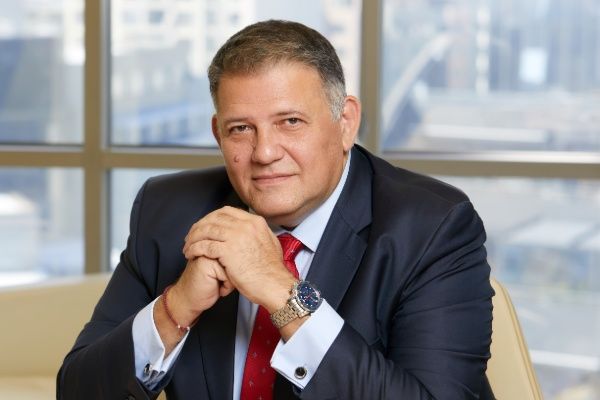
People change. The things that motivated us at 25 may seem meaningless at 40!
Introduce yourself in a few words..
My name is Zhivko Todorov and I have been working in the
financial and banking sector for 28 years. I started my career as an accountant while
still a student in a paper factory, went through the positions of financial manager and
director in international and Bulgarian banks, and today I manage my own company
for management consulting and accounting services. I graduated in “Accounting and
Control” from UNSS and Executive MBA at HULT International Business School in London.
I was awarded in 2018. in the competition
organized by EY Bulgaria and
magazine Forbes “CFO of the Year “, in the category “Strategy
for the development of the financial function”.
How would you describe your career in a few words?
I would describe it as purposeful and consistent - a path from
detail to the big picture. I started from operational accounting. Entering
invoices and checking balances taught me attention to detail.
We had auditors who said that “The difference in balances by even one
cent can be a mistake or fraud for millions!”. Gradually, I climbed the ladder
and moved to strategic management positions, managing entire teams, where
vision, leadership, and making tough decisions are required. Today I also define it as
a process of transformation, because the transition from the corporate world to
entrepreneurship gave me a new perspective on professional development.
What was the most important choice that shaped your path?
Definitely the most important choice was to apply and take
a leadership position in a bank. At first, it was quite stressful - you step out of
your comfort zone and suddenly bear responsibility for other people, processes, and
clients. This was a moment when I realized that growth comes only when
we take risks and are ready to take responsibility not only for ourselves but also for the people
we lead. This decision put me in situations where I had to think
strategically, manage crises, and make decisions with long-term implications.
It was then that I understood that the true strength of a leader is not in knowing
everything, but in being a visionary and being able to inspire the people around them.
What would you like to have known at the beginning of your career,
but no one told you?
That you need to be ready for many sacrifices and that you will work
24/7. That a career is rarely a straight line upward. At first, I thought that the path
would be a series of promotions, but the reality is different – there are periods of
stagnation, doubts, and even steps backward. Today I know that these periods
are valuable – because in them you build resilience, educate yourself or improve
your qualifications, take stock, and plan your next steps. I would
also like to know that the relationships and connections with the people you meet along the way are often
more valuable than the titles and positions themselves.
How can a person understand which profession is suitable for
them?
Choosing a profession is an important step for every person. We often
see how people change their profession after 10-15 years because they have embarked
on a professional path influenced by parents or other factors. In my opinion, the choice
of profession is a combination of three main factors: to know what they are good at, what they love
to do (what brings them satisfaction), and what they can contribute real
value to others, i.e. what is in demand in the market. Where the three factors
overlap, that is their profession. A person can start with
experimentation – through internships, short-term projects, or new roles, to
understand what truly energizes them. It is also important to listen to their intuition – often
it hints earlier than reason where the right path is. This way, when
I was in 10th grade, I decided that I wanted to become a financier and apply to UNSS. And
to this day I believe that numbers are not just digits, but the language that business
speaks, and my mission is to help businesses understand and use it,
to grow and develop sustainably.
Which skills do you think will be key in the next 10
years?
The most important skill will be the ability to adapt – the world is
changing at an extraordinary pace and those who can learn and change quickly will succeed. Many people are afraid of change. To them, and to everyone
else, I would recommend reading “Who Moved My Cheese?” by Spencer Johnson
- a modern parable that you can apply in your own life. It
will help you overcome the fear of change and only then will you be able to
unleash your full potential in a complex and uncertain world. Critical
thinking and the ability to analyze data will be key, but also the skill
to turn information into clear decisions. AI will be a good assistant, but cannot make decisions. Besides,
emotional intelligence will become increasingly valuable – because in a world of
technology and artificial intelligence, it is human relationships and leadership
that will be the distinguishing advantage.
How to build a network of useful contacts without
appearing interested?
By treating people not as “contacts,” but as individuals. Genuine curiosity, the willingness to listen, and the desire to
be helpful without immediate return create trust. The network of contacts is
the result of reciprocity and authenticity – if you approach with interest and add
value, people will want to continue the relationship with you.
What is the biggest mistake you have made in
your career, and what did you learn from it?
In the beginning, I often tried to do everything myself, I was not
a team player. I believed that this way I would control the results and show
competence, that I would be irreplaceable. But this quickly leads to overload and a lack
of development for the people around you. I learned that delegating and passing on
knowledge and skills is not a weakness, but a strength. When you trust your team,
you actually create conditions for growth and development for both them and yourself.
How to recognize a toxic work environment and when is it time
to leave?
Lack of transparency, lack of respect, and lack of
perspective.
If decisions are made behind the scenes, information is
shared selectively, and rules change according to circumstances. This creates a
sense of insecurity. Neglecting ideas, passive aggression, or
favoritism is a constant atmosphere. There are no opportunities for development, feedback is
formal, and initiatives are stopped instead of being encouraged. At such a moment,
you should ask yourself:
1.
Am I getting better at what I do?
2.
Are there people in this company who inspire me and help me
grow?
3.
If after a year I am still here, will I be satisfied
with myself?
If two of the three answers are “no” – it may be time to
consider the next step.
A sure sign are the physical and emotional
symptoms: If every Sunday evening you
feel anxious, if you gather strength every morning to go to work,
and in the evening feel that your energy is depleted, this is a signal for
a toxic place.
What would you do differently if you could start
over?
I would dare to start my entrepreneurial journey
earlier. For a long time, I was dedicated to the corporate environment and it gave me a huge
experience, but today I see that the freedom to build your own business brings a different
kind of satisfaction. If I could start over, I would combine both – to
gather experience in corporations, but also to experiment earlier with my own ideas.
How to maintain our motivation in times of stagnation?
By changing the perspective – stagnation is not a failure, but a time
for recharging and reassessment. In such moments, it is helpful to set smaller
and achievable goals, to learn something new, or to change focus. Personally, I find it very
helpful to remind myself of the “why” – why I started on this path and what the
larger goal is.
How to achieve a balance between professional and personal
life?
The most important thing is to determine what our priorities are. Balance
is dynamic and never constant. Sometimes the profession/work requires
more time and energy, other times personal life needs our attention.
The key is to set clear boundaries and not forget that success in
career has no value if achieved at the expense of health. Balance also comes
from learning to say “no” to those things that are not our priority.
When is it time to change our career, not just
the job?
On one hand, changing jobs/employers is highly
stressful, especially for people who have spent a large part of their time in one place. On
the other hand, it is a relatively easy solution for those seeking some
challenge or benefits: the same job, but in a new office, with a new team and
new tasks.
Changing careers is a big and often scary decision,
because it means rethinking your professional identity. It is time when
we realize that not only the place but also the profession itself no longer brings us satisfaction
and meaning. People change. The things
that motivated us at 25 may seem meaningless at 40. If
our values no longer align with the profession, if passion and curiosity have
vanished and do not return despite efforts – then the change must be
deeper than just a new employer.
If you had to give just one piece of advice to people seeking success, what would it be?
To invest in themselves – in knowledge, in skills, in health, and
in a network of valuable people. Everything else can be lost or changed, but
investment in oneself has guaranteed returns.
What is your definition of a “successful career”?
For me, a successful career is not measured only by titles and
achievements. It is a combination of professional results, personal satisfaction, and
the positive impact you leave behind – in business, in colleagues, in friends,
and in society. If I had to say it briefly: A successful career is a balance.
A balance between achieving results and staying true to yourself.
As Maya Angelou says: “Success is liking yourself, liking
what you do, and liking how you do it.” This thought very
accurately summarizes my understanding