A successful career is one in which you work with people you respect and inspire each other
· Mario Bakalov
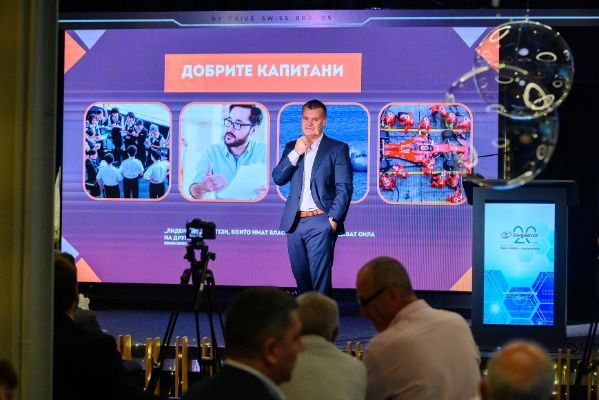
The true value lies in the ability to work with the people around you, to adapt to changes, and to accept the unexpected calmly!
Introduce yourself in a few words..
My name is Mario Bakalov, 45 years old – a pilot, motivator, and a person who loves challenges. For more than two decades, I have flown and worked in a team with people from all over the world. I believe in calmness under pressure, good communication, and leaving a positive mark behind.
How would you describe your career in a few words?
I started my training at the Lufthansa pilot academy in Bremen and in Arizona, USA. My first years in the air were as a first officer on the Airbus A320 across Europe, then I transitioned to long-haul flights with the Airbus A330 and A340, and then I fulfilled a dream – to fly the Airbus A380, the largest passenger aircraft in the world. During the pandemic, the A380 was grounded, and since then I have flown as a captain on the Airbus A320, again across Europe.
Over the years, I was also a long-time instructor at the pilot academy focusing on the human factor, and today I am part of the rapid response teams after aviation incidents.
Over time, I discovered that the experience from the cockpit can inspire on the ground – in training rooms, in front of teams, and in front of an audience. Today, I combine aviation with motivational lectures and seminars, where the leading principles are safety, teamwork, and trust. For two years, I have also been organizing online seminars for fear of flying.
What was the most important choice that shaped your path?
The most important choice was to embark on the path of aviation – not just as a profession, but as a way of thinking and living. From the moment I entered the Lufthansa pilot academy, I realized that this is an environment where responsibility, team spirit, and constant readiness to learn are not just requirements, but the foundation for everything. This choice not only took me to thousands of meters in altitude but also taught me to maintain calm under pressure and to make decisions that provide security for others.
What would you like to have known at the beginning of your career that no one told you?
Interesting question!
I wish someone had told me that in aviation – just like in life – success is not measured only by hours in the air or by the types of aircraft you fly. The true value lies in the ability to work with the people around you, to adapt to changes, and to accept the unexpected calmly. No one tells you how often you will need to learn anew, change habits, and step outside your comfort zone – and that this is actually the greatest reward.
How can one understand which profession is suitable for them?
There is no universal formula, but I believe that the right profession is one in which you find meaning and wake up eager to do what you do. At the beginning, it is important to try, to expose yourself to different challenges, and to see what makes you “forget about time.” Unlike before, today we live in a dynamic time where we have the privilege to adapt and change our profession several times throughout our lives – and this is a strength, not a weakness. The most important thing is to remain open to new opportunities, to learn continuously, and to trust your own values as a compass.
Which skills do you think will be key in the next 10 years?
In the next 10 years, interpersonal skills – so-called soft skills or interpersonal competences – will be key. Most research shows that out of the eight most important skills for the future, seven are not technical but human. These are communication, teamwork, emotional intelligence, adaptability, critical thinking, leadership, and empathy. They are also what distinguishes us from artificial intelligence.
I see it every day in the cockpit – good pilots are not just those with perfect technique, but those who can respond most wisely to unexpected situations, come up with creative solutions, and work in a team to ensure the best outcome. The skills to think, communicate, and collaborate will be the currency of the future.
How to build a network of useful contacts without appearing interested?
By starting with genuine interest in people, not in the benefit from them – to listen, to share, and to help without expecting anything in return. This way, contacts turn into relationships, not transactions.
What is the biggest mistake you have made in your career, and what did you learn from it?
Although I have invested a lot in my knowledge and qualifications, I now see that I could have invested even more – especially in the early years of my career when the pace of learning is the fastest. Perhaps my biggest mistake was that at the beginning I thought more about the current job than about my long-term development. Today I know that every skill, every additional course, and every new piece of knowledge pays back many times over – not only as professional success but also as confidence and readiness to face challenges.
How to recognize a toxic work environment and when is it time to leave?
In my work environment, I have not encountered a toxic atmosphere. In aviation, people are usually highly motivated because for many of them flying is a childhood dream – a calling, not just a job. But in general, a toxic environment is recognized by the lack of trust, support, and respect among people. If the feeling that you are not in the right place becomes stronger than your desire to develop there – then it is time to leave.
What would you do differently if you could start over?
If I could start over, I would invest even more time and effort in the first years – in education, in building contacts, and in developing skills beyond purely technical ones. I would dare more often to step outside my comfort zone because that is where the greatest opportunities come from.
How to maintain our motivation in times of stagnation?
By reminding ourselves of the “why” – the reason we started. In times of stagnation, it is important to return to the meaning, to seek small achievements every day, and to surround ourselves with people who inspire us. This keeps motivation alive until the next big leap forward.
How to achieve a balance between professional and personal life?
In aviation, the schedule is dynamic, so I learned to value the time outside the cockpit and to be fully present in it. The key is to set clear boundaries and not to forget that personal life requires at least the same attention and dedication as professional life. In my opinion, many people do not realize that to be good and energetic in the profession, we need to take care of ourselves in personal life – to give ourselves time to rest, to maintain a good quality of life, and to build healthy relationships with loved ones and family. When this is in place, work goes better too.
When is it time to change our career, not just the job?
In my opinion, it is time to change our career when even changing jobs does not restore our interest and energy, and when we feel that our values no longer align with what we do. If there is a lack of meaning and the prospect of developing in the same direction does not inspire you, then it is time to seek a new path – one that makes you wake up eager again.
If you had to give just one piece of advice to people seeking success, what would it be?
To clearly define their “why” – the reason they want to achieve success. When you know why you are doing it, you will find both the strength and the perseverance to get through the tough times. Success is rarely the result of one big leap – it is more often the result of many small, consistent steps in the right direction.
What is your definition of a “successful career”?
A successful career is one in which you work with people you respect and inspire each other, and do something meaningful – then success and satisfaction come naturally.