Be in a conscious dialogue with yourself about what you want and why you want it
· Lyuba Popova
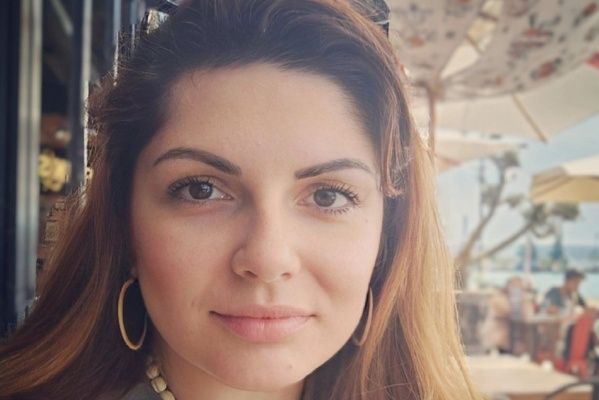
Competence opens doors, but good professional contacts help you pass through them with ease!
Introduce yourself in a few
sentences..
My
name is Lyuba Popova, general counsel of the companies in the group of “The
Payments Group” Limited - based in
Germany holding, under whose management several different business
areas fall, such as issuing electronic money under a license from the Maltese
financial authority (Malta
Financial Services Authority),
providing embedded electronic solutions for instant international processing
of payments (international embedded finance solutions), issuing
electronic vouchers, consulting services in various IT areas, marketplace
and others. The main jurisdictions in which we operate are Germany, Malta with
passporting of the license in the EU and the United Kingdom.
I
also have a few personal business ventures that are of lower intensity, but
still have relatively successful development over the last 5 years.
The most distinctive is “Abiz Solutions and Services” Ltd, which is part of a global
network for providing outsourced consulting services in the field of
IT contract management and other administrative services, with partnerships in
the USA and India. It’s interesting, but there is still room for improvement :)
What did you dream of becoming in your childhood?
I
loved to write, sometimes I did it better and I have won several local and
national literary awards - for poetry, for essays, including on
journalistic topics. In this regard, I really wanted to become a journalist, but
pragmatism prevailed over the dream. It was also important that there was not too much mathematics, because
I have not liked it since early childhood.
At what age did you earn your first money? Tell us
about an interesting incident?
In
school and at university, I always had scholarships - although not large amounts,
they give you the feeling that your efforts have a monetary expression, and this helps to
form an early attitude towards the future, I suppose. Additionally, I wrote for various
children's newspapers and had fees from there - I remember they were monthly
and I managed to ease my mother's burden with some of my childhood whims that I could
afford myself. Obviously, it wasn't something phenomenal in terms of amount, but still it
gave me a sense of freedom and success. I also worked during the summers, with my favorite
summer job being at the Archaeological Museum in my hometown - Varna, where for an entire
summer I was a curator of an exhibition dedicated to clothes, objects, and traditions from
the First, Second, and Third Bulgarian kingdoms. I have an affinity for history and
this activity particularly appeals to me.
What are the main factors and examples that shape us
as individuals at an early age and form our interests? What is your
recipe for curiosity, sources and wells of information and inspiration in
this stage of our human development?
At an early age, it is often
a combination of the family environment, social surroundings, and access to new
experiences. Our family gives us the first values and behavior models that
serve as an internal compass. Friends, teachers, and even random encounters with inspiring
individuals broaden our horizons. It is also important how much our environment allows us to
experiment, make mistakes, and seek our own answers.
Nowadays,
I think we have become very information “polluted” from too much information, and part of
survival - online and offline - is learning to filter the “empty” noise from serious news. I am
terribly annoyed by the endless media manipulations that flood us, and it took me some time
until I found the right channels and media outlets that nourish my soul and consciousness,
rather than robbing and suppressing them. I follow a few youtube channels and podcasts, whose topics revolve around history, psychology, finance,
and healthy living. I am a patron of some of them because I like the content and see
meaning in supporting their creators. I also read a lot of
fiction, but I have less and less time for it.
Has there been any significant change in your perceptions in more mature age about what motivates you to do or not do something?
Rather
yes. I was born in the 80s and I am a product of an upbringing that repeated to us that
money doesn’t matter and that it’s important “what people will say,” while the rest - as
it comes. “People” will always find something to say, and the less they know you,
the more decisive their opinion about you is. If in mature age, nowadays,
you follow this approach, you are simply doomed. One of the first lessons I
learned when I started working was that if you don’t fight for what you want,
the chance of getting it is very low, because no one will come and
say: “here’s a X percent raise because you are a great asset and deserve it.” In other words, it’s not impossible, but it’s becoming increasingly rare.
Also, at a younger
age, the main drivers were curiosity and the desire to prove myself – both to
myself and to others. Over the years, priorities have shifted towards sustainable and
meaningful results for me, towards projects and causes that bring me long-term
value and are in sync with my values. Today, I am less driven by external
approval and more by internal conviction that a given action is worth
the effort and time. I learned that “no” is just as important a word as “yes,” and
that refusing the unessential opens up space for the truly significant.
Whose decision was it where to pursue higher education and what to study? Was that decision correct, viewed from today’s perspective?
It was
entirely mine and I believe it was the right choice for me. Sometimes the current issues of
the profession have weighed on me, but in the end, I am satisfied with both my development
and the recognition I have received for the results achieved. I would say
that in this direction my personal goals are fulfilled and that makes me happy.
Share with us more about your interests, knowledge, skills, and
hobbies?
I
have diverse interests, I don’t consider myself an expert in them, but I believe I have
a relatively good general culture. However, there is always room for development.
Psychology,
and more specifically criminal psychology, is very interesting to me. I have never wanted
to engage in criminal law, but I have been curious to understand what
drives people to commit actions that are incomprehensible to me.
Being from Varna,
my family is closely connected with shipping, maritime transport, and
visiting new countries, and I believe that is where my desire for
travel and (light) tourist adventure comes from. The sea has always been a part of my
life, which is a prerequisite for my favorite hobby - sailing.
To be honest, I don’t have much time for
it lately, but whenever possible, I set aside a few days for a yacht island tour. Last time I
visited the Azores in Portugal and that was my first sailing in the open ocean with an 11-meter yacht.
It was an interesting experience.
I love
photography as well, but I’m not sure if it’s a result of my travels or if it provokes them.
Would you change your profession today and which fields of
activity capture your interest?
Rather
not, because I am still reaping the fruits of the work I have put in over the years. The good thing about
law is that you can apply your knowledge in various fields and in this
way stay engaged and intellectually curious. A good lawyer must not only
know the legal framework but also know how to best relate it to
the industry they are advising. Once you delve into a subject, you realize how
many things there are to discover and consider, and that personally motivates me a lot.
It is said that personal branding is everything that people say
about you when you are not in the same room with them. What would you like to hear
today?
That I am an honest person whom
people can trust, and that I always give my best. That I approach my work with professionalism
and attention to detail, but also with humanity and empathy.
In reality,
I am convinced that there will also be negative comments. As lawyers, we often have to
present unwanted information or be the ones to point out where to put the brakes, so there are no
serious consequences or undue risk. Unfortunately,
when ego drives motivation, reason sometimes cannot calmly accept
information that does not meet expectations, and this leads to friction. So,
no matter how hard I have tried over the years, I have still upset someone at some point, even if
that was not my intention. I have no problem living with that; time always,
always shows what people are made of, and sometimes it is necessary to let it
resolve things.
Emotional intelligence, adaptability, and flexibility, as well as our soft skills, are key conditions for success in recent years. How do you cope with the daily challenges of life to stay in good shape and mood?
Work
is not everything, and the fuller your life is, the harder it is to
succumb to negativity at work. I am an introvert, but I try to
create pleasant feelings and fullness outside the computer - friends,
experiences, interests. Everything that is not related to law, to remind me
that there is life outside of urgent deadlines, projects, and the corporate
environment.
I take
walks with my dog, listen to podcasts on various topics, and recently I have also taken up
gardening. I like to see life thriving around me and I try to make an effort to nourish it.
What are the most important conclusions you have drawn so far about
maintaining proper communication considering the different characters of the people you meet daily – colleagues,
friends, close ones?
The most important conclusion for me
is that there is no universal approach – people perceive and react differently,
so it is crucial to first listen and understand what lies behind their words
and actions. I try to adapt my communication style according to the person opposite me –
with some, a more structured and specific communication is needed, while with others –
a more informal and emotional one.
The second conclusion is that respect and active listening open doors even in
difficult conversations. When people feel heard and understood, they are more likely
to share and seek solutions together.
And finally, I realized
that it is important to leave room for feedback and not to see differences as
obstacles, but as a source of new ideas and perspectives.
What do you think about money? What is its influence on your life? What is your advice to people who often ask themselves questions related to money and how sufficient it is?
I see money as a
tool, not as an end in itself. It is important because it gives us freedom and
peace – conditions without which it is difficult to develop as individuals, to
explore our potential and to make decisions from a position of choice, not of
survival. Over time, I realized that its greatest influence is in how much it
allows us to live in harmony with our values.
There will always be someone who has more – probably even Jeff Bezos has
moments when he feels inadequate. That’s why it’s important to know where to
set the healthy boundary and not to become slaves to constant comparison
and the pursuit of more and more.
My advice to people who often wonder how “sufficient” they are is first
to determine what a valuable and fulfilling life means to them. When we have clarity about
our goals and priorities, it becomes easier to assess what resources we need
and how to use them wisely. Money makes sense when it works for us, not
when we work only for it.
What is the most valuable career advice you would give to people?
Perhaps to be in a
conscious dialogue with yourself about what you want and why you want it. Not every
opportunity is worth the time, effort, and sacrifices just because it is prestigious or
profitable – we should choose those that are in harmony with our values and
long-term vision, and that will not put us in unbearable moral dilemmas
or compromises with our conscience.
The second part of
this advice is to learn to invest in your skills and relationships –
competence opens doors, but good professional contacts help you pass through them with ease. And finally – accept change as a constant companion
in your career, not as a threat, and you will be able to adapt with confidence.