Germany taught me that early preparation is 50 percent of future success
· Natali Pasheva
Germans love to say that 'the devil is in the details'!
Introduce yourself in a few sentences. What does your work as daily commitments consist of?
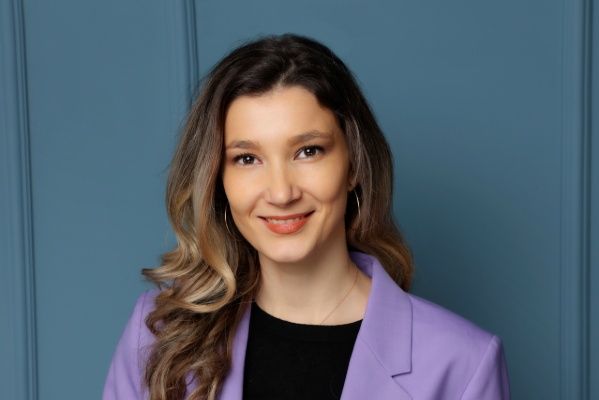
Natali Pasheva, journalist. Graduated with a bachelor's degree from the Faculty of Journalism and Mass Communication at Sofia University 'St. Kliment Ohridski', and then a master's degree in 'media culture' in Germany. Her journalism career began in Bulgaria, at bTV as a reporter. Over the last ten years, she has reported for various television stations as a correspondent from Germany, initially for bTV, and currently for Nova Television. She writes articles from Germany and for 'Dnevnik.' She specialized in German ntv.
In which country and city do you currently live and how did you end up there?
I have been living in Germany for ten years. The last seven in Düsseldorf, but you can often find me on a train swaying on the tracks to Berlin. My desire to be with my husband brought me to Germany, where we created a home, and over the years I built a workplace that, although based so many kilometers from my home country, has created a strong connection with Bulgaria due to the nature of my work as a correspondent for Bulgarian media.
What were the biggest challenges you faced at the beginning of your stay?
The first adventure was the language barrier. I left for Germany without knowing the German language. Immediately after unpacking my suitcases, I started an intensive course. I studied German for five hours every day, and after classes, I had homework. Thus, five days a week for 11 months. After that, I took a language exam that opened the door for me to study my desired specialty in German. Besides the language, at first, I found it difficult with the mentality of the people among whom I was to spend the next decade of my life (the assessment is as of today, and the counting continues). Thanks to my husband, who was ten years ahead of me in Germany, I did not face bureaucratic difficulties, which I know many people encounter.
How did you overcome the language barrier (if there was one)?
With many hours of reading, writing, listening to children's stories (I recommend them to anyone learning a new language, no matter what) and news. I remember that the entire window in front of the sink was covered with sticky notes with different words, so that while washing the dishes, I could look at them and memorize them. As the Germans love to say, 'the devil is in the details,' and I think that in learning a new language, small hints help a lot.
What resources or networks (local communities, colleagues, organizations) helped you adapt?
Mostly my husband, who has been a strong support for me in moments when I found it difficult. His help has been more than sufficient for me, and I never had to seek external support outside the home.
What are the main differences between the work culture in your current country and that in Bulgaria?
The structure of the organization. Over the year, Germany taught me that early preparation is 50 percent of future success. In this country, I learned that there are no important and unimportant tasks; even under the shortest note is my name, and I fight every day for the trust of the people. In Germany, I learned how important calmness and a clear mind are to be good at what you do. It seems to me that in Bulgaria we often underestimate this.
What values and practices in the workplace impressed you the most?
To answer this question, a memory comes to my mind. Years ago, I was writing an article about Grigor Dimitrov's path to professional tennis. The text was for a German media outlet. I had to submit it by the end of my workday, my shift ended at 5:00 PM. I managed to finish at 5:40 PM. The editor to whom I submitted it noticed that I had worked 40 minutes longer and told me the next day to come in 40 minutes later. The care for colleagues and especially for oneself continues to impress me in this country to this day.
Have there been situations where cultural differences have challenged you?
Never. On the contrary, they have always brought me joy and laughter. Rarely sadness, but it has happened. The last time was when I was communicating with a woman in whose culture women do not have rights equal to those of men.
How does finding a job differ in your current country compared to your homeland?
I do not believe that finding a job differs anywhere in the world. If you want something and are persistent in achieving it, sooner or later it will happen, regardless of the scale.
Did you have to go through any additional qualification courses?
I did not have to.
Have you encountered prejudices or obstacles due to your foreign origin?
Never. On the contrary. In the place where I live, people are curious. They approach with the desire to learn more about every culture.
What would you advise people who want to take a similar step?
Not to postpone, but just to do it. Living in another country is an experience that can only help, even if a person decides to return to their homeland. The world is big, and friendships and new opportunities are lurking everywhere.
If you could go back, would you choose the same path?
Yes, definitely.
What do you miss most from your homeland in professional and personal terms?
My loved ones and Vitosha.
Have you considered returning and under what conditions would you do it?
At this stage, I see my path abroad.
What do you think about money? What is its influence on your life?
Money is the reward for a job well done. If you work hard, I see them as a natural part of the journey.
What is your advice to people who often ask themselves questions related to money and how sufficient they are?
Money is a consequence of labor. You cannot have the result before you have performed the action. Better ask yourself how to be among the best at what I do. Money will find you afterwards.