People connect more with personal stories than with dry facts
· Teodora Petrova
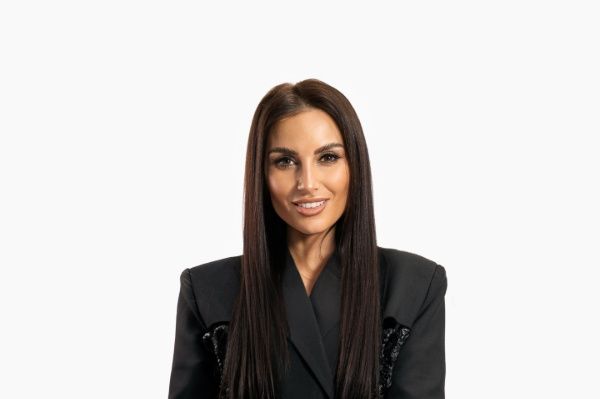
“What do I do better or differently from others and why is this important to people?”
Introduce yourself in a few words.
My name is Teodora Petrova and I am a PR and communication leader at the Ocean
Investments holding. I believe that good ideas should not just sound good, but
reach people and leave a mark. In my work, I often balance between
developing strategies, implementing campaigns, and organizing events – between
the big picture and the small details that make the result truly
impactful. I love the dynamics and believe that the best stories are born
when creativity meets discipline and good organization. In the holding, this is part of our DNA – to turn bold ideas into
reality and to do it in a way that leaves a mark.
How would you define a personal brand and why is it
so important today?
A personal brand is the sum of how others perceive us and what our name leaves
behind – reputation, value, energy. In a world of
information overload, it is the filter that distinguishes us and creates trust.
How did you start building your personal brand?
What motivates you?
To be honest, I never aimed to build my personal brand in the classical sense. I
have always been more focused on helping businesses and other brands grow – to
find their voice and reach the people who matter to them. But over time, I
realized that even when you work “behind the scenes,” people start to associate
your name with certain qualities – trust, expertise, humanity. Thus, my personal brand builds over time
naturally, as a reflection of what I do for others. My motivation
has always been one – to create value and leave a mark through my work.
What are the most important elements of a successful personal
brand?
From my personal experience, working with different companies and their teams, I see that
a successful personal brand is primarily based on three things: authenticity,
consistency, and value. Authenticity – knowing who you are, what you stand for, and
what you want to be recognized for. Value – giving more than
you take, and showing your expertise through real benefits for others. And
consistency – because trust is not a one-time act; it is built over
time, from the way you stand in the space and present yourself.
How do we find our niche and unique value?
By asking ourselves the question: “What do I do better or differently from others and
why is this important to people?”
Unique value lies at the intersection of what we are good at and love to
do, and what others truly need. The niche is not invented – it
is born when we gather our strengths, values, and the specific problem we solve for others.
Should the personal brand be built around
personality or expertise?
Both are equally important. Expertise gives weight, personality – emotion. People
trust professionals, but follow personalities.
What first steps would you recommend to someone
who is just starting?
The first steps always start with clarity. The most important thing is for a person to clarify what
he wants to communicate – what his main messages are and what value he wants to bring
to his audience. Then choose one or two platforms where they really
are, instead of spreading themselves thin across many channels. And the most reliable way to
build a presence is through small but consistent actions – regular
posts, storytelling, sharing ideas and experiences.
What platforms are most suitable for developing a
personal brand today?
The choice of platform depends on three key factors: where your audience is,
what type of content you create, and what goals you pursue. However, the most important thing is not
the platform, but the strategic presence where your target
audience is. If they are in the corporate world with the aim of professional positioning –
LinkedIn is the right place. If they are in more creative, lifestyle, or
entrepreneurial environments – Instagram and TikTok are stronger. If the goal is to build
a lasting authority through storytelling and video content – YouTube is the better
choice.
What role does authenticity play in a personal brand
and how do we maintain it?
Authenticity is the core of a strong personal brand. It is what makes
messages credible, and people willing to trust. We maintain it when
we are consistent – in values, actions, and the way we communicate.
And when we have the courage to speak openly not only about our successes but also about
the lessons that come with mistakes.
How do we create content that engages and
builds trust?
By combining knowledge and personal story. People do not remember facts; they remember feelings.
For me, the strongest content is that which combines expertise with personal
context. In my work with campaigns and events, I have seen how people react not
so much to the “perfect presentation,” but to the stories behind the scenes – what was
the challenge, what decisions we made, what lessons we learned,
what emotion we created for them. People do not seek ideal scenarios, but authentic
stories in which they can recognize themselves. Content earns trust when it shows not only the final result but also the journey to get there.
What are the most common mistakes people make
when building a personal brand?
To copy others' models instead of finding their own style. To seek quick
results while forgetting that a personal brand is a marathon, not a sprint.
How do we deal with negative comments and
criticism?
By first reminding ourselves that criticism goes hand in hand with visibility. If it makes
sense and is constructive – we listen, learn, and strive to improve. If
it is just noise or hate – we let it fade away.
How do we avoid burnout when
investing a lot of effort into our personal brand?
By loving ourselves and not forgetting that behind the screen stands a person – it is us.
To take care of ourselves by giving ourselves time to rest, digital
detox, and an “offline” life. It is important to have moments of silence in which to stop
the constant flow of content, likes, and engagements.
How can a strong personal brand lead to
more opportunities (jobs, partnerships, clients)?
A strong personal brand is like a business card that works while we sleep. It creates
trust in advance – people come to us with the feeling that they know us and
that they can rely on us. This saves time, opens doors, makes dialogue
easier, and often leads to opportunities that we would otherwise wait for years.
What are the best ways to monetize a
personal brand?
The most natural ways are through consultations, training, creating products
or partnerships. But the key is one – value. When the brand brings real
benefit and solves problems, monetization comes organically. Then there is no need to
convince – people seek our product or service on their own.
When is the right time to start offering
paid services or products?
The right moment comes when you already feel that people are starting to seek
more from you – they write to you for advice, want specific help, come back to
you for opinions, seek your product, or share their positive feedback.
This is a sign that your value is already recognized and can naturally grow into a
paid service or product. I would say – start when you already have the first
“yes” from people, even without asking for it. This is the moment when
the brand building and shared content have done their job –
it has built trust and connection. From there on, it is not a matter of courage, but of
consistent building.
How do we maintain sustainability and long-term
growth of the personal brand?
With persistence, flexibility, and a willingness to learn. The world around us is changing
very quickly – technologies, platforms, people's interests. A personal brand
survives and grows when it is in motion, when it knows how to adapt, but without losing its essence.
What habits and discipline are needed for
building authority?
Persistence – to publish, share, tell stories, and be active.
Audience – to build and maintain people who are there for what we
offer and its value. And most importantly – engagement. True
authority is not in the number of publications, but in the ability to listen, to engage in dialogue,
and to show that there is a person behind the screen.
Which personalities with a successful personal brand inspire you and why?
I am inspired by those personalities who combine success with humanity – people who
have influence but remain accessible, who can inspire but also listen
to others. Because the strength of an authentic brand is not in the number of followers, but in
the ability to create connections and trust.
What three specific things can people do today to improve their personal brand?
1.
Look at your LinkedIn profile as a business card.
The photo, title, and first lines are the first impression – make sure they
speak about you in the best way and periodically update them.
2.
Storytelling. Tell a story. Share in
your network an experience or lesson. People connect more with personal stories
than with dry facts.
3.
Provide value before asking for attention.
This starts with building authority.