Success is measured by the recognition and respect from the people you work with
· Martin Petrov
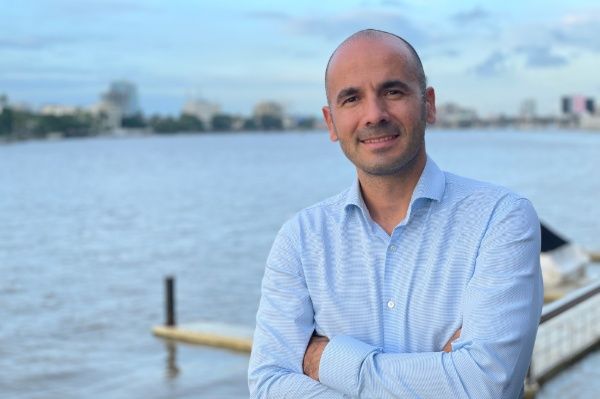
Unfortunately, in Bulgaria, we often judge success by external material signs, while under the packaging, there is nothing worthy of respect!
Introduce
yourself in a few words..
I didn't have much luck in
football, but thanks to the lessons from it and a bit of luck, I had luck in
life :) Joking aside. For 19 years, I have been responsible for the business development of
the media group SPORTAL, and for a few years now for that in 8 countries in Ringier
Sports Media Group (RSMG), of which Sportal became a part. Over the years, I had
the fortune to meet people with a similar value system, entrepreneurial spirit, and
together we created many successful projects such as digital, creative, and BTL agencies, e-commerce solutions, etc. To this day, I love my job and every
day I go to the office with enthusiasm. I believe, and through Sportal / RSMG we prove
it daily, that we create products and possess expertise that far
exceeds the scale of our market. Although we are now part of a multinational team
and learn from each other every day, I am proud that a large part of the innovations
come precisely from here.
How would you
describe your career in a few words?
In one word -
adventure. I started in the company without much thought. A 5-minute conversation in
a bar with Stilyan Shishkov. I didn't know exactly what I was getting into, but I felt his ambition
and trusted him. A combination of inner intuition and a bit of courage. Back then,
digital was a scary exotic, there was no iPhone, no apps. Can you imagine such an environment now? I had endured a rather painful (unpaid)
internship at a bank and was eager to invest my creative potential in something. From the first
day, I clicked with the people who were already there and were solving existential
problems every day. A classic start-up, slightly ahead of its time. After
several years, I learned from Stilyan how “fragile” the beginning was. He didn't want to
share it to avoid scaring me :) To this day, many of the colleagues from the first
years are still with me, and I am very proud of that. Many of the knowledge accumulated in
the media environment we capitalized in other businesses like software development,
agencies, etc. In the media industry, especially digital, you mainly move in
the left lane at 200km/h without brakes and quickly accumulate experience. Every small
change in the ecosystem (like a change in the algorithm in search engines or
social media) can end you in no time. We quickly realized that this
knowledge makes us super-competitive in other fields. We had a few bitter
pills over the years, but we learned quite quickly from our mistakes. A key moment
for us is that there has never been any “sugarcoating” of unpleasant situations (the so-called
“sugarcoating”).
What was the
most important choice that shaped your path?
If we talk about
specific moments, the most important was my wrong choice - to understand what is
not for me. Before I made a mistake, the father of my roommate from university tried
to give me advice, but I didn't listen to him. It's different to drink the bitter cup :)
After that, the right choice was intuitive. Everything else is a series of
lesser or more significant daily decisions, on which I relied on
my value system and the lessons passed on by my mother and father. It's easy :)
When you are true to yourself and make a mistake, you don't regret it. I can look every
single person I have ever worked with in the eye.
What would you
like to know at the beginning of your career that no one told you?
That there is
a fundamental difference between being informed and being wise. Information is to
know that the tomato is a fruit, while wisdom is not to put it in the fruit salad :))
Sometimes we deceive ourselves that when we are informed, we are automatically
competent.
How can a person
understand which profession is suitable for them?
Not to be
afraid to try new things. In my opinion, internships from an early age are a great
way to calibrate your expectations. And of course, to answer the
question “where is my passion”. When work and passion find each other, people
stop just “going” to work and life is better.
Which skills
according to you will be key in the next 10 years?
Social
skills and critical thinking that artificial intelligence cannot replicate.
There are two fundamental trends that make me believe in this: on one
hand, addiction to devices makes people increasingly asocial in
real life, on the other hand, artificial intelligence is developing at the speed of
light. Since the 90s when IBM's supercomputer defeated Garry Kasparov in
chess, it was clear that with mathematics and the exact sciences, we will always fight the most
for second place.
How to
build a network of useful contacts without appearing interested?
By appearing
interested. We shouldn't hide it. On the contrary, we should
show genuine interest in the people we meet along the way. Also, always
strive to be helpful without expecting anything in return. Relationships with people
are a two-way street.
What is the
biggest mistake you have made in your career, and what did you learn from
it?
To trust too much. A lesson: not to be afraid to trust again. We should not
close ourselves off just because someone has abused our trust. Learn
fast and move on.
How to
recognize a toxic work environment and when is it time to leave?
I have never
worked in such an environment and I really don't know. There is a saying from the movie Ronin with
Robert De Niro “if there is doubt, there is no doubt”. I think it is a good
compass.
What would you
do differently if you could start over?
This question
implies predestination. Rather nothing. Life is a series of left and right
turns that lead to where you are now. I wouldn't go back to change any
turn because the next ones might not line up that way :) Rather, I would pass on
my experience to my children. That is the second chance. I don't like to look back.
How to
maintain your motivation in times of stagnation?
This is perhaps
the most important lesson from sports that I have learned. Persistence and resilience. When
these become part of your character, it doesn't matter whether you are motivated or not - you have
a goal and you just follow it. This is true professionalism. Imagine a
figure skater or skier who prepares for the Olympics for 4 years. One slip
and you start a new 4-year cycle with completely empty hands. There is no HR to
whine to that you have lost 4 years of your life. It requires an iron mentality. In
business, it is the same. Very often there is no reward for second place. Many young talents
think they immediately deserve a lot because they work hard. Success comes with
persistence. Real Madrid also ran a lot, but lost 4:0 to PSG and left the
World Club Championship empty-handed with the ambition to try again.
How to
achieve a balance between professional and personal life?
Find
your passion.
If you had to give just one piece of advice to people seeking success, what would it be?
Do not
settle for “good enough”. Always think “how can I improve things”. Not
only at work but wherever you are, even when you enter a
café. This will unlock your creativity and raise your personal standards and
attitude towards work.
What is
your definition of a “successful career”?
Success is something
very subjective. For me, it is measured by the recognition and respect from the people you have touched in the process of working together. If I have been a small part of
their personal success - I would also be satisfied. If I have managed to change the fate
of some of them, for me that is the meaning of our life path, not only
professionally. Unfortunately, in Bulgaria, we often judge success by external
material signs, while under the packaging, there is nothing worthy of respect. This needs
to change. Our children need role models to build a successful
society.