The ability to "translate" your message into the language of the other makes communication successful
· Nadya Stanoeva
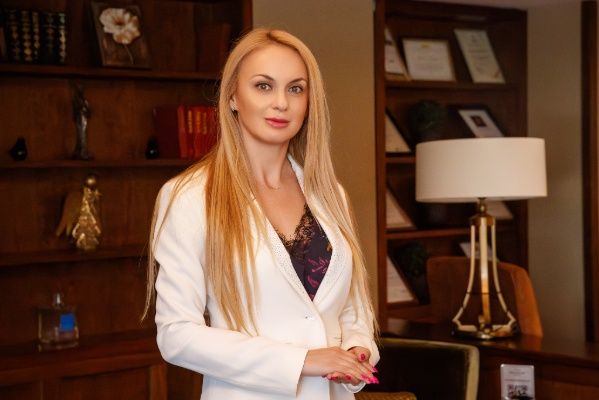
I believe that a person should develop not only a habit of reading but also the ability to sift through the valuable in the flow of information!
Introduce yourself in a few sentences..
My name is Nadia
Stanoeva and I am the owner of the company “Progresiva Group”, specialized in PR and
training in soft skills.
I also teach in the Department of “Marketing and Strategic Planning” at UNSS as a
visiting lecturer – a role that allows me to share my experience with future specialists in
communications and business.
I have been engaged in strategic PR for almost my entire
conscious life – it is not just a profession, but my calling. I believe that good PR is not
noise, but meaning – it starts from within, from the values and identity of the person or
organization, and reaches out through authentic messages and consistent actions.
I naturally transitioned to training in soft skills – after
realizing how many people face difficulties in communication, confidence, teamwork, and
self-presentation. That’s where I discovered another way to provide value and create positive
change.
As a natural continuation of my path and accumulated
experience, the idea to create “Progresiva Group” was born – a company through which I
could unite my two main professional strengths: strategic communications and human
development. Because I believe that sustainable success comes when the personal and
professional brand go hand in hand – authentic, organized, and with a clear direction.
What did you dream of becoming in your childhood?
Since I was 10, I dreamed of
becoming a lawyer -
I was sure I could convince anyone of my point of view and that no one could defeat me in an
argument. J My family often joked that I was “a lawyer by birth” because I always found
arguments and defended not only myself but also others.
Over time, I realized that
what truly attracts me is not the courtroom, but the power of words and communication. I
have great respect for words and strive not to waste them on empty talk. Communication is
not just an exchange of information, but an argument for building trust, for inspiring, and for
change.
Diplomacy and empathy are my strong
qualities – they guide me in every professional and life interaction. And although I am not a
lawyer by profession, in many ways I fulfilled my childhood dream – every day I use my skills
to defend ideas, build bridges between people, and create value through strategic
communication.
At what age did you earn your first
money? Tell us an interesting story?
At the age of 16, I earned my first
money as a radio host. The radio was not just a job – it
was my passion. Every show was an opportunity to express myself and connect with people in a
unique way. I poured my heart into what I did and did it with genuine pleasure.
I was not in a hurry to spend the money – for me, the moment
when I first felt the satisfaction of earning income on my own was more valuable. This
experience gave me a sense of freedom, independence, and inner strength.
Even then, I realized the power of personal branding – how
your voice, your style, your name start to be recognized. For the first time, I felt the
responsibility and power of being heard and remembered. These lessons and feelings laid the
foundation for the professional path I later chose – a path related to communication,
building trust, and creating meaningful content.
What are the main factors and examples that shape us as
individuals at an early age and form our interests? What is your recipe for curiosity,
sources and wells of information and inspiration at this stage of our human development?
From an early age, the strongest example for me was my
family – mainly my mother. She has always been there for me with support, advice, and that
personal example that does not impose but inspires. It is from her that I learned how
important it is to be consistent, compassionate, and driven.
Since childhood, I have admired successful people –
whether they are women or men – as long as they carry value with them and leave a mark. I
have always felt that I want to be part of some positive change, to create value, to help
with ideas, actions, or simply with kind words.
My curiosity about the world is another factor that has
shaped me and is still part of me today. I remember how at the beginning of the summer
vacation after first grade, I went to the city library and took 20 books. I wanted to read
everything, to know everything. And this thirst for knowledge remained. Today, I direct it
both towards my professional field – through the media monitoring I do daily as a PR
specialist – and towards my personal development. My interests are diverse, and the
information I consume daily comes from various sources – traditional media, podcasts,
specialized literature, professional networks.
As for social networks – I use them, but I approach them critically. I believe that a
person should develop not only a reading habit but also the ability to sift through the
valuable in the flow of information.
And the recipe for curiosity? Perhaps it is a combination of internal motivation, a
constant hunger for knowledge, and a sense that you can always become an even better
version of yourself.
Has there been any significant
change in your perceptions in more mature age regarding what motivates you to do or not do
something?
Over time, a person begins to look at motivation in a
different way. In more mature age, you understand how important patience and acceptance are –
both of people and circumstances. Today, my actions are guided not so much by momentary
impulse, but by whether something has value and meaning – for myself and for the people
around me. If that meaning is lacking, I prefer to refrain. For me, every action should be
justified and bring added value.
Whose decision was it where to pursue higher
education and what to study? Was this decision correct, viewed from today’s perspective?
The decision of what and where to study has always
been my personal choice. Every subsequent specialty I chose was dictated by my desire to
delve deeper into my knowledge and develop in the field of communications. Today, looking
back, I am convinced that I made the right choices because they provide me with a stable
foundation and confidence in my profession. And very soon I will take the final step in this
direction – defending my doctoral thesis, again in the field of communications.
Share more about your interests, knowledge,
skills, and hobbies?
My interests are quite diverse – from
communication in all its forms and directions, through topics like personal development,
spiritual growth, social activities, and support for vulnerable groups, to European
programs and politics. My knowledge and experience are also concentrated in these areas,
with my strengths in PR, management, soft skills training, management of European projects,
and organizing and moderating events.
As for hobbies, I am not one of those people with an
endless list, but I have a few true passions. I love to travel and discover new places, opera
is an inseparable part of my life, and I never miss an opportunity to immerse myself in its
atmosphere. I enjoy attending concerts, and I am glad that in recent years there have been
more and more opportunities for this in Bulgaria. I read a lot, most often classic literature,
and yoga is my way of finding balance and inner peace.
Would you change your profession today and which
areas of activity capture your interest?
I would not change my profession today because I
feel that I am in the right place – communications, training, and organizational activities
are the areas where I find meaning and satisfaction. They give me the opportunity to work
with people, to impart knowledge, and to build valuable projects. Of course, my interests are
broad and often intersect with topics like social causes, European projects, culture, and
education – but I see them more as a natural continuation of my main professional direction,
rather than a desire for change.
They say that personal branding is everything that
people say about you when you are not in the same room with them. What would you like to
hear today?
I would like people to say that I am a person they
can rely on – that I am consistent, fair, and genuinely engaged in what I do. That in my
work I bring value and seek meaning, and in personal relationships – humanity and
understanding. It would please me to know that I leave the impression of a person who can
inspire, connect people, and uphold values. That would be the best confirmation of my
personal brand.
Emotional intelligence, adaptability, and flexibility,
as well as our soft skills, are key conditions for success in recent years. How do you cope
with the daily challenges of life to stay in good shape and mood?
I would say that by nature I am a person in a
good mood – I believe that if we are angry and unfriendly, it will neither help us overcome
difficulties nor make our daily lives easier. Therefore, I strive to approach every situation
positively, to remember that after the rain, the sun always shines, and to keep following my
planned path. This gives me resilience and calmness, and good mood comes as a natural
result.
I believe that the key to dealing with challenges
today lies in emotional intelligence, adaptability, and flexibility. They allow you to see
change as an opportunity rather than a threat. In my work, I often emphasize these topics
during soft skills training because I believe that without skills like empathy, communication,
leadership, and teamwork, we cannot achieve sustainable success. These are the qualities that
help us not just to “survive” in a dynamic environment but to develop and grow along with it.
What are the most important conclusions you have
made so far about maintaining the right communication considering the different characters of
the people you meet daily – colleagues, friends, relatives?
Over the years, I have realized that one of the
most important rules in communication is to accept that people are different and everyone
expresses themselves in their own way. I try not to jump to hasty conclusions – if I face an
unfriendly person, I prefer to tell myself that the person probably has a difficult day,
rather than take it personally. For me, the key is adaptability – being able to adjust to the
situation and the person you are communicating with.
I believe that effective communication does not mean
talking more or louder, but finding the right approach to the other party. The ability to
“translate” your message into the language of the other is what makes communication
successful – whether it is about colleagues, friends, or relatives.
What do you think about money? What is their
influence on your life? What is your advice to people who often ask themselves questions
related to money and how sufficient they are?
The topic of sufficiency is multi-layered – for
every person, “sufficient” means something different. Hardly anyone would say that money
is not important – they are an integral part of our lives and in a sense represent the
material result of how well we do our job. Therefore, it is important for everyone to learn
to value their work and not underestimate its worth.
However, I believe that money in and of itself does
not bring happiness, but is a tool – they can provide freedom, security, and opportunities,
but cannot replace meaning, human relationships, and inner peace. My advice is: strive for
balance – work in a way that makes you feel satisfied and valued, but do not set money as
the only measure of success. True sufficiency comes when you know that what you have is in
harmony with what you truly need.
What is the most valuable career advice you would give to people?
The most valuable career advice I can
give is to never stop developing and challenging yourself.
The world is changing rapidly and those who continue to seek new knowledge and
skills will always have an advantage. However, it is important not to forget to take
some time for yourself, because it is the balance between professional development and
personal well-being that makes us more effective and helps us feel good in
our own skin. Curiosity, perseverance, and self-care are the keys to
sustainable success and satisfaction.