The Challenge of Leading a Software Company in Indonesia
· Evgeni Karakanovski
Indonesia - the country with 18,000 islands!
Hello and warm greetings from Jakarta. Here, just below the equator, it is between 29 and 30 degrees Celsius year-round, with the humidity of about 80% making the temperature feel like 38-40 degrees. The variety of food is incredible, with around 270 shopping centers just in Jakarta offering markets and all kinds of attractions for visitors, and the traffic even at night is worse than that in Istanbul.
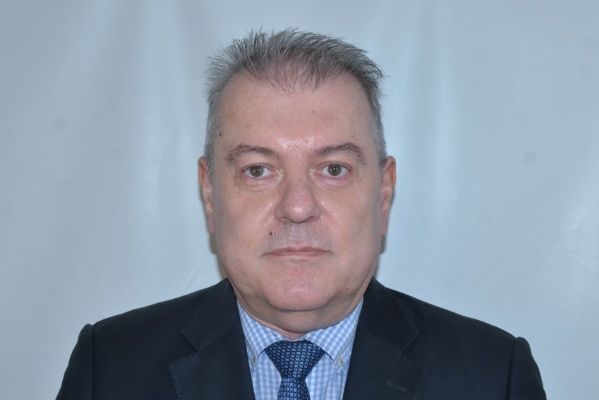
My name is Evgeni Karakanovski and I run a software company for products in the mobile technology sector. We were colleagues with the owner of the company when GSM networks were starting their development, and I have known him for about 30 years. In 2016, he called me with an invitation to join his team and help him, so I found myself here. An unfamiliar place, a different culture, an incomprehensible language, many new acquaintances, different food, it is difficult, but also interesting, and outside of the comfort zone. So I started to learn both the language and about the country and culture while working.
Indonesia is a huge country located on 18 thousand islands. It has a population of 270 million, making it the fourth largest country. Besides Bali, which everyone knows, its rich history is evidenced by many historical and cultural monuments, such as Borobudur, Prambanan, the Ubud Palace, the Old Town (Kota Tua), and the National Monument in Jakarta.
There are amazing places with incredible views on many islands, such as Kintamani, Raja Ampat, Lake Toba, Flores, the Gili Islands, Mount Bromo, and many others. For the exotic large flora and fauna, there are many destinations, such as Komodo Island, Safari Park, Tanjung Puting Park, Gunung Leuser Park, Way Kambas Park, etc.
Even before my arrival, I learned that valid residency documents in Indonesia are extremely important. At that time, the procedure was quite cumbersome, and after obtaining all the documents, the Indonesian embassy in Sofia issued a visa that had to be converted into a temporary work and residency permit here. Now, the submission of documents and obtaining a residency permit is done electronically and represents a great convenience. Of course, the work permit goes through a strictly defined procedure and approval from the relevant authorities. On the very first day, we discovered that there are people who speak English, but they are not many. It often happens that you encounter someone who does not understand a foreign language. In Indonesia, there are over 300 languages and dialects, which complicates communication, so after Indonesia's independence, Bahasa Indonesia (language) was created, and in the 1970s, the alphabet for it was introduced based on the Malay language. So everyone has learned and speaks this language, and I also enrolled in beginner lessons and learned to talk about everyday things. I remember that on the first weekend in Jakarta, I took a taxi whose driver did not speak any other language, and after we drove around the city a bit more, I realized that I would need to speak this language. Another interesting new thing was when I started looking for an apartment to rent, as here rental contracts are for a minimum of 1 year in advance, and the fee is paid all at once or in two installments according to the agreed schedule in the contract. I was struck by the fact that unlike the Chinese, Indonesians do not like bargaining and very often do not wish to reduce the requested fee even if the apartment will remain unoccupied for some time.
Regarding the work environment, there is a clear hierarchy everywhere here with a strong emphasis on respect for authority and seniority. Decision-making is usually top-down, and employees are expected to show respect to their superiors. The local culture is collectivism, with a strong sense of community and mutual support among colleagues. However, this does not always contribute to results, as problems may not be reported but simply hidden. In their communication, Indonesians strive to be always indirect, polite, and focused on maintaining harmony. Open confrontation and direct criticism are almost always avoided to preserve reputation and relationships. Some value punctuality, but in general, it is a flexible concept and is often overlooked. Very often this is imposed due to the huge traffic, which makes travel time to a meeting unpredictable. In my first days here, I was always interested to hear that meetings for the day should always be held in one part of the city, which I confirmed myself. Another discovery was that many Indonesians do not understand project management and timely task execution within a given deadline. This took me quite a while to implement project management in the company. Maintaining professionalism is important, with employees expected to be respectful, helpful, and to avoid gossip or negative behavior. Since Indonesia is a diverse country with a predominantly Muslim population, religious practices and rituals can affect work schedules and interactions among employees. So to highlight the most important aspects of the work culture here, I would point out collectivism and group harmony, respect for and adherence to hierarchy, and personal relationships and friendships.
I recommend that those who intend to come to Indonesia for a longer time or to work consider training and seminars on work culture and peculiarities. This will help them a lot in communication and in executing assigned tasks and achieving the goals set before them. For example, such a peculiarity is always responding “yes, sir” to a boss or superior during a conversation and task assignment. This response can create quite a few problems, as for us it is accepted that after a positive response, task execution and a report on the execution or a report on encountered difficulties should follow. But here, you will rather need to seek out the colleague to whom you assigned the task, to ask him if he has completed it or for its status. In many cases, he will not have completed anything if he did not understand the task or cannot handle it. I keep a task diary for my colleagues and talk to them often to understand if they have started the tasks and how far they are in their execution.
What I miss from Bulgaria are mainly the work contacts and friends with whom we achieved many things together. After 30 years of experience, I have quite a few people whom I believe we will work together again and achieve goals that are very advanced for their time. I wish to feel the thrill of working again with at least some of them as we did years ago. I never thought I would stay here forever, and I know that the day will come for me to return back. Two years ago, I started making plans for my return, but unfortunately, things happened that currently make me stay in Indonesia. Still, the thought of returning is alive and will happen one beautiful day. For now, I wish everyone to visit Indonesia to get acquainted with the local cultures and spend a few wonderful days in some of the many wonderful corners here. See you soon.