The cornerstones in my life are - family, friends, work, sports, and hobbies
· Dimitar Naydenov
There will always be someone with a higher salary, a more expensive vacation, or a more expensive bicycle than yours!
Introduce
yourself in a few sentences..
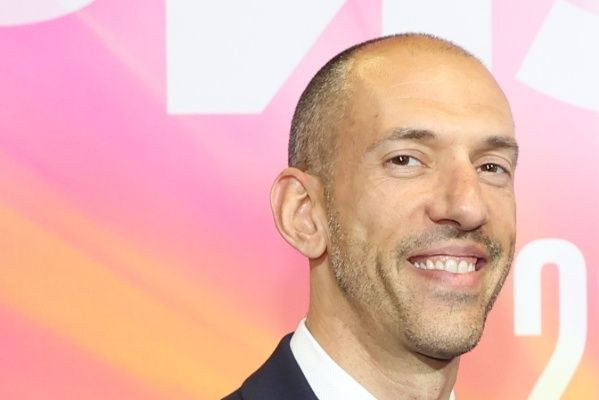
I am Dimitar Naydenov, manager of "Corporate Affairs"
at JTI Bulgaria,
the company for our country of the leading global manufacturer of tobacco and
nicotine products JTI. I am responsible
for managing the company's relationships with the operational and regulatory
environment, its image and communication, as well as for investments in local communities.
A team of two people takes care of these topics in Bulgaria. I am a fan of my family and
friends, training, football, cycling, photography, psychology, and
of course, what I work on.
What did you dream of becoming in your childhood?
I spent my summers at my grandmother's in a very charming town in
Southern Bulgaria. The fire station was right across from the house, and I was constantly
there watching the trucks, the equipment, and everything else. I found
the work of these people very exciting and noble; I wanted to be like them.
This, of course, is not unique to a little boy – wanting to operate
a big machine, to do something interesting, and to serve some cause.
At what age did you earn your first money? Tell us
about an interesting incident?
I earned my first 50 BGN as an intern in a small
start-up company during my first year at university. From the perspective
of today's youth, this sentence sounds ridiculous, but we are talking about a different
period of economic development in our country, and we must not forget
how much things have changed in the last 20 years. I felt great with my first earned money – more capable, more independent, a bit more grown-up, etc.
The feeling is incredible, and I would advise everyone to enjoy it because this is
the beginning of a new period in life, not just because of the money.
What are the main factors and examples that shape us
as individuals at an early age and form our interests? What is your
recipe for curiosity, sources of information, and inspiration at
this stage of our human development?
In my opinion, a person should be raised to walk their
path with open eyes and mind to understand more about others, the world, and
themselves. The more flexible we are in our minds and spirits, the more we can
achieve and enjoy our experiences. If this way of
thinking is encouraged in a child – to try, to be open to the world and to
various ideas and experiences, they have a greater chance of becoming a more fulfilled
person and a happy individual. Or at least, that’s what I hope.
Has there been any significant change in your perceptions
in more mature age regarding what motivates you to do or not do something?
I have always preferred to do a little more than
just meet the requirements. My father used to tell me to do so and to prepare well for
my tasks and challenges because results are expected from us, and no one
will ask us whether we trained a lot or a little for them. What I hope I have learned better to do in the more mature phase of my life is to
skip the state of frustration from problems and go directly to
solving them. It’s not easy, but it’s the right way to direct our energy,
achieve goals, and feel good. The tension from dissatisfaction and
anxiety, even if they are fair and understandable, is useless.
Whose decision was it where to pursue higher education and
what to study? Was this decision correct, looking back today?
I come from a family with niche professions and have been
close to news, texts, photos, events, press conferences, etc. since childhood. To engage
in public relations, reputation, and similar issues was somewhat
predestined, I suppose. The idea was spontaneous, and although I
wasn't super sure what exactly I would work on, I applied for this major at
Sofia University and after some trials in the three exams, I was accepted. I was
lucky that things developed well afterward, and I could start a professional
career that I enjoy. My parents supported my choice, my friends were not
very convinced at first because at that time it seemed like a very
exotic and strange job.
Share more about your interests, knowledge, skills, and
hobbies?
I love doing things together with my wife and children, meeting
friends, training, watching and playing football, cycling, traveling, and trying to analyze people. I really enjoy listening to music, drinking espresso,
being by the sea, and celebrating every small success. Many
of these things connect me with my wife, besides the children and all the support
we give each other, of course.
Would you change your profession today and which areas of
activity attract your interest?
After studying "Public Relations", I have worked
only in this field for over 20 years. It continues to be very interesting to me and I
like it. This is not a job for people who do not find it interesting; you simply cannot
engage in it if you do not have an attitude towards it. I don’t know if it’s
too late to consider another field of activity, but in general, I would engage in
people and process management.
They say that personal branding is everything that people say
about you when you are not in the same room with them. What would you like to hear
today?
I want them to say about me that I am energetic, pleasant, fresh, a professional,
smart, and that it is easy and successful to work with me. I work in a way that I deserve
such a reputation; I hope I am not far from it.
Emotional intelligence, adaptability, and flexibility,
as well as our soft skills, are key conditions for success in the last
few years. How do you cope with the daily challenges of life to
stay in good shape and mood?
My mother used to repeat that I should have at least three cornerstones in my life – family,
friends, work. I would add a fourth – sports and hobbies.
In my opinion, striving to maintain all these things in good shape helps
one to be happy. Regarding skills – it is important for a person to be able to listen
carefully and understand what is happening around them, to be good at
perception, to show patience, to be careful not to overdo their spontaneous
reactions, and to think about what messages they send to people – verbally and through
their behavior. Very often we think we are sending one message, while people actually
understand something completely different, and this creates difficulties. Regarding emotional
intelligence – it is super important and very difficult – not to let our emotions
dominate our decisions and actions entirely. Managing them is very important,
but it is a matter of maturity and self-improvement. It is no coincidence that working with the mind and
psyche is key for elite athletes, people in very high leadership
positions, etc.
What are the most important conclusions you have drawn so far about
maintaining proper communication considering the different characters of the people
you meet daily – colleagues,
friends, close ones?
In my opinion, if you let goodness dominate, give it a
chance, are patient, and are guided by love and determination, in the end, everything falls
into place.
What do you think about money? What is their influence on
your life? What is your advice to people who often ask themselves questions
related to money and how sufficient they are?
Money is necessary to buy what we need and to satisfy our basic needs. Naturally, everyone wants to secure a good life for themselves. But money itself cannot and should not be
worshipped. It is very important not to compete with anyone on the topic of money, but
simply to have your own goals that you achieve for yourself. We always feel
better if we earn more, but there is no ceiling, and not reaching
the ceiling should not make us unhappy. There will always be someone with a higher salary,
a more expensive vacation, or a more expensive bicycle than yours. If this is a problem in your head,
you will always be unnecessarily unhappy.
What is the most valuable career advice you would give to
people?
I think we should strive to engage in something
that interests us and makes us feel good about our achievements in it.
If we cannot find such a thing, we should simply view work as a reasonable
way to secure a better life. The internet is full of clichés on the topic,
but they are quite correct, in my opinion – if you cannot do what you
love, love what you do, etc. In my opinion, another super important factor is
discipline, and this distinguishes many successful and happy people – the ability to
keep doing what needs to be done, even when you are tired, don’t feel like it,
don’t have the mood, etc. When this becomes a habit, life is easier.