The Future of Career in the Era of AI: Why Persistence is More Important than Brilliant Ideas?
· Ivaylo Hristov
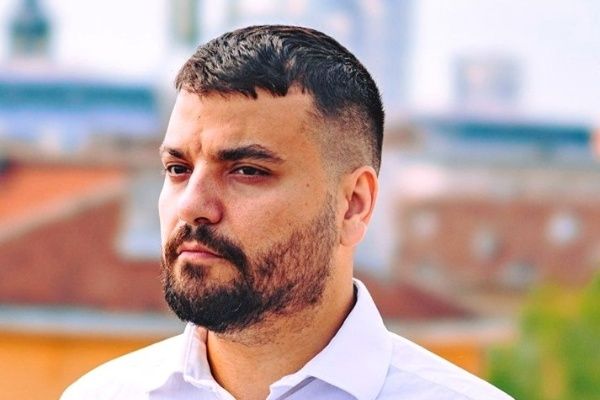
True success comes when you can look back and see that you have built something meaningful – not only for yourself but also for the people around you!
Introduce yourself in a few words..
My name is Ivaylo Hristov and I am a co-founder and manager of DEV.BG. Before that,
I created and developed the Bulgarian-Danish technology company Komfo. I have over 7
years of teaching experience at Sofia University and I have received awards
such as “Young Entrepreneur of the Year”, “Next Generation Entrepreneur”, as well as
a place in the Darik Radio ranking “40 under 40”.
How would you describe your career in a few words?
My whole life has been connected with information technology. I started programming
in the fifth grade, in 1994 – a time when this was far from modern.
Back then, everything was different – there were no resources, information, and easy access to
technologies, but my enthusiasm was huge. In high school, I participated in informatics
olympiads and in the fourth round of the national olympiad, I ranked very
well, which allowed me to enter without an entrance exam in the “Informatics”
specialty at Sofia University. There I completed my bachelor's and master's, and after
that, I worked as a programmer.
However, during all this time, I had the burning
desire to start my own business – the idea of building a company that makes
sense and brings value. Thus, I created my first company, which I successfully sold
in 2014. I have been building the second one for nearly a decade now, and it
continues to grow. On this journey, I learned that success rarely comes from a brilliant
idea – it comes from persistence, concentration, and hard work.
AI is changing the world of work. What will be decisive for career success in this new era?
AI is already a reality and will soon penetrate even deeper into all professions – not
only in IT. Some jobs will disappear, others will change drastically,
and some new ones will emerge. The truth is that technologies will continue to
develop at a pace that often outstrips us. But what will remain
unchanged are personal qualities.
For me, success in the future will depend on
our ability to learn quickly, to be persistent, and to see things through.
You can have access to the most modern technologies, but if you lack discipline and
resilience, it will be hard to extract real value from them.
What was the most important lesson you learned from building your companies?
In both cases, I learned the same thing: it is not the one who starts with
the most brilliant vision that wins, but the one who works the hardest and does not give up.
My first company started with a clear idea, but success came not from the concept itself,
but from systematic work and perseverance. After years of work, we reached
a successful sale.
My second company is another example – I have been developing one of the largest professional communities in Bulgaria for almost
10 years now. This is a long process that requires persistence, not momentary enthusiasm. Today,
the platform is recognizable because we put in effort every day, not because
we ever had a “lightning” brilliant idea.
What skills will be key in the next 10 years?
In my opinion, there are three skills that will be decisive:
- The ability
to learn and adapt quickly.
In the era of AI, any knowledge can become outdated in months, so people who
can learn effectively will survive.
- Persistence
and concentration. This is the skill to
work systematically, even when results do not come immediately.
- The ability to see things through. Many people have ideas, but few succeed in turning them into completed projects. In the future, this will make the difference.
If you had to give one career advice
to the readers, what would it be?
Don’t wait for the “perfect idea” or the “right moment”. Start now, work
hard, and learn along the way. You can’t predict everything, but if you have
persistence and discipline, you will go far. In the era of AI, these qualities
will determine who remains competitive and who falls behind.
What is your definition of a successful career?
For me, a successful career is not just a matter of achievements or recognition. It is a
path in which you develop as a person – you become more resilient, more adaptive,
you learn to work systematically and to see projects through to the end. True
success comes when you can look back and see that you have built
something meaningful – not only for yourself but also for the people around you.