The work speed in Germany is quite lower, and the change of employers is quite rare
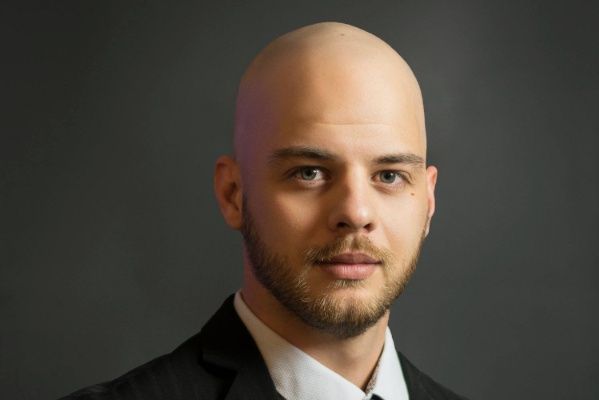
· Martin Ivanov
Professionally, I miss the preventive way of working and the flexibility in problem-solving!
Introduce yourself in a few
sentences. What does your work consist of in terms of daily commitments?
My name is Martin Ivanov and
I am Cluster Lead – Automotive Test & Validation for Germany at Luxoft. I am responsible for preparing offers for new projects, developing
strategies for securing personnel for new projects, and successfully
executing test projects in Germany, working together with all German
car manufacturers. I have a degree in Industrial Engineering, graduated
from TU-Sofia.
In which country and city
are you currently living and how did you end up there?
For the last 9 years
I have been living in Nuremberg, Germany. It happened quite randomly, I spent a lot
of time on business trips to Frankfurt am Main and was looking for options there, but
the automotive industry is not very strong in that city. I randomly received
a job offer through LinkedIn for Nuremberg and jumped in without knowing anything
(the only contact I had with Nuremberg at that point was an emergency landing and 2 hours
sitting on the runway in the plane). The main reason that pushed me to make this decision is that what I saw on Google Maps reminded me a lot of Pamplona in Spain where
I spent 6 months on Erasmus and liked it a lot, as well as the fact that there is a Bulgarian community
(one of the largest in Western Europe).
What were the biggest
challenges you faced at the beginning of your stay?
Starting from scratch,
no contacts, language, understanding how the system works,
standard things when moving to another country, and last but not least
dealing with all the people who take advantage of the ignorance of newcomers to
make some extra euros.
How did you overcome the language
barrier (if there was one)?
Personally, I prefer to
learn languages the childlike way – you throw yourself in boldly and struggle to convey your ideas
even with a limited vocabulary. This way, I think, is the easiest way to learn a language at
the level where you don’t have to think about rules and whether what you said/wrote
is grammatically correct, in other words, you build an ear for the language. Additionally,
watching movies (with English subtitles), listening to German music (mainly rap,
if a person starts to understand German rap, it means they are on the right path).
What resources or networks
(local communities, colleagues, organizations) helped you adapt?
Fortunately, in Nuremberg
there is quite a strong Bulgarian community. This helped me build quite strong
contacts that have helped me over the years. Additionally, colleagues from work
(foreigners) who had already gone through everything helped me a lot.
What are the main differences
between the work culture in your current country and that in Bulgaria?
Germans are used to
having money and do not work preventively. If a problem arises, they simply throw some
money at it to eliminate it. This, of course, has played a bad trick on them in recent
years. The work speed is quite lower, the change of employers is quite
rare. Differences in their social policy – more days of paid vacation, no
salary reduction during sick leave, and that’s why people take time off more often. It is very
difficult to make decisions, old German corporations are extremely bureaucratic.
The approach of if it’s not in my job description – I don’t do it, can sometimes be
a bit annoying.
What values and practices
in the workplace impressed you the most?
When it comes to
health and safety of workers, there are no exceptions. If any
requirement is not met, it is accepted as a fact that work cannot proceed and this is the employer's fault until the problem is resolved. Fair compensation for
labor (regular and overtime).
Have there been situations where
cultural differences have hindered you?
Although Germans have
the reputation of being direct people, they are not as direct as Bulgarians, which
leads to complicated situations at the beginning. Another difference is the speed of work, quite
often Germans do not look approvingly when they see someone working faster than them
(which is not very difficult). Germans also have difficulties understanding people
who have studied and worked full-time simultaneously (for them this is
impossible), as well as taking seriously someone in a managerial position who is
under 40.
How does finding a job
differ in your current country compared to your homeland?
In Germany, the process of
finding a job is quite complicated. Many of the steps in the processes are quite
old and outdated compared to Bulgaria. Germans require a huge amount of documentation to be sent
from the very beginning, very rarely are there options like Easy apply on LinkedIn, more companies do not post ads on the big sites, but only on
their own, which requires an additional account for applying and even though the CV
is attached, they require everything to be filled out in their system according to their
understandings (each company has different requirements). And lastly, Germans always have priority
even if they are not at the level of foreign candidates.
Did you have to go through
any additional qualification courses?
I had to take a course
for German B2 for the certificate. The other certificates that are important for
my profession I already had from Bulgaria, I would even say that I was retrained
thanks to the high level we worked at in Bulgaria compared to German
companies.
Have you encountered
prejudices or obstacles due to your foreign origin?
Of course. At first,
many people confuse me for being German until I start to speak, and many times I have
seen their disappointment. There have been times when they promoted a German instead of me
just because of nationality. Generally, Germans are not the most sensitive people, but
compared to Eastern Europeans, they are not as discriminatory as they are towards other
nationalities.
What would you advise
people who want to take a similar step?
Germany is not for everyone, it is
important to do thorough research on climate, economy, culture, food, etc., and
also to talk to at least 5-10 people from different industries who already
live there.
If you could go back,
would you choose the same path?
Yes, no matter how many difficulties
there were along the way, Germany has given me a lot and I do not regret it.
What do you miss the most
from your homeland in professional and personal terms?
Professionally, I miss the preventive way of working and the flexibility in problem-solving.
Personally, of course, I miss my close ones, but also some smaller things like
service, shops open on Sunday, options for side activities.
Have you considered returning
and under what conditions would you do it?
Especially at the moment with
the instability of the German economy and automotive industry, it always remains
an option to return. In any case, Germany is not my final
destination. Regarding the conditions, finances are always a factor, life in Sofia at
the moment is, I would say, more expensive than in Nuremberg, I already see quite a few options in
the automotive sector where I can apply what I have learned over the last 9 years
in Germany.
What do you think about money?
What is their influence on your life? What is your advice to people who
often ask themselves questions related to money and how sufficient they are?
Money is a means, not
a goal. With it, a person can afford two of the most valuable things in life –
peace of mind and free time.