You don't need to have all the answers right from the very beginning
· Plamen Vasilev
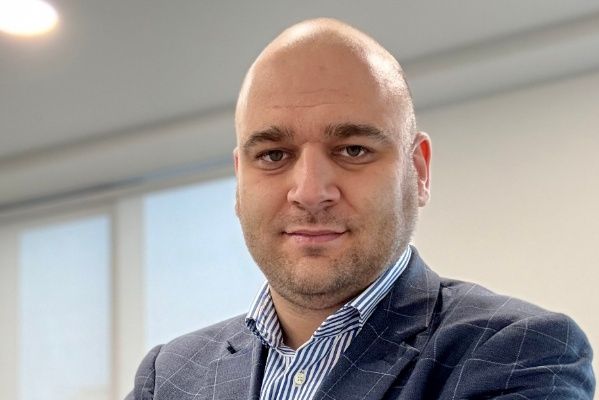
Small victories, a clear vision, and conversations with inspiring people are often the key to recharging!
Introduce yourself in a few words..
My name is Plamen Vasilev, and in a short time I managed to
achieve the highest position in human resources in an international company at
29 years of age. I am a person who
loves to create, to seek solutions, and to find meaning in my work. I believe that
success is not a place, but a direction – and that small steps taken with persistence
bring the greatest results. As I continue to develop and learn, I
embrace new opportunities.
How would you describe your career in a few words?
Purposeful. I went through different stages and fields, which gave me
broad perspective, flexibility, and a sense of resilience.
What was
the most important choice that shaped your path?
To trust my own intuition, even when it
was contrary to the expectations of others. The choice not to compromise on
my personal values turned out to be the strongest professional decision.
What would you like to know at the beginning of your career,
but no one told you?
That you don’t need to have all the answers right from the
start. The most important thing is to start – anything, whatever it is – and to learn in the process.
Perfectionism can hold you back at the starting line.
How can a person
understand which profession is suitable for them?
By observing where time stops existing when
working. If you can lose yourself in something with pleasure – that is a direction. And when
you manage to combine that with market value – then we are talking about a career with
potential.
Which skills
according to you will be key in the next 10 years?
Adaptability, emotional intelligence, ability to
communicate clearly, and digital literacy. It doesn’t matter which industry you are in –
these qualities will determine success. And you must remember the most important thing - to
be able to forget what you have learned and to be open to new knowledge, skills, and
ways of working.
How to
build a network of useful contacts without appearing interested?
By approaching people with genuine interest, not towards
their positions. Ask questions, listen actively, share value. Connections
based on respect and authenticity are the most lasting.
What is
the biggest mistake you have made in your career, and what did you learn from
it?
I will give it as guidance – if you stop developing/learning,
it’s time for a change.
How to
recognize a toxic work environment and when is it time to leave?
When there is a systemic lack of respect, opaque
communication, and constant fear of making mistakes. If you feel drained instead
of motivated – this is not just a “hard week”, but a sign to take action.
What would you
do differently if you could start over?
I would believe in myself more from the very beginning. I
would not wait for the “ideal moment”, but would start applying
my own ideas earlier.
How to
maintain our motivation in times of stagnation?
By reminding ourselves “why” we started. Small victories,
clear vision, and conversations with inspiring people are often the key to
recharging.
How to
achieve a balance between professional and personal life?
Balance is not a static state, but a process. It is important to
learn to say “no”, to prioritize, and to take time for ourselves without
guilt.
When is it time
to change our career, not just the job?
When even in the best conditions, you feel that what you are
engaged in is no longer “your thing”. Changing careers is not a failure, but a
brave rearrangement of priorities.
If you had to
give only one piece of advice to people seeking success, what would it be?
Know yourself – your strengths, limits, and passions.
Success is not a universal formula, but a personally defined goal.
What is
your definition of a "successful career"?
A career that is in sync with your personal values, brings
satisfaction, and allows you to live your life to the fullest – not just to
experience it.