A strong business starts from a united family
· Stanislav Popov
First trust, then technology - the brand is a consequence!
Introduce yourself in a few sentences ..
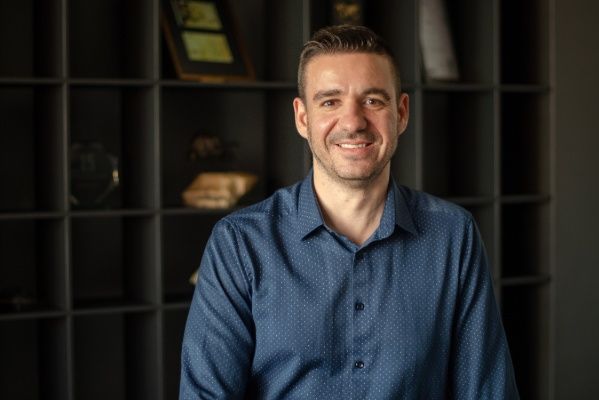
My name is Stanislav Popov and I am a co-founder and CEO of RSC.bg - a company we built nearly a decade ago with the idea of combining modern technology with a human touch. Our
activity is in the field of consulting and technology solutions, focusing on
working with artificial intelligence and large volumes of data, but at its core
always stands a simple philosophy: if you can't help the client sleep
better, then you haven't done your job.
At the same time, I am a full-time participant in a wonderful family - a husband and father of two energetic children. In
my family, I find my most honest advisors - there are no corporate filters,
nor “diplomacy”. The children do not read financial reports, but they know how to ask
questions that change the perspective. Recently, my son asked me: “Dad,
if you help so many companies work better, do you have time to help me build the best wooden house in the yard?” We started
thinking about the house, and at the same time, such moments make me realize that
the balance between business and personal life is not an abstraction, but a daily practice.
Tell us what the philosophy and values of the
company you represent at the moment are?
The philosophy of the company is to create long-term partnerships, not
one-time deals. We believe that true value is built on trust,
transparency, and a constant pursuit of improvement.
The attitude towards employees and colleagues is no less
important part of our values. For us, it is crucial to put ourselves in the shoes
of the other side - whether it is an employee or a client - and to try to
understand how they think, what motivates them, and what they expect. This reminds us that
we are never alone in the process - there are always connections and relationships between people
that stand above every deal and every system.
The same applies to our clients. We rarely have “former”
clients - with most of those we started working with from the very beginning of
the company, we continue to work even today. This is the greatest
proof that the values we believe in have a real reflection in
our relationships and beyond the office.
How long have you been developing your current company? What are the most valuable lessons that
this period has taught you?
The company has existed for more than 9 years. The most valuable lesson we learned
during this time is that success does not come from one big achievement, but from hundreds
of small victories achieved together with the people around us.
Winning one of our first major projects was
a real challenge. At that time, we had to make proof of concept with the real
client data to prove that we could handle it and earn their trust.
We spent almost a whole week without sleep in the office to adapt to a completely
new environment full of challenges, unknown situations, and unknown
partners to work with. But the efforts were worth it - not only did we
successfully complete the project, but we have been partners
with this client for over 8 years now and have gone through a number of new initiatives together. I often like to
say: “What doesn’t kill us makes us stronger” - and this story is
a living proof of that. The biggest challenges often turn into
the strongest bonds.
But the lessons do not come only from within. They also come from our clients
- especially from those we have been working with since the very beginning and until today. When
the partnership is long-term, it goes through different stages - growth, crises,
market changes - and each situation tests you. One client told us: “Your true value is not when everything is going well, but when you are
with us when it is hardest for us”. Then you understand that the biggest lesson is to
put yourself in the other person's shoes - whether it is a colleague or a client - and feel the world through
their perspective.
Today, I view these periods not as “years of
survival”, but as years of building trust. This trust is a capital,
which does not appear in any accounting report, but is the most valuable resource of
the company.
If you personally had to write a job ad, how would
you attract the attention of a future employee?
I wouldn’t write a standard ad with bullet points like “requirements” and “responsibilities”.
I would write:
“If you believe that the office is a place where you come to grow, not just to
work eight hours - come join us. If you want the tasks to be challenging, but always
meaningful - you will find them here. If you are not afraid to say “I disagree”
even to your boss - you are probably already our person”. In the ad, I would also add: “We expect
you to argue with us, but with reason”.
Of course, the more complex part is not to write the ad, but to fulfill what you
promised in it - to create a real environment where people can truly
grow, argue, and feel significant. That’s why we view such
messages not as advertising, but as a commitment to the team.
What does your company do to organize a
constructive and beneficial working environment for everyone? Do people in
the team need to be friends?
In general, I am a proponent of the rule: you don’t have to be best
friends to be an excellent team. People should respect each other, trust each other,
and help each other, but it is not necessary to celebrate their birthdays
together.
I believe that values are never just on paper - they
must be lived every day. At home, we have a tradition we call
“Family Hour”. Every week, a different person (me, my wife, or
one of the children) becomes the “moderator” and presents their idea - it can be a small
project, a game, a science experiment, a plan for a trip, or just to play the
guitar and sing. This teaches us to listen to each other, to give freedom to
different perspectives, and to value individual contributions.
I carry this model into the company - when you give the floor
to everyone, even the youngest member of the team, something new and valuable always
emerges. For us, every member of the company is extremely important. We strive to get to know
people not only as professionals but also as individuals - to understand their
interests, hobbies, and passions, and when possible, to practice them together.
This way, we build a culture of mutual respect, where individual attention is
no less significant than collective success.
Since the very founding of the company, we have maintained
initiatives that enhance this sense of community. We organize meetings with the whole
team, regardless of who is working on which project - everyone shares what they are doing and what
lessons they have learned. This maintains the connection between us and gives a sense that we are moving
forward together.
We also have more unconventional initiatives - like our caravans
by the sea, located at a cool campsite. They are available to anyone from
the team who signs up in a common system and can spend time with their family
in our unique seaside houses. One of these caravans we even renovated
together at home, in the yard - with the help of pizzas and beer. This became an
unforgettable experience and an example of how work can overflow into
friendship.
Our team buildings are organized by an external company,
but always with an emphasis on the social element - not just activities, but real
bonding. It is a tradition at these events to invite the partners and
families of colleagues - whether they have been married for 15 years or are dating
for 15 days. We believe that work should not separate people from their closest ones,
but rather create balance and opportunities for more shared moments. And we often participate in team competitions, such as mountain hikes and sports events,
where we are together as a team outside the office.
All these practices are a way to show that behind
projects and tasks stand people - with ideas, dreams, and energy - and that this is
the strength of our company.
What makes you enjoy going to work? How do you
handle difficult and stressful moments?
I go with pleasure because every day brings a new challenge. The greatest
satisfaction comes when you see how, after much effort and teamwork,
the complex problems find their solution, and the client is already at ease that
their systems are working.
There are constantly difficult and stressful moments - this is
a natural part of business. I deal with them in different ways. I have on my
desktop short clips with my family, which carry a code name of the kind
of “Otvori, kogato rabotata ne varvi.mp4“. You can
imagine what is in them and how they affect me - the smile comes
instantly and the tension drops.
I cope with tension through small rituals. For example,
when the situation is very tense, I turn off my laptop for 15 minutes, go for a short walk around the office, or have a philosophical conversation with my father and tell myself: “If after 15 minutes this still looks like the end of the world, then it’s really serious”. In 90% of the cases, it no longer seems so scary.
In general, all good practices for a fulfilling life are
my “arsenal” against stress - healthy eating, sports, dietary supplements,
sufficient sleep, quality rest, travel, outdoor time, music, amazing
experiences with friends. I live at the foot of Vitosha and try to hike every day after
work. I generally love the mountains. Personally, coffee works wonders for me in stressful moments, and of course, I rely on
supplements like ashwagandha 😉. All of this helps me not only cope with stress,
but also maintain the energy and concentration needed to lead a team and
a company.
Undoubtedly, my strongest
motivator to enjoy going to work and find strength in
difficult moments is my family - my wonderful wife Petya, who is always by
my side, in every happy or difficult moment, and is undoubtedly my
strongest support, as well as my two awake children - Mitko and Kati, who remind me
every day why all of this makes sense.
What work model does your company adhere to - office
or remote?
We work in a hybrid model - office and remote. I believe that freedom brings
responsibility. If a person knows that we trust them, they will arrange their time
so that the result is the best.
We have had the practice of remote work since day
one of the company - long before the start of Covid. We have always worked with
individuals from different places - Plovdiv, Varna, Vurshets, villages around Vratsa,
Pazardzhik, and others - without having offices there. This is a natural way of working for
us, not a temporary measure.
What do you think about the possibility of offering options for flexible working hours, within which
employees have greater freedom to balance their personal and work commitments?
For me, flexible working hours are not an “extra”, but a natural part of how
a modern company operates. People are different - one is
most productive in the morning at 7:00, another thinks most clearly in the evening after 21:00. It is important to
measure results, not hours spent in front of the screen. That’s how it is even with
my partner Rumen - I am a fan of early work, while he is of evening work. Both
strategies are equally successful, as long as there is trust and a clear focus on the final
result.
In our company, we have always viewed flexibility as
trust. If a person has the freedom to arrange their day, they will find
the optimal balance between work and personal life. This way, they not only accomplish more, but also
do it with more pleasure.
We have examples that prove this. One of our colleagues
received European funding for his own hotel and moved to Vurshets. He
programmed literally from the hotel reception, combining his two roles -
entrepreneur and specialist in our team. This not only was not an obstacle, but on the contrary -
it brought additional energy and inspiration.
The same applies to parents in the team. We have colleagues who
take their children to school in the morning and start work a little later, or finish earlier to be at their child’s training or concert. The flexible
model allows them to be both good professionals and fulfilling
parents.
In other words - flexible working hours are an investment in
trust and autonomy of people. And when they feel that the company supports them,
they respond in kind - with more dedication, creativity, and
engagement.
How do the continuous technological changes on a global scale affect your business?
Technologies are changing so fast that sometimes we joke: “By the time we make a strategy for next year, it’s already outdated”. But we are not trying to stop the wave - we are learning to surf on it.
For example, when we started experimenting with artificial intelligence in data analysis, some were worried that it would replace humans. The reality was different: thanks to the new tools, we managed to save hours of manual work and people had time for more meaningful tasks - for analysis, for new ideas.
How important is hierarchy and what does it mean for you? What kind of communication do you advocate in your company?
I believe in hierarchy as a “skeleton” - it holds the structure, but it shouldn’t be constantly visible.
Regarding communication, I advocate the rule: if you can say something to a colleague within 2 minutes over coffee - don’t send them an email. This saves hundreds of unnecessary messages annually and makes the atmosphere much more human. The truth is that many things don’t need to leave a “trace” - face-to-face conversation is completely sufficient. Naturally, for topics that require information for future reference or more formal tracking, email remains the best option.
What is your career advice for all the people who are building a strategy for their professional development?
My advice is: don’t chase positions, chase skills. Positions will come if you are useful. I have seen young people who start as interns, but within a year become leading experts - because they had the courage to ask, to make mistakes, and to learn quickly.
If I have to give a metaphor - a career is like chess. You don’t always need to move only forward. Sometimes the wisest move is sideways or even backward, to find a better position for the next step.