Cities and Professions of the Future: A World Where Time is the Most Valuable Resource
· Gabriela Kirova
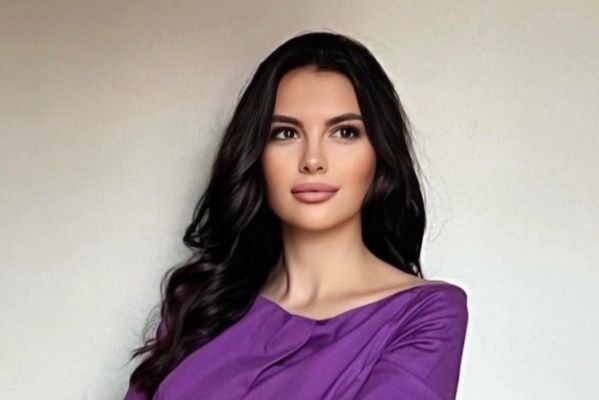
The greatest challenge for people will be to find meaning – meaning for what they live for!
Gabriela Kirova is a Bulgarian author, visionary, and entrepreneur with
international experience, dedicated to the topic of spiritual development and the
building of a more conscious and just world. She is the author of the book New World (New
World), in which she offers a bold vision for a future beyond materialism and
technological control, centered on the human soul and values. Kirova is an inspirer
of ideas for moral and spiritual leadership, believing that Bulgaria can play a
key role as an example of a sustainable and humane society.
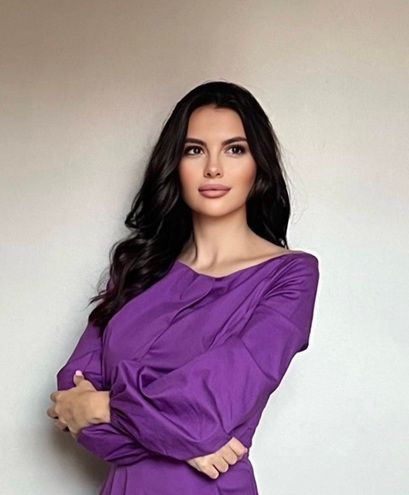
Which moments in your personal and professional path
shape you as a person and leader?
My love for books, which I developed from an early childhood, has had a lasting impact
on my personality. Books help you understand the world and build your
place in it, even before you have actually seen it. Also, as a teenager, I hosted
a show on a popular radio station in my hometown Pernik about Bulgarian pop and rock
music. I was only 13 years old. Music taught me to dream and to paint with
my imagination pictures that I later turned into reality. I adore
The Beatles and to this day I wake up almost every morning to their songs. Later,
my life in Sofia and London had an additional positive impact on
my personality. If we talk about leadership, my long-term interaction with world
authorities in the field of business and politics had a great influence on me.
What inspired you to dedicate yourself to
philanthropy and activism?
I have always wanted to be able to model the world in a much fairer way. God
created a world where there is room for everyone, but the improper distribution of
resources and the greed of some at the expense of others leads to my desire to
correct this injustice with whatever I can. Every time I leave my
mark for the improvement of the world, it brings me a sense of satisfaction. It
comes from the ability of a person to harness their efforts and capabilities, as well as
those of the people around them, to help those in need.
What values guide you when starting a new
initiative?
Several things motivate me, the main one being my belief that every person carries
a piece of God within themselves. This belief manifests in my desire to be
active and contribute with whatever I can, whenever I can, to improve the world
around me. Another is my personal intolerance towards injustice, which leads
to my desire to fight for the creation of a new world where the leading
values are connected to spirituality in its various manifestations.
If you had to describe yourself in three words, what
would they be?
Future, hope, wings.
You had the unique opportunity to meet
Pope Francis. What was the occasion for this meeting, what was the feeling and
challenge for you, and how did this moment help you for future
initiatives?
Pope Francis was a very down-to-earth person. He preached humility. The occasion for
the meeting was his initiative for a charity campaign aimed at
helping the homeless in Italy. What impressed me most during
one of our meetings, at a concert he initiated afterwards, was that the
wealthy and noble guests were not on the pedestal, but the underprivileged and poor people. This is
faith in action. This event, held in this way, influenced my
concept of the desire for a new world – a world with less vanity, more humility, and
less social stratification. The world needs a revolution of
values more than ever.
How do you think artificial intelligence and
automation will change the labor market in the next 10–20 years?
Initially, the workweek will start to decrease. Gradually, some of
professions will be replaced by artificial intelligence. This is already happening. This
will allow people to focus on creativity and innovation,
and tedious daily tasks will be replaced by machines. The biggest
challenge for people will be to find meaning – meaning for what
they live for. In the future, a universal basic income will also be introduced, with which everyone will
receive funds, regardless of whether they work or not. But if they do not comply with the rules
of public order, this income will be reduced. And then the greatest
luxury will be not money, but freedom.
Which professions will be most in demand in the future?
Many people in various industries will be replaced by artificial intelligence.
We already see at most airports that checking in luggage is done through machines, there are
hotels in Japan with staff entirely made up of robots, writing essays and translations
is done with chat GPT or Grok. Schools and hospitals with robots instead
of teachers and doctors have also been presented. By 2030, in 90% of professions, people will be replaced
by robots. But there will be room for those with creative thinking, who are innovators.
There will also be room for technicians, renewable energy engineers, artificial intelligence and
machine learning specialists, engineers in the field of space
exploration and aerospace industry, and software developers focusing on
automation and robotics.
What is more important for a successful career in
the future – the diploma or the ability to adapt and learn throughout life?
People with talent and strong personal qualities could afford to
not rely on the formal document, for others the formal diploma will be a path
for successful realization in life. For me, education at the moment is more
quantitative than qualitative. It must be changed if
we want to raise children with wings, not soldier children, molded by a mold.
Of course, I do not in any way belittle a person's desire to seek knowledge
and develop competencies, which enrich both the individual and society as
a whole. The most valuable thing in education is to learn to dream without limits, and
this is impossible without reading various literature.
Do you believe that the professions of the future will
require more creativity and emotional intelligence than technical
skills?
In the near future, the main quality a person must possess is
resilience – emotional, moral, financial, psychological, physical. Today
we already know that the world is not a system that is at rest, but a living organism in which
numerous and mutually exclusive processes pulse. People who manage to
understand this philosophy will adapt more quickly to objective reality.
Others will feel like corks in a turbulent sea. Creativity will
be a leading need, and a person will be evaluated based on their personal contribution
to the public good. Technical activity will not be a primary human
occupation. It will be robotic.
What qualities should young people develop
today to be competitive tomorrow?
They should develop resilience within themselves, learn to think outside
of templates and despite templates, be creative and create added
value for themselves and society. Of course, qualities such as
loyalty, dedication, responsibility, and discipline are also important. Here I want to share a
personal story. Years ago, I spoke with a school principal in London.
The principal told me that the main value they want to instill in children is
empathy… and if a person does not possess this quality, it does not matter what else
they possess or what they have achieved. A person cannot be called successful if they do not
possess compassion and kindness towards others. I enrolled my son in that
school.
You often talk about the concept of “Smart
Cities.” What does a city of the future look like to you?
The cities of the future will be constructed in such a way as to allow a person to
optimally use their most valuable resource, namely time. Because this is
the only resource that cannot be restored once it is exhausted.
They will be built so that everything necessary for our daily lives can be
reached within 15 minutes on foot. This will eliminate traffic jams and endless
travels to accomplish daily tasks and the stress we experience in
the struggle on the roads. This way we will be able to spend more time with friends, get to
know the people around us, and dedicate ourselves to creativity and innovation. We will also
live in a cleaner and greener environment without pollution from cars.
Fifteen-minute cities will be connected by fast ecological trains, and the preservation
of cars as a means of transportation will remain only to guarantee us
freedom from the system. A major challenge for us will be related to
the control system over these cities. There are circles that would like to
completely control the future residents of these cities, and this is possible. Therefore,
we must build them in such a way that the mechanisms for control over all areas
concerning our freedom are in the hands of the people living in the cities.
The principle whose practical application guarantees this is subsidiarity –
maximally many rights at the lowest possible management level.
Which technologies will be most important for
the construction of sustainable and green cities?
There is no single technology, but rather a combination of solutions that need
to be integrated. Such as clean energy and energy efficiency. Sustainable mobility, intelligent public transport, and
infrastructure for bicycles and pedestrians are also important. There must be good management of
resources and waste – recycling, smart water networks, mechanisms for
retaining rainwater, etc. The entire infrastructure must be
adapted to climate characteristics.
What role do culture and communities play in
the cities of the future?
As I mentioned earlier, the main goal of future cities is to free a person's time for
creative efforts. So they will have a spirit and soul that
responds to the creative needs and capacities of the majority that inhabit them. An important component of the culture of cities will be the continuity in
architectural heritage. The free time of people in modern cities will manifest in direct participation in planning,
organizing, leading, and building the cities. The most important thing is for this city to be alive and with a soul, where
everyone knows each other and there are shared spaces. In a much more distant
future, we could reach the values of the past, when the key to your father’s
house is clear to everyone and there is complete trust and security among residents.
Many products and services may start to be on a barter basis and
money may disappear as a means. Personally, I see the future closer to
smart villages rather than smart cities. We are observing more and more emerging conflicts in
the world centers like London, New York, Paris, Berlin. There are protests and
resentment. Social stratification, political-economic struggles that will be
masked under the guise of ethnic and religious oppositions will
contribute to the creation of “smart villages.” All of this, combined with the reduction
of arable land, may also lead to a food crisis, which
will further increase the value of independent farms outside the centers of
the big cities.
How can Bulgaria position itself as an example
of sustainable and positive cities?
Bulgaria has many strengths that it can use to be a leader in
the construction of modern cities and villages. I will start with natural resources –
several mountains, sea, vast arable lands with rivers and spring mineral
water. All of this is combined with a strategic geographical location and a cradle
of ancient civilization. These initial characteristics of our country can
be optimally utilized by a sufficient number of Bulgarian technocrats who
would like their homeland to be a leader, and they to leave their mark in
history.
If you had to imagine Bulgaria in 30
years, what will the cities and professions be like here?
In the future, valuable will be the countries with rich natural resources, I am not just talking about
minerals, but in general about natural features. Therefore, Bulgaria will
be among the top important countries of the future. What it will be depends on many
factors, one of which is related to the ability of nationally responsible
circles to realize a good idea for future Bulgaria. It can be
a country of unlimited possibilities, with smart cities and villages, smart agriculture, and
a magnet for the global tourism community. Professions may be
related to artificial intelligence, space sciences, and climate architects,
who will design buildings and cities resilient to extreme temperatures and
floods.
This month your book New World (New
World) was released on the global website Amazon.com. How do you envision the New World and what will
be Bulgaria's role in it?
Yes, my book “New World” is already on Amazon. You can order it on Amazon.com by searching for New World by Gabriela Rumenova Kirova.
The book encourages the building of a New World –
the building of a new era for the brave, soulful, and free. This is a future
beyond materialism, noise, and obedience; a future of the soul, skills, and
simplicity, where a person overcomes control and finds their true essence.
In an era when the world is facing unprecedented
division, conflicts, and uncertainty, we need a bold and urgent vision for
change. Some of the main themes in the book are the fragility of peace,
the exploitation of smaller nations by larger powers, and the dangers of
uncontrolled technological dominance. The current global system is
unsustainable, and without change, civilization will face collapse.
“New World” warns against transhumanism and
abuse of artificial intelligence. Innovations should not govern
humanity – they should serve it. Artificial intelligence should not
become a tool for control, but a tool for liberation. Its role
is to take on the burden of everyday life, so that people can dedicate themselves to
creativity, rather than being slaves to systems. Technology without spirituality is dangerous.
The human soul, created by God, must remain at the center of progress.
I have dedicated chapters in the book to Bulgaria. Bulgaria is
the oldest country in Europe, the homeland of the Slavic alphabet and a country with
exceptional natural and cultural wealth. And yet today, despite its beauty,
Bulgaria remains among the poorest countries in Europe. This paradox is the result
of decades of poor governance and exploitation by oligarchs, who after
the fall of communism plundered the national wealth.
But I see a way forward. With the right leadership –
moral, spiritual, and responsible – Bulgaria can become a refuge in a
chaotic world. Its abandoned villages can be transformed into “smart
villages” that are energy independent, food secure, and models of
self-sufficiency.
The role of women in leadership is extremely important in “New
World”. Women can bring to the global stage qualities such as empathy,
resilience, and the instinct to preserve rather than dominate.
What would you advise young women who
would like to be leaders in tomorrow's world?
For me, confidence is the quality that can take us to everything we
dream of. When it is backed by knowledge and skills, you can open any
door to success. Almost everywhere in the world, conflict is currently smoldering, and in some
parts, there are even wars. The qualities of women as leaders are more necessary than
ever to lead the world in a new direction of understanding and empathy. It is no
longer just about promoting women's leadership, but about its vital
necessity to achieve a peaceful and sustainable world. The role of women, especially
in politics, is a necessity now, to preserve the planet from the aggression that
has engulfed it at the moment.
What is your biggest personal dream for the world of
the future?
Peace. Peace in all its possible manifestations – a world without wars, a world with inner
peace for people, where their entire being is dedicated to creativity and
well-being, rather than daily problems, stress, and tension. A world with completely
different values from the current ones. I dream of a spiritual and non-material world, where
the assessment of success is based not on material achievements, but on the value of
the soul and the person's relationship with the world and others in it.
A purely personal dream of mine is to reach the ability to teleport in my lifetime.
I often have to travel and have friends in many places around the world, especially
in London, and sometimes I wish I could be in many places at once or reach
somewhere instantly without the hassle of traveling. And of all the innovations, for me,
the achievement of teleportation would be the most valuable.
And finally, what would you like to leave as
a legacy for future generations?
New World.
I want to be one of the architects for building a completely new world – with new
spiritual and moral values.