Do not enter the "rut" from which you cannot escape later
· Boris Slav Stefanov
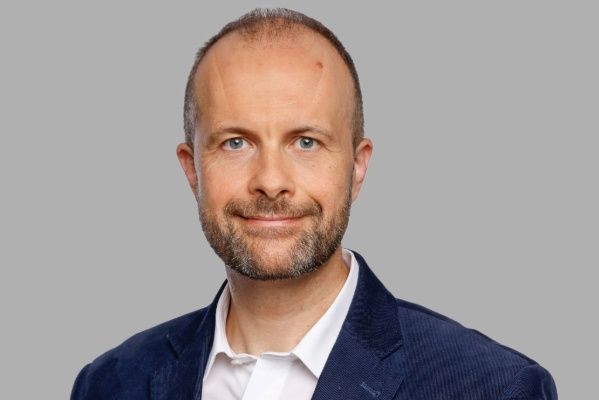
Music is one of the most important things in my life!
Introduce yourself
in a few sentences!
My name is
Boris Slav Stefanov and I am a consultant in the field of strategic and management
services. I have a master's degree in business administration from Harvard Business
School and lived for about ten years in
London, Dubai, Boston, and Moscow before returning to Bulgaria in 2009. Besides
being a consultant, I worked for 4 years at the Bulgarian Investment Agency, in
the regional logistics center of "Daimler" for the Middle East, and for various
investment funds.
What did you
dream of becoming in your childhood?
When I was a child,
the usual answers varied from "astronaut" to "militiaman". I, on the other hand, wanted
to become an academic. I was taught to read at about three years old. For some
reason, I really liked encyclopedias – they were more engaging to me than children's
books. Probably, because of that,
I decided that being an academic must be an incredibly interesting job. It so
happened that I developed professionally in a completely different direction, but
still today I visit Wikipedia several times a day, so probably some part of that interest has remained.
At what
age did you earn your first money? Share an interesting story with us?
I don't remember if
I was already in first grade or not, but one day I was helping my grandfather in the yard of
our house in Apriltsi. As a reward, I received 5 BGN, which in the mid-80s was
an impressive amount for a day's work. When I was about ten years old, I helped
my cousins in Shabla for a few weeks, who had a stall in the center –
they taught me how to make coffee and help with orders. It was a lot of fun… Otherwise, unlike most of my friends, I didn't start a "real" job until the end of
my second year, when I went on a student brigade in the USA, but after that, I quickly caught up.
What are the
main factors and examples that shape us as individuals at an early age
and form our interests? What is your recipe for curiosity, sources
and wells of information and inspiration at this stage of our human development?
Small children are
naturally curious. Put their toys in a cabinet with one of those "child locks", leave them alone for a while, and they will have figured out how to "hack the system" before you realize what's happening. But if this desire to explore how the world
around them works is not constantly nurtured, it cannot develop. So, my recipe is
very simple – talk to children constantly, explain all sorts of things to them,
answer their questions, and encourage them to ask even more (or at least, up to
the fifth "why" in a row). And less phones and television, of course.
Has there been
any significant change in your perceptions in more mature age regarding what
motivates you to do or not do something?
Definitely.
When I was at the beginning of my professional career, I neither knew exactly
what I wanted to do, nor did I invest time and energy in all sorts of endeavors. This
certainly helped me gain experience, but it was probably not the most effective way to
do it. At some point, I discovered that time is actually my most limited
resource, and I became much more selective about who and what I spend it on. This
went hand in hand with learning to say no – I try to maintain good relationships with everyone, and for many years I had a problem saying "no", which
meant I had to do many things that weren't particularly interesting to me. This
lesson that focus and personal interests are key is one of my most valuable discoveries.
Whose decision
was it where to pursue higher education and what to study? Was that decision
correct, looking back today?
I have three degrees
of higher education, and the funny thing is that for none of them was the decision
entirely mine. I graduated from the first class of the American College in Sofia and
applied to a university in the USA at the end of 1996. Back then, the process was
entirely "on paper", endless letters with forms, essays, and whatnot were sent. I was accepted to a university in Virginia, but I had missed sending some documents for
financial aid and we had to pay tens of thousands of dollars.… So, with the
results from the SAT and TOEFL, I entered AUBG – back then I didn't even want to go to
Blagoevgrad, but those four years turned out to be some of the most useful for me.
After that,
I completed a master's degree in international management at Regents University in London. This, too, was pure
coincidence. In my last year at AUBG, I took the GMAT, one of the most important exams for MBA programs in America, achieving an extremely
high score (and extremely limited professional experience – apparently, the leading
universities in the USA were not impressed by the fact that one summer I cleaned
hotel rooms for ten hours a day, and another I was a waiter at two
different places simultaneously). I was not accepted for MBA and decided to look for a job – in the early 2000s,
I think the most prestigious among my classmates and friends was working in Big
4 and the large international firms in
Sofia. However, my parents insisted that I have some degree from a university
outside Bulgaria, so by chance (and urgency) I started my master's degree
in London – but it helped me start working at a small firm in the UAE, from where
I moved to "Daimler", and the professional experience from there was the "missing
link" to start my MBA four
years later.
It's funny that even
the decision for Harvard was not entirely mine. Besides there, I was accepted at INSEAD, also a leading business school - and for about
a month I hesitated because I preferred to study in Europe. In the end, finances
helped me decide – at that time, INSEAD practically did not help students. They said,
"if a company is not paying for you, the master's degree costs about 50 thousand euros, not including
housing and other expenses – how you will find them is your problem." Harvard, on the other hand, had
a contract with one of the big banks in the USA, which covered not only the costs of
education but all related expenses. So, in the end, all three of my higher
educations contributed greatly to my development both professionally
and academically – only for none of them did things develop exactly as I
expected…
Share more
about your interests, knowledge, skills, and hobbies?
At home, we have a
three-year-old boy, so lately all interests and skills revolve
around him, and there isn't much time left for hobbies. But I am among
the lucky ones for whom work is so interesting that it allows me to learn something
new every day. Otherwise, I try to exercise for at least half an hour to an hour a day.
We live near Borisova Garden, so I try to run at least twice
a week. Music is one of the most important things in my life. I can't play and it's
better not to hear me sing, but I listen to everything from Vivaldi to "Rammstein". Fortunately, my partner is just as passionate about music as I am.
Would you
change your profession today and which fields of activity capture your interest?
Aside from the fact
that I envy people who can explain their profession in two words,
I wouldn't change it for anything. What I really like about it is that I am not
connected to any industry or company, and every new project is like a new
job. This is wonderful in terms of the opportunity to learn new things and
skills (and it's terrible in terms of the fact that every few months, when I start
a new project, I feel as if I just graduated from university and
am starting work for the first time).
They say that
your personal brand is everything that people say about you when you are not in the same room with them. What would you like to hear today?
I have been fortunate
to work with all kinds of people – from those everyone knows from television and the
media to those no one suspects exist (but thanks to whom many companies and industries manage to work as we know). There are two things that have always "captivated" me – a person being a true
professional in what they do, as well as treating their work with respect. Unfortunately, both are not particularly common lately – the world
has developed in a way that a person can quickly become famous, resulting in all sorts of people who cannot tell their left hand from
their right living as experts on all sorts of topics. For many people, work is a necessary evil, something they try to rush through, but
there's no way around it because they need money for cars, phones, and vacations. Well, I would really like to hear those two things about myself – that I am one of the best in
my field and that I equally respect everything I undertake.
Emotional
intelligence, adaptability, and flexibility, as well as our soft skills, are
key conditions for success in recent years. How do you cope with
daily life challenges to stay in good shape and
mood?
For good
shape and mood, I try to avoid driving in Sofia during
busy hours. Joking aside, I completely agree that social
skills are among the most crucial prerequisites for success. None of us lives on
a deserted island, and every day we interact with dozens of people on all sorts of topics and
reasons. Someone may be the smartest in the room or offer the most correct
solution, but if they cannot "reach" the others, then all that knowledge and experience may go to waste. I personally am very empathetic, so I almost
always try before I react in any way to look at the situation through the eyes of the people around me. Sometimes, because of this, I find myself
saying exactly the opposite of what I thought a moment ago before I called, but it has often helped me in communication and teamwork.
What are the
most important conclusions you have drawn so far about maintaining the right
communication considering the different characters of the people you meet
every day – colleagues, friends, relatives?
This is probably
related to the previous answer… I try not to create stereotypes, not to succumb
to first impressions, and to accept that everyone has some knowledge and
skills and that everyone has something useful to say, no matter how different they are from me.
What do you think
about money? What is their influence on your life? What is your advice to
people who often ask themselves questions related to money and how sufficient they are?
When I was a child, we
were taught that money is a bad thing and that it was good that September 9th came to
free us. Then it turned out that it wasn't exactly like that, but due to some
coincidence, many of the people who got money after November 10th
were just as annoying as the rich before 9/9. At the same time,
because of my life in Dubai and Moscow, through my contacts from Harvard and the companies I
have worked for, I know many millionaires and billionaires who are wonderful people
and their wealth has not changed them at all. So, my conclusion is that money in itself
has no particular influence – rather, people are decent or not, and some of them have a lot of money… Otherwise, money is important to the extent that it gives
freedom to do what you want – and that is not unimportant.
What is the
most valuable career advice you would give to people?
To get to know themselves and
do what "resonates" with their inner self. At a young age, a person is
prone to take on everything just to have some job. Over time, it turns out that what they do is boring or unsuitable for them, but they don't
want to try something else - for one reason or another, and after another year or so, they find themselves in some "rut" from which they cannot escape. So,
try to engage in things that make you happy and that you find
interesting – the rest is easy.