Even a small step today can position you differently tomorrow
· MARIYAN GENCHEV
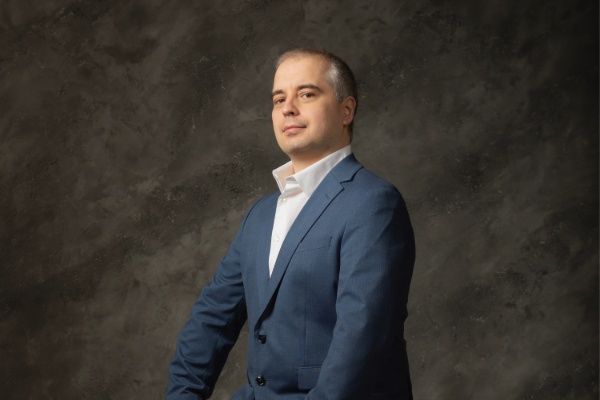
The personal brand is not built in a day — but it is built one step at a time every day!
Introduce yourself in a few words..
My name is Dr. Mariyan Genchev and I am a business mentor,
consultant and founder of MG Academy — an academy for the development of entrepreneurial,
managerial and leadership skills. For over 20 years, I have been helping
professionals, managers and entrepreneurs build sustainable strategies for
success, develop their emotional intelligence and create a balance between
their professional and personal lives.
How would you define personal branding and why is it so important
today?
Personal branding is everything that people associate with your
name, even when you are not in the room. It is how they think of you —
your reputation, value, message and presence.
Today, personal branding is key because we live in a time of
abundance of opportunities and competition. Companies, partners and clients no longer
choose based solely on CVs or titles — they choose individuals they can
trust. A strong personal brand allows you:
·
to receive better positions and
higher pay,
·
to be recognizable and preferred,
·
to build authority that opens
doors everywhere in the world.
How did you start building your personal brand? What motivates you?
Everything started with my desire to help people unlock their
potential. Even in my early years as a consultant, I realized that
if I wanted to give them the best, I needed to be not only a specialist but also a
recognizable leader and inspirer.
I started building my personal brand through:
·
conducting training and mentoring
programs,
·
creating original content —
books, podcasts and online courses,
·
building a real community of people
who grow and develop together.
My motivation has always been related to leaving a
positive mark — not just to teach, but to change lives.
What are the most important elements of a successful personal brand?
There are five main pillars on which a successful
personal brand is built:
·
Clear identity — who you are, what you
believe in and what your mission is.
·
Consistency — the same values,
behavior and messages across all channels and situations.
·
Proven experience and expertise — real
results, successes and stories that speak for you.
·
Trust and authenticity — people sense
when you are genuine and when you are trying to play a role.
·
Visibility and presence — online
activity, public appearances, events, media appearances.
How to find your niche and unique value?
The niche is not just a market segment — it is the intersection
between what you love to do, what you are good at and what people need.
To discover it:
·
analyze your strengths and
skills,
·
seek feedback from people you
value,
·
observe the problems and needs around
you — where others see difficulties, you may see opportunities,
·
and most importantly — be yourself.
Unique value comes from your story, experiences
and personal style. No one can be a better version of you than you yourself — and
that is your competitive advantage.
Should the personal brand be built around personality or around
expertise?
The truth is that a strong personal brand is a combination of both.
Your expertise is what opens the doors, but your personality is what keeps them
open. If you are just an expert without character and values, you will remain
“just another professional”. If you are only charismatic but without real value and
competence — you will not build long-term trust.
People do not follow just knowledge — they follow personalities
who believe in something, who inspire them and help them grow.
That is why I recommend: build expertise, but through your authentic personality —
your values, style, mission.
What first steps would you recommend to someone who
is just starting?
Start small, but consistently:
1.
Define your identity — who you are,
what you fight for, what your message is.
2.
Build your digital profile —
LinkedIn, professional website or blog, where you clearly showcase your experience.
3.
Create content on your topic —
short tips, analyses, useful resources. Don’t wait to be “perfect” —
start and improve over time.
4.
Seek feedback and mentorship —
a person who has walked this path can save you years of mistakes.
It is important to think long-term — a personal brand is not
built in a week, but over years.
What platforms are most suitable for developing a personal
brand today?
It depends on your audience, but today the most effective are:
- LinkedIn
— for professional positioning, B2B environment, expert image
- Instagram
and TikTok — for personal presence, creativity, and reaching a younger
audience
- YouTube
and podcasts — for in-depth content and building authority
- Own
website / blog / newsletter — for full control over your brand and base of
followers
My advice is to choose 1–2 channels and be consistent,
instead of spreading yourself everywhere. Quality and consistency always
win over quantity.
What role does authenticity play in a personal brand and how to
maintain it?
Authenticity is the heart of a personal brand. People sense
insincerity and it destroys trust in seconds.
To maintain it:
- be
honest about your successes and failures — your vulnerability makes you human
- don’t
compare yourself — you don’t need to be like others, you need to be
the best version of yourself
- build
your brand around your real values and beliefs, not around what
“will be liked”
A personal brand is not a mask — it is an amplifier of your
essence.
How to create content that engages and builds
trust?
Your content should be:
- useful
— solving real problems
- personal
— showing your story and experience
- consistent
— with a clear line, style, and frequency
- engaging
— ask questions, invite dialogue, respond to comments
One of the most effective formulas is:
Problem → Personal experience → Solution → Call to
action
When people see that you not only talk about the topic but also
have walked this path, they start to trust you — and that is the moment when
your personal brand starts to work for you.
What are the most common mistakes people make when
building a personal brand?
I often encounter a few key mistakes:
- Lack
of clarity — people don’t know what their focus is, what they want to be
recognized for, and they talk about everything. This dilutes the brand.
- Inconsistency
— they publish chaotically and give up after a few weeks because they expect
quick results.
- Trying
to copy others — instead of developing their own style, they try to resemble
popular personalities. This leads to inauthenticity and lack of trust.
- Too
“perfect” content — people seek real personalities, not ideal images.
- Neglecting
relationships — a personal brand is not just what you say, but also what
you create in terms of connections, network, and community.
How to deal with negative comments and criticism?
Criticism is inevitable when you start to stand out
— and this is a good sign because it means you have influence.
Here’s how to respond constructively:
- Distinguish
hate from constructive criticism — ignore the former, analyze the latter and
use it for growth.
- Don’t
engage in emotional arguments — respond calmly, professionally, and with
facts.
- Show
empathy and maturity — thank for feedback when it is constructive.
- Don’t
take it personally — negative comments often say more about the author
than about you.
A strong personal brand is not built by being liked by
everyone, but by being useful and valued by the right people.
How to avoid burnout when investing a lot of effort in your
personal brand?
Building a personal brand can turn into an endless marathon
if you don’t take care of yourself. My personal principles:
- Clear
boundaries between work and rest — I plan recovery time as strictly as I do
work time.
- Focus
on priorities — you don’t need to be everywhere; choose 1–2 platforms and
a few content formats.
- Delegation
and automation — I use tools and a team to not do everything myself.
- The big
goal and personal meaning — when you know why you are doing it, it’s easier
to overcome fatigue and pressure.
A personal brand should be a source of energy and
satisfaction, not exhaustion.
How can a strong personal brand lead to more
opportunities (jobs, partnerships, clients)?
A strong personal brand positions you as an expert and thought
leader in your niche. This automatically:
- attracts
better job offers and higher salaries,
- opens
doors for partnerships, media appearances, invitations to events and conferences,
- creates
trust with potential clients even before they get to know you personally,
- and
most importantly — makes you independent of circumstances because people seek
you specifically, not just your position or service.
A personal brand is like capital that grows over time —
you invest in it today, and it pays dividends for years to come.
What are the best ways to monetize a personal brand?
Once you have built trust and an audience, the logical
next step is monetization. The best approaches I have applied in my field are:
- Consulting
and mentoring — directly passing on your experience 121 or in small groups. This is
the fastest way to capitalize on your expertise.
- Online
training, courses, and webinars — you create scalable products that
work for you long-term.
- Licensing
content or methodology — if you have created a unique approach or
system, you can offer it to other professionals for a fee.
- Paid
partnerships, sponsorships, and advertising — possible when you have a large and
engaged audience.
- Books,
podcasts, and paid communities — this builds an even deeper connection with
the audience and creates passive income.
It is important to start with one core that matches
your expertise, and gradually build upon it.
When is the right time to start offering
paid services or products?
Many people wait for the “perfect moment” — but it rarely comes.
The truth is, you should start when you have:
- a clear
definition of your niche and value,
- at least
a small but engaged audience,
- real
results or case studies to show as proof.
Don’t wait to become “world-famous” to
start earning. It’s enough to have a dozen people you have truly
helped — that’s already a solid base.
Start with a minimal product or service, test, gather feedback, and
improve. A successful personal brand is built through practice, not waiting.
How to maintain resilience and long-term growth of
personal brand?
Sustainable growth does not come from one-time publications, but from
a long-term strategy. My key principles are:
- Consistency
and discipline — plan content and development like a business, not like a hobby.
- Continuous
development — learn, update your knowledge to stay relevant. The world is
changing fast and your brand must grow with it.
- Diversification
— build presence across multiple channels and develop different sources
of income.
- Care
for personal balance — without stable health, rest, and personal life, you cannot
be productive in the long term.
- Community
and network — create people around you who support your mission. This
makes the brand bigger than yourself.
A strong personal brand is a marathon, not a sprint — and that is exactly what
makes it so valuable.
What habits and discipline are needed to build authority?
Building authority is not a matter of luck, but of
long-term consistency. Here are the main habits that I believe are
critical:
- Constant
learning and development — dedicate time every day for books, courses, new
knowledge in your niche. Authority comes from competence.
- Creating
value — regularly publish content that truly helps people, not just gathers likes.
- Keeping
commitments — your word must carry weight. When you say you will do
something — do it. This builds trust.
- Time
and energy management — schedules, habits, sports, sleep, clear priorities. Without
them, burnout comes quickly.
- Self-reflection
— regularly analyze what works and what doesn’t, and adjust your course.
These habits make you not just recognizable, but
respected — and respect is at the core of authority.
Which personalities with a successful personal brand inspire you and why?
I am inspired by people who have built a brand not only
through achievements but through strength of character and contribution to others.
- Daniel
Kahneman – Nobel Prize winner and creator of Prospect Theory. He built a brand based entirely on scientific credibility
and the courage to challenge accepted models of thinking.
- Robert
Cialdini – the father of modern science of influence and author of
the classic principles of persuasion and pre-persuasion. He is an inspiration for me because he showed how ethics and influence
can go hand in hand.
- David
Buss – one of the founders of evolutionary psychology and author of the book
"Evolutionary Psychology". His brand is an example of how to build
global authority through continuous research, clear expertise, and the courage
to present ideas that change paradigms.
- Chris
Voss – former top negotiator of the FBI and author of the book "Never Split the
Difference". He managed to turn his practical experience into
a global brand that inspires entrepreneurs, managers, and leaders.
What unites them is that they have built their personal brand
on deep expertise, scientific or practical innovation, and unwavering
consistency. They do not just talk about their topics — they embody them.
This is exactly what I strive to convey to my students: the personal brand must
be built on real value and a sincere desire to contribute.
What three specific things can people do today to improve their personal brand?
To achieve real results, we need to start with
small but visible actions. My three most practical tips are:
1.
Describe your unique value –
take a sheet and write down 3 things you are really good at and that can be
helpful to others. This is the core of your brand.
2.
Improve your online presence –
update your LinkedIn profile, add a quality photo, a clear description of what
you do and how you help people.
3.
Share knowledge today – publish
a short post with advice, a lesson, or a personal story from your professional experience. Don’t
wait for the "perfect content" — what matters is to start.
Even a small step today can position you differently tomorrow. The personal brand is not built in a day — but it is built step by step every day.