Even if we understand something, it does not mean that we can manage it
· Borislav Ignatov
People constantly "calculate" what they pay and what they receive in their relationships with the organization and the people in it!
Introduce yourself in a few sentences..
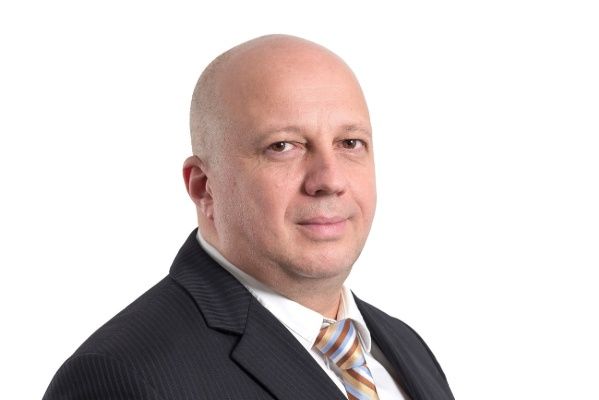
My name is Borislav Ignatov and I am a consultant for Organizational development
at the company Entalant. What we help to develop in organizations are:
People, Teams, Leadership, and Culture at Entalant. I have been doing this for 25
years and if I had the opportunity, I would do it for another 125 years, because if there is one thing
I am sure will exist and will need development in 125 years, it is: People, Teams, Leadership, and Culture
What did you dream of becoming in your childhood?
Every long-term goal starts as a dream. Mine was to be an
academic person - a charismatic teacher, a provocative scholar, and a person who strongly influences
public opinion. Behind the big dream, there is usually a leading
value. For me, it is obviously Learning and Knowledge. Most often, after dreaming,
a person starts to consider the multifaceted consequences of potentially fulfilling
their dream. Here, the next values in personal arrangement appear and manifest.
So since I am also a bit pretentious about social status - I became
a consultant. But dreams never die, right...
At what age did you earn your first money? Tell us an interesting story?
At 12 years old. In those times, it was socially unacceptable. Children
were supposed to study, play sports, and play to develop knowledge,
will, and social skills. However, in the center of the Lozents district, right across from my 40th
School (35th Russian High School), in the ground floor of the house of our leading
architect, the heroes of emerging capitalism were thriving. There was
a screen printing studio, and every day hats and t-shirts were adorned with inscriptions like:
22nd regular student spartakiad or simply with the logos of famous
Western sports brands. The entrepreneurial spirit is clearly part of character, because
three more open classmates and I volunteered to help unload
the materials and gradually integrated into the collective. We were paid generously and
this gave us the confidence to ask our parents to let us go to
the sea on our own with our own money. One of us got beaten, but the other two went to
Chernomorets for 14 days. Those were wonderful times...
What are the main factors and examples that shape us as individuals at an earlier age
and form our interests? What is your recipe for curiosity, sources
and springs of information and inspiration at this stage of our human development?
This question is precisely in the area of my deep professional expertise,
so I will be brief. There are two groups of constructs that build the concept
of personality. One is Biological tendencies, which include: Instincts, Traits (5
factor model (Curiosity is a character trait) and Cognitive abilities
(what intelligence tests measure). These tendencies are largely
genetically predetermined, but small changes are still possible in early
childhood (up to 6-7 years). The second group is Socio-cultural adaptations, among
which the most important are: Individual values (deep beliefs and understandings),
Knowledge and skills (more universal, for example, Ohm's Law) and Experience (more specific
adaptations for a particular role, for example, Divorced with two children)
Has there been any significant change in your perceptions in a more mature age about what
motivates you to do or not do something?
Of course. We call this self-understanding and it is one of our leading themes for
consulting. However, it is important to admit that even if we understand something, it
does not mean that we can manage it. Many people choose behaviors in
harmony with their personality, rather than dynamic adaptation and a successful career.
The latter creates emotional dissonance and exhausts one physically. In fact,
this is the high price we pay for social success.
Whose decision was it where to pursue higher education and what to study? Was this decision correct,
looking at today?
I had to enter by score, among the first 120 people in Bulgaria
applying to the Technical University, to avoid going to the army. There I graduated
in medical electronic engineering. Not going to the army did not prevent me from
defending a doctoral dissertation on the topic of Leadership at the Military Academy years
later. In the meantime, I also obtained a master's degree in Business Administration. For
consulting, the ability to look through different perspectives helps a lot.
I would probably still be a student, but from a certain point onward, learning happens
more effectively outside the university.
Share more about your interests, knowledge, skills, and hobbies?
As we already mentioned, Curiosity, as a character trait and Knowledge,
as a value, shape a life-defining orientation and action. Outside
my professional interests - People, Teams, Leadership, and Culture (what
clients pay for), I am interested in social phenomena and high-level processes: Politics,
Geopolitics, Sociology, Political Economy, etc.
Would you change your profession today and which fields of activity capture your interest?
I have an interest in many fields of activity, but I prefer to develop in
my area. There is so much to understand and apply there.
They say that the personal brand is everything that people say about you when you are not in the same room with them. What would you like to hear today?
We call this reputation and define it as an intersubjective assessment
of what people expect from you. This reputation is role-specific.
What I want my children to feel about me is that I am a good parent (I am there
when needed and I provide and share my resources to help them grow and
develop as socially adequate individuals). Not that they will say it that
way, but that is the essence. Otherwise, for my professional reputation, I would like to
hear: Competent (doesn't waste my time) and Well-meaning (helps me). The latter
is a bit difficult, as what is good for one is not always good for another or others, and
that makes the work challenging but also satisfying (at least for me).
Emotional intelligence, adaptability, and flexibility, as well as our soft skills are
key conditions for success in recent years. How do you cope with
daily life challenges to stay in good shape and
mood?
There are few roles in society where you can develop so much
while doing your job. But the role of a Consultant is just such a role.
Consulting implies facing new and different situations every
time. On one hand, you need to be very prepared to face them, and on the other,
the very act of coping makes you even more prepared.
What are the most important conclusions you have drawn so far about maintaining the right
communication considering the different personalities of the people you meet
daily – colleagues, friends, close ones?
There are many, so I will choose only one. How to select that 1% of
feedback you receive that you should pay attention to. I have
a special publication on this topic, which generally states that 99% of feedback is either invalid or ill-intentioned, and quickly ignoring it clarifies the picture for you rather than obscuring it.
What do you think about money? What is their influence on your life? What is your advice to
people who often ask themselves questions related to money and how sufficient they are?
There is a difference between money and money. Little money is opportunities. A lot of money
is power and a threat at the same time. More importantly, money is just one of
the resources that people strive to accumulate and preserve. There are other
more internal and less recoverable resources that seem to be more important. Let's
give an example with health or social skills. It will be easier to turn them into
money than to turn money into health and social skills.
What is the most valuable career advice you would give to people?
There are actually three:
First: Negotiate / earn a role (profession/position) that utilizes
your talent (cognitive skills and character traits). This way, you will do what
comes from within and feel happy, and you will also be successful and achieve your goals easily. The latter is called job compatibility.
Second: Join an organization whose culture is in sync with
your individual values. This way, you will feel that you are serving the good and will
find meaning and satisfaction. The latter is called cultural compatibility.
Third: No matter how great your job and cultural compatibility with the role is,
there will always be situations where you will have to do something that does not
come from within. Serving the organizational need does not always coincide with
serving your personal needs. How much you will "push" depends on your personal
"gain". People constantly "calculate" what they pay and what they receive
in their relationships with the organization and the people in it.