I live in the Netherlands, but often work sends me to different parts of the world
· Simeon Yanev
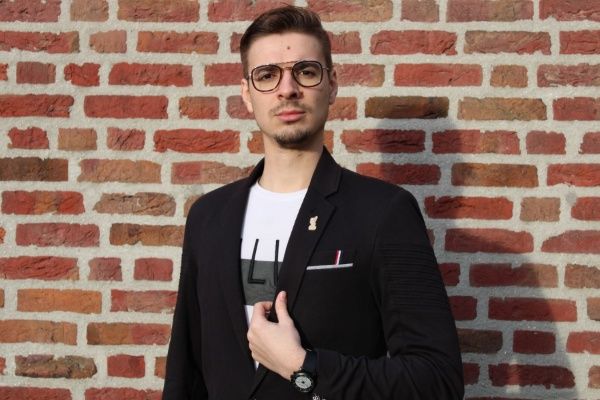
I have my own digital marketing company that keeps me busy during my free time!
Introduce yourself in a few sentences. What does your work involve as daily commitments?
My name is Simeon Yanev and I am Global Marketing Manager at the company iQ Power Tools. The company is in the construction business, producing machines for cutting tiles, bricks, stones, and other materials with an integrated vacuum system. The machines are unique and the company is a leader in cutting without water and dust. I work in the field of global marketing and strategic development of the company. My main focus is business growth through creating strong partnerships, managing key accounts, and expanding brand presence internationally. I work with a global network of influencers, manage social media, and promotional campaigns.
A large part of my work is related to travel – I attend international trade fairs in almost all European countries, as well as in the USA. I often have over 20+ flights a year, and sometimes I have to travel for months. This allows me to be in constant contact with partners, clients, and markets, which is invaluable for understanding the global business environment.
I also have my own digital marketing company that keeps me busy during the rest of the time.
Which country and city do you currently live in and how did you end up there?
I currently live in Rotterdam, Netherlands. I initially came here for my education, but I started working while studying. The university took a back seat as I was simultaneously working full-time and taking a full course load. In the end, I graduated successfully, but I didn't even manage to attend my own graduation ceremony because I was at a work event. Work and development opportunities kept me in the country, and it gradually became my second home.
What were the biggest challenges you faced at the beginning of your stay?
The main challenges were the language barrier, cultural differences, and adapting to the different pace of life and the way food is perceived. I overcame them because I knew what I wanted and didn't have time to feel isolated or discouraged – parallel work and study filled my days completely. Only later did I realize what I was missing. At first, I adapted entirely thanks to the work environment and by actively creating new contacts. I used apps like Time Left and attended events to meet people outside my professional circle.
How did you overcome the language barrier (if there was one)?
In the Netherlands, if you don't speak the language, you can literally be ignored, without it being considered uncomfortable. At first, it was unpleasant, and I often found myself having lunch alone in a room full of people. I managed by becoming valuable enough to the team that they started seeking my opinion and presence. Interestingly, when you earn people's trust and respect, they start to consider you, and those who don't like you don't hide their attitude. This helped me read the culture and build real, quality relationships.
What resources or networks helped you adapt?
I have not been part of a Bulgarian community. Adaptation came through work and actively seeking new acquaintances – through apps, events, and mutual friends. The work environment provided me with a stable foundation, and my personal social activity complemented this process.
What are the main differences between the work culture in your current country and that in Bulgaria?
The work culture is fundamentally different. In Bulgaria, there are often clear barriers between different levels in a company – for example, an intern would find it difficult to give direct advice to a director. In the Netherlands, everyone has weight, and good ideas are valued regardless of where they come from.
Here, there is a strong emphasis on work-life balance – overtime is an exception, and people are focused on doing exactly what is required of them without having to sacrifice their personal time. Promotions also happen faster and reflect real merits. An example of this is that my friend and I started at the same time in similar positions – I here, and he in Bulgaria. Over the last four years, my career growth has been significantly faster precisely because of the environment that encourages results and efficiency.
People here are focused on retaining good performers, which makes companies more open to new solutions and innovations.
What values and practices in the workplace impressed you the most?
-
Transparency – everyone knows the goals and expectations, which creates trust.
-
Open communication – it doesn't matter where the idea comes from, if it's good, it is heard.
-
Respect for personal time – personal life is valued, and balance is not just a word, but a real practice.
Have there been situations where cultural differences made things difficult for you?
Yes. At first, it was hard to get used to the direct way of communication. This frankness can be perceived as criticism if you come from a culture where people speak more indirectly. Over time, I realized that this is a manifestation of concern for quality and results.
How does finding a job differ in your current country compared to your homeland?
The process is similar in stages and length, but here personal contacts and recommendations carry much more weight. LinkedIn is an extremely important tool – through it, I have found opportunities and built professional connections.
Did you have to go through any additional qualification courses?
Yes, I always strive to develop and maintain a high level of knowledge and skills. I often use platforms like Masterclass, and YouTube is also a valuable resource where exceptional professionals share their knowledge.
Have you encountered prejudices or obstacles because of your foreign origin?
Yes, it has happened. We Bulgarians do not have a particularly good reputation in this part of the world, often due to scams committed by our compatriots. There have been cases where I was rejected solely because of my nationality. I see this as motivation – my goal is to prove with my work that prejudices can be overcome.
What would you advise people who want to take a similar step?
-
Clear goal and vision – know why you are doing it and what you want to achieve.
-
Financial preparation – ensure you have a reserve for the first 2–3 months.
-
Skill development – invest in language and professional expertise.
-
Actively building a network – LinkedIn, events, new contacts.
-
Flexibility and patience – adaptation is a process that takes time.
If you could go back, would you choose the same path?
I wouldn't change anything at all. In the end, if you are satisfied with the result, there is no reason to change the steps that brought you to it.
What do you miss most from your homeland in professional and personal terms?
Professionally, I miss the dynamism and the opportunity for more informal communication. Personally, I miss the people and the culture around food. In the Netherlands, everything closes early – if I finish work at 9:00 PM, there is nowhere to go to unwind. There, food is treated as fuel, while in Bulgaria you sit at a table and stay with loved ones for hours, sharing moments.
And, of course, the weather – in the first years, it didn't bother me, but after the fifth, I started to miss the sun and warm days.
Have you considered returning and under what conditions would you do so?
No. I am a nomad type and will definitely leave the Netherlands in the future, but not to return to Bulgaria, but to discover a new destination. I love the unknown, and the desire to explore new places and cultures is part of me. In Bulgaria, as well as in the Netherlands, I already know my surroundings, and it is hard to get lost in a city that is familiar to me. When you work 14 hours a day, you need to be able to go out and explore something new without traveling too far.
What do you think about money and its influence on your life?
Money for me is a tool, not a goal. They provide freedom and opportunities, but should not dictate your life. I believe that a person should focus on creating value – then the reward comes naturally.