I work in Madrid at a Spanish startup for digital solutions
· Vasilena Vasileva
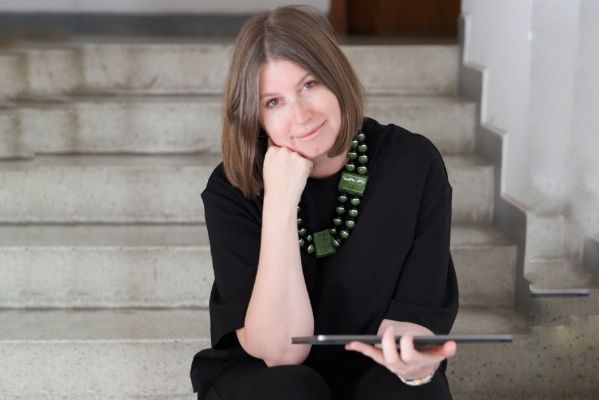
Personal contacts play a key role in finding professional opportunities!
Introduce yourself in a few sentences. What does your work as daily commitments consist of?
Hello, I am Vasilena Vasileva and I work at the Spanish
startup company Tochat.be. Our platform offers digital
tools related to WhatsApp, such as creating a WhatsApp button for data
collection, a booking system, payment links, and automations aimed
at representatives of small and medium-sized businesses.
Working in a startup is a real
challenge, as it requires performing various tasks such as
creating content for social media, onboarding clients, presentations,
invoices, and tracking payments. Nevertheless, my main focus is on
sales, as well as building strategic partnerships and
collaborations with technology companies in the same sector. In my
daily communication with colleagues and clients, I use Spanish and English.
Over the past year, we have focused on a strategy for
long-term development by building sustainable partnerships with large
digital media groups from across Europe. I am currently involved in two pilot
projects with online business directories and listings from Belgium (FCR Media) and
Austria (Herold).
I believe that building partnerships will remain one of
the few business functions that artificial intelligence will not be able to replace.
Every day we read how with AI we can automate business
functions such as finance, marketing, and even sales. But partnerships by their
nature are deeply human – they are built on trust, relationships, and
a long-term commitment. And this is where human intuition has no alternative.
Collaborating with other startups allows me to get to know
different business models and strategies. Spain is among the leading countries in Europe for
creating startups, and I feel truly lucky to work
in this ecosystem.
In which country and city do you currently live and how did you end up there? How did you overcome the language barrier (if there was one)?
I have been living in Madrid, Spain for almost 10 years.
In Bulgaria, I graduated from a language high school with a focus on Spanish. After that, I started higher education as a student in the Spanish Philology program, but after the first year, I realized that this was not my path, and I decided to leave for Madrid. There, I completed a bachelor's degree in Tourism – Management of hotels and tour operators at Universidad Europea de Madrid.
After graduating, I returned to Bulgaria and immediately
started working at a small travel agency that organized cultural
tours for Spaniards. Later, I continued my career in marketing and sales in
large hotel chains.
In 2013, I met my husband - a Spaniard, and two years
later, I moved back to Madrid.
What were the biggest challenges you faced at the beginning of your stay?
The first challenges I faced were mainly administrative – legalizing my stay and similar procedures. Making friends also turned out to be a difficult task. Spaniards only seem sociable at first sight, but they are actually reserved and find it hard to let foreigners into their circle.
What resources or networks (local communities, colleagues, organizations) helped you adapt?
I did not rely on local communities and organizations. I am
very communicative, curious, and open-minded, these qualities helped me
immensely in adapting to a foreign country. Additionally, I am a passionate
lover of art and culture, and Madrid is such a cosmopolitan city that it is
hard for one to get bored or feel lonely.
What are the main differences between the work culture in your current country and that in Bulgaria?
It is difficult for me to answer this question. I believe that
the work culture depends on the mission and values of each company. I value
the trust that my boss gives me, I have complete freedom of action, and I do not have to
constantly seek his approval.
What values and practices in the workplace have impressed you the most?
Spaniards are bohemians by soul and character. The organization of
tasks, the pace of work, and problem-solving often happen
more slowly with them.
Have there been situations where cultural differences have hindered you?
Spaniards do not like excessive directness – therefore, it is
more appropriate to point out problems in a delicate and indirect manner. Also,
they definitely do not understand our sense of humor.
How does finding a job differ in your current country compared to your homeland?
Here, for foreigners, the process of finding a job is quite
difficult. Salaries are relatively low. Many technology companies prefer
to hire freelancers from Latin America to reduce their costs. Personal
contacts play a key role in finding professional opportunities.
Did you have to go through any additional qualification courses?
Oh, yes. I myself experienced a “digital transformation”.
The COVID-19 pandemic shook tourism and
hospitality, and many had to rethink what to do with their careers.
Instead of waiting for things to get better, I decided to take action and turned to
technology, completing a master's program in e-commerce at
Complutense University in Madrid (2021-2022). A few months after I
finished, I started working at the company where I have been for 3 years.
In the digital sector in Spain, it is crucial to be proactive and
build knowledge by following experts on platforms like LinkedIn and YouTube.
LinkedIn is a great platform not only for B2B sales but also for learning, as it
offers access to professional communities and valuable resources.
For this reason, the diploma itself is not of primary importance (for the digital sector), but the practical skills that
you can apply immediately. This is one of the main differences with Bulgaria – there,
diplomas are often at the forefront, while here employers value real
skills and experience. To succeed, you need to constantly learn, experiment, and
adapt to new trends in the industry.
It is also important (I will say it more casually): “to enjoy playing with different platforms and digital tools”.
Have you encountered prejudices or obstacles due to your foreign origin?
Of course, especially in 2001. Over the last
decade, I feel a positive change – more and more Spaniards visit
Bulgaria, and I increasingly hear from Spanish colleagues that they have used
the services of Bulgarian specialists from the IT sector.
What would you advise people who want to take a similar step?
The best way to start working in Spain is first to work abroad for an international company, which can then transfer you to their local office in a major city in Spain. I am talking about working in large international companies, where the pay and conditions are significantly better than those of local Spanish firms.
If you could go back, would you choose the same path?
Honestly, I am not one of those people who look back to
the past or wonder “what if…”. I look boldly ahead and focus on future projects and career opportunities.
What do you miss most about your homeland in
professional and personal terms?
I work entirely remotely, and this model gives me the freedom
to work without difficulties from Bulgaria – especially in the summer, when I can
combine my professional commitments with my son's vacation. Two months in
Bulgaria somewhat compensate for the fact that I live far away.
Professionally, I miss working with colleagues from
Bulgaria.
Have you considered returning and under what conditions would you do it?
At the moment, my life is connected to Spain.
My husband is Spanish, and we have a 10-year-old son.
I would gladly travel to Bulgaria more often if I had the opportunity to participate in seminars or teach courses. After completing the master's program in e-commerce, the program coordinator invited me to give a lecture related to the startup ecosystem. In the future, I see myself as a teacher, sharing knowledge and inspiration.
What do you think about money? What is their influence on your life? What is your advice to people who often ask themselves questions related to money and how sufficient they are?
Spaniards are very frugal. They are very careful about what
they spend their money on. In Bulgaria, we are used to indulging ourselves and spending money on
nonsense, or simply spending more than we can afford.
My impression is that Spaniards have a better financial
culture in this regard. They clearly distinguish between needs and wants. I also manage to
maintain good financial discipline.
However, when we talk about money as financial compensation, they
give security and opportunities. But true satisfaction comes when
your work is meaningful and allows you to grow professionally and personally. In
today's society, we often accept it as a norm that success is measured solely
in money – in my opinion, this is a misconception.
My advice is, on one hand, to strive for financial
literacy, and on the other – for balance: between career and family, between
professional ambitions and mental health. Money is important, but it should never be
the only measure of happiness and success.