In the Netherlands, people respect each other's time
· Boryana Velinova - de Haan
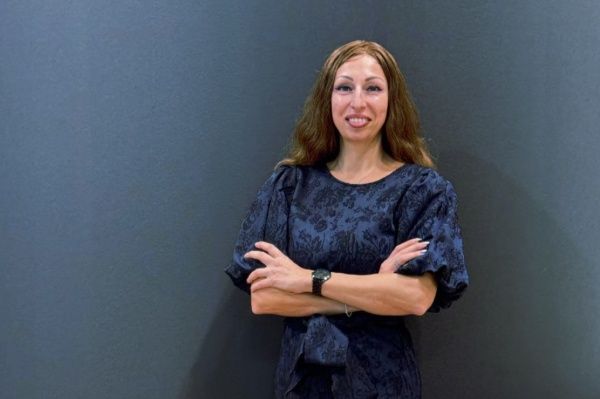
For a little over 20 years, I have been living in the northern part of the Netherlands!
Introduce yourself in a few sentences. What does your work
consist of as daily commitments?
My name is Boryana Velinova
- de Haan, I have accumulated 10 years in the gas industry and almost 10 years in an industry called
Nutraceuticals, which includes / summarizes vitamins, minerals, cosmetics. For the last
two years, I have been working on developing new markets for liposomal dietary supplements
in the Middle/Far East and South Korea.
Which country and city do you currently live in and how did you end up
there?
Rather, the country
chose me than I chose a new country to reside in, since this is
my husband's hometown. We always talked about how we would move to
Bulgaria or live in another (warmer) place over time, but before we
realized it, we are still here. For a little over 20 years, I have been living in the northern part of the Netherlands.
What were the biggest challenges you faced at the beginning of your stay?
There were as many challenges as one could wish for, although
most are washed away by memories over time. Perhaps first and foremost, I would mention
The Weather, which I, at my 22 years, completely failed to evaluate before I
left. Arriving in a place with an endless autumn, where you have no friends and do not
speak the language can easily melt the enthusiasm of even the strongest personalities. There was
a prolonged process of proving oneself caused by the fact that you are not from here. In
today's world, it is rare to be in an environment with only locals, but in the early 2000s,
the rules were different.
How did you overcome the language barrier (if there was one)?
For me, learning
the language was a mandatory goal from the very first moment. I started learning
Dutch 6 months before my departure, in Varna with my amazing teacher/
certified translator Olga Kamburova. Here on site, I took an eight-month course, after which
I started my first job in Dutch.
What resources or networks (local communities, colleagues, organizations) helped you adapt?
Integrating into the culture and environment is a very important process,
I assume not only in this country. The Netherlands offers (offered) free training for mastering the language. Classes are
formed according to the level of education in the home country, to maintain the pace and
level of learning. I found most of my current international friends
during this course. My first job was as a translator from Bulgarian and Russian
for the national health organization, where I learned a lot about
the structure and boundaries of society.
What are the main differences between the work culture in your current country and that in Bulgaria?
In the Netherlands, people respect each other's time. This is one
of the main differences; appointments are kept, schedules, meetings, commitments. People
do not allow themselves to change made agreements without a substantial reason,
especially at the last minute, and if a change is necessary, it is announced to everyone.
This is still lacking in Bulgaria, it is accepted even in business culture that every
agreement is a penultimate one, and the time is just a guideline.
What values and practices in the workplace impressed you the most?
Every industry and company is different in itself,
but generally, efficiency of the process is sought. The Dutch are very practical and frugal
people, I was extremely amazed by
the colleagues in the gas industry, who eat exactly the same thing every day
(mainly a cheese sandwich). The crazy biking in this country
continues to impress me to this day, especially when I see a pregnant mother with two
children on the bike and two bags of groceries.
Have there been situations where cultural differences have troubled you?
Endless amounts 😊 Starting from
the eating culture – as quickly as possible, around 18:00, without much dynamics. It is typical
here to invite you over after dinner, around 19:30 – 20:00, it is called for
coffee. Over the years, my surroundings got used to the fact that visiting us means a lot
of dishes, food for all invited, and long hours spent at the table.
Weddings here are another similar example; only part of the guests
are invited to dinner, for the others, the invitation states, for example: ‘Cocktail’,
‘Church’ or ‘Ceremony’ – where it is expected that you appear only during that part
of the day. The first local wedding was like shock therapy (none of our
international group had been familiar with these customs and we left hungry).
The Dutch are extremely direct and frank conversationalists,
they can calmly ask you: “So, why did your parents get divorced?“,
literally minutes after your introduction.
Welcoming business guests to an empty table or only with
coffee and one precisely defined cookie per person was one of my major
corporate battles in my early years here. I think I managed to build
numerous bridges between cultures over time and to fight budgets for dinners and
gifts for the foreign delegation.
In the first years in a foreign land, one makes
countless compromises with how they were raised and educated. Over time, you have
built a new, personal figure and personality that lifts its head and stands up for
its understanding of Normal behavior.
How does finding a job differ in your current country
compared to your homeland?
To be precise, in Bulgaria I have only worked
during my student years and everything was done through acquaintances. Here, the processes
change dynamically, in the early years of residence it was quite difficult to find serious work with a Bulgarian passport. Nowadays, a lot is done with agents,
who connect the demand with the supply in the market.
Did you have to go through any additional qualification courses?
Before Bulgaria's entry into the EU, it was necessary
to take an equivalency exam for the driver's license and equivalency of diplomas from
Bulgaria. The language course was mandatory, but free.
Have you encountered prejudices or obstacles due to your foreign origin?
Certainly. At the interview for a flight attendant, I was told
quite directly that due to my accent, I would never reach the level of
local candidates and there was no point in continuing. In the province where
we live, there is also a local language (Frisian), which I do not speak and that has limited me
very much back then.
What would you advise people who want to take a similar step?
Not to underestimate the decision, to research various aspects of life in the given country, to assess which factors are more important to them. There is a big difference between the standard of living in a million city or in a village in a province with a dialect. There are pros and cons everywhere, but for each they are defined by personal criteria.
If you could go back, would you choose the same path?
Most likely, yes. I am not sure if the Netherlands would
again be my new country, but when I started traveling outside Bulgaria, I was
18 years old and quickly realized that I had an interest in other cultures. At that time, I
was trying to become a flight attendant, so I could visit as many new places as possible.
I am grateful that my job has provided me with enough opportunities to travel
over all these past years.
What do you miss the most from your homeland in a professional and personal sense?
In personal terms, it is much more measurable: during the first 5-6
years, we managed to return home only once a year and that was quite
hard for our family and friends. We missed weddings, christenings, and
funerals – this is part of the price of living abroad. The mountains are one of
my most missed natural beauties, but overall I miss everything – the sun, the sea,
the real tomatoes, the long, priceless time spent at the table with loved ones.
However, when you get used to living in an orderly, structured society, the disorganized things
in your homeland start to weigh much more than before the time when you lived there.
Have you considered returning and under what conditions would you do it?
In 2004, we seriously considered returning home, we spent
about 6 months searching for a job with my husband, but apart from Sofia, no
potential opportunity opened up to equal our standard of living. Interestingly,
he, as a non-Bulgarian speaker, received many more offers
than I did, and better paid, due to his work sector – IT. We are already
investing in our country and visiting more often, and there is also a possibility that one
day we will live there.
What do you think about money? What is its influence on your life? What is your advice to people who often ask themselves questions related to money and how sufficient they are?
This is quite a personal question. Everyone should build their
relationship with money and determine how important they are and when they are sufficient.
The Netherlands is the country of taxes. Here, the entire system is built on
taxing taxpayers and accordingly providing them with benefits and social
security. When I arrived, over 20 years ago, the social network supporting
every citizen was very stable, and I would calmly say that it was worth it to
immigrate here for a better and more secure life. In the last 5-7 years, things have
been very different and the social system would not support newcomers as it did before,
but would take their due taxes. Personally, I am grateful that I have two
countries that I call Mine and I have managed to build a foundation that allows us
to live peacefully!