Our journey helps us understand others better and convey our ideas
· Asena Serbezova
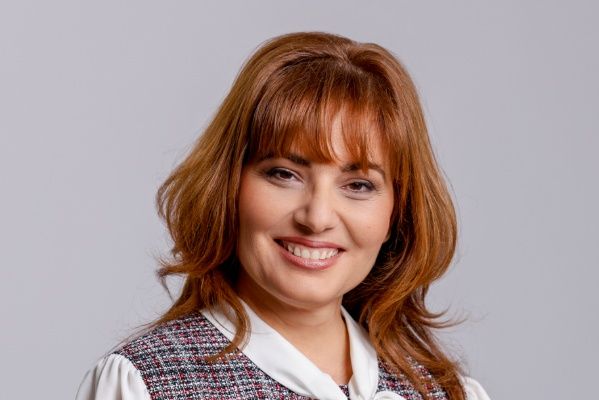
Dealing with challenges that arise during travel develops the ability to quickly and effectively solve problems in the work environment!
Introduce yourself in a few words..
I am a pharmacist and psychologist, health
manager. I have over 30 years of experience, both professionally and in terms of
traveling abroad. When I was little, I traveled around Bulgaria with my parents
lengthwise and breadthwise, as my mother was an ethnographer and I grew up with the typical
smell of chests and traditional costumes in ethnographic museums. I raised my two children in
love for travel and I am glad to see that today they are travelers and
appreciators of beautiful and interesting places all over the world.
What does traveling the world mean to you?
Traveling is not just physical
movement from one place to another, but also a deep process of learning and self-discovery. It
enriches the soul and expands the boundaries of knowledge. Any
trip can be such, regardless of the destination and the reason, and it is an incredible
adventure.
How many different countries have you seen so far? Share a
curious incident or highlights from your travels?
I recently counted them – it turned out that I
have visited over 50 countries (there are still so many left). Every culture I encounter
tells a unique story and offers new perspectives. For example, India is a country
with deep cultural roots and incredible diversity. The contrasts between
different regions, traditions, and ways of life are palpable. Riding an elephant was
an unforgettable experience that immersed me in local tradition and nature. The gliding
of flower sellers' boats on Dal Lake is magical. The nature there is
breathtaking, and the reflection of the Himalayas in the calm waters creates a unique
landscape. Even challenges can turn into positive memories,
which enrich travels. I have many similar incidents: for example, three
consecutively canceled trains from Lund, Sweden to Copenhagen, Denmark, as a result of which I had to take a taxi
to Denmark; getting into the wrong taxi in Almaty, Kazakhstan (another guest from the hotel had
ordered at the same time and the same make and model of taxi), my taxi not arriving
for the airport in Copenhagen (which forced me to “jump” into the metro at
the last moment and travel without a ticket), landing from Prague in 2011 on
the third try, my flight from Sofia to Varna taking 4 hours (we circled for 2 hours
above Shumen without anyone explaining why) and many others.
Do you like to repeat destinations? Give examples and
motivation “for” or “against”?
I love to repeat destinations. Every
trip to a familiar destination offers the opportunity to discover something new.
I always leave something for the next time, whether it’s new places to visit or
activities I haven’t managed to do. I know what to expect and I can
plan my time more effectively. Repeating destinations creates a sense of
comfort and familiarity. I know how to navigate and what local customs to
follow. Returning visits allow me to deepen my experience and learn
more about the culture, history, and people of the destination.
What was your first trip that truly changed you
as a professional and can be said to have changed your thinking?
My trip to Austria was related
to my first job as a medical representative. I spent three months in
an alpine village, where I was trained. The training included doctors and pharmacists
from different countries, which gave me the opportunity to exchange experience and knowledge with
professionals from different cultures. There was also a psychologist who recorded
our presentations during various tasks. Afterwards, we discussed what
we could change to improve our performance. Through this experience, I began to
develop an interest in psychology and how it can be applied in a professional
environment, especially in the field of healthcare.
What do you learn about yourself and your professional skills
when you are in a new cultural environment?
Faced with differences in language and
communication, we develop skills for active listening and nonverbal communication.
This helps us to better understand others and convey our ideas.
Stepping out of the comfort zone forces us to face new challenges,
which leads to personal growth and increased self-esteem. We learn to
respect and understand differences, which is important for successful work in
multicultural teams. In short, a new cultural environment offers unique
opportunities for self-development and improvement of professional skills. These
experiences not only enrich our personal experience but also prepare us for future
challenges in our careers.
Have you encountered people or ideas during your travels that
have influenced your career path?
I have encountered them, of course. Participating in
events related to our field helps us stay up to date with the latest
trends and innovations. This is especially important in rapidly changing industries,
such as pharmaceuticals. When we are active, we can be more easily
noticed by potential partners and employers.
Do you think that traveling helps you expand
your professional network? How?
I travel a lot in connection with
my profession, as I am a good practices auditor in the pharmaceutical industry and
in this regard, I visit factories, laboratories, drug distributors, and
consulting firms in the field of drug safety. So I have a very
rich network of professionals in the sector, I would say some of the best in
all of Europe, as well as in other parts of the world. Through traveling, I establish and
maintain long-term relationships with people from my professional network. Audits abroad
allow me to get acquainted with different business practices and cultures, which enriches
my understanding and approaches in my work. I also get to know many different
innovative methods, as well as future trends in pharmacy, as I often
auditing the development of drug
products and conducting clinical trials with them.
What skills do you develop the most when you travel, and how
do they affect your work?
When I travel, I develop numerous
skills that positively influence my work. For example, when traveling,
I have to plan routes, make reservations and budgets, which improves
project management and time in work. Dealing with challenges that arise
during travel develops the ability to quickly and
effectively solve problems in the work environment. Traveling often brings
unforeseen situations that require quick adaptation, and this can improve
the ability to cope with changes and challenges in the workplace.
Is there a city or country that inspired you to
start a new business or project?
There are countries where I have met people,
who have shown me that there are no stereotypes and everything is possible. I have seen a company,
that in 4 years since its establishment, operates on 3 continents and has over 35
clients in the field of drug safety tracking. One of
the most resilient and positive souls I met in a small town in Holland. He created a
family business for drug trading, which he manages together with his wife,
who barely uses her right hand, and their daughter, who gets out of her wheelchair and graduates as a nurse, working in the hospital where
she was treated as a child. This resilient family does not hesitate to buy a house in
Italy, hire craftsmen, and do renovations from a distance. My meeting with them
was at a time when I was wondering how I would cope with far smaller difficulties. They
inspired me.
When you are in an unfamiliar country, do you feel
more motivated or more distracted? Why?
I feel more motivated due to
the eternal lack of time – I have to prioritize what to see and therefore
analyze and make choices (most of the time I
let my intuition run wild) . This applies both in
cases where I use public transport and when I am with a rental car. The only exception is when my husband drives, then I relax
and use the opportunity to take a nap. Although, if you ask him, he will probably tell you
that I constantly advise him on where to go.
Are there destinations that act as a “restart” for
your creativity and ambition?
Every destination can affect us this way, depending on who we meet and what examples we witness. Ideas often come to me on the couch in the living room or in
the bathroom. On the street. Or while driving. I haven’t noticed this process to be
more intense in certain countries compared to others, or to depend on the destination.
What I can share is that I recharge a lot from nature.
How do you manage the balance between work and pleasure
when you travel?
It depends on many factors, such as the destination and
current work commitments. At interesting places, I spend more time,
even renting a car to explore. First and foremost, of course, I prioritize
fulfilling work commitments if the trip is work-related,
but I try to combine when possible. I often work at airports, between two
flights, as well as on planes and buses. My job allows it.
How have travels changed the way you perceive
the value of money?
They have increased its value because
I have seen many situations where my money saved me time, gave me unforgettable
experiences, and provided me with comfort. Also, traveling in different countries,
I see how people use their money in different ways, which helps me to
realize that the value of money is relative. Travels can often challenge us to learn more about currencies, costs, and economies of different
places, which can increase our financial literacy. My attitude towards
money has fundamentally changed since I started traveling. I began to see
money as a means to create memories and unique experiences, rather than
just for purchasing things.
Do you travel to find new ways to earn
money?
No. This is not the goal of my travels.
What lessons about financial independence have you learned from
different economies and cultures?
In different cultures, saving, for example,
can be perceived differently. In some Asian countries, like
Japan, the emphasis is on long-term savings and investments, while in
Western cultures, the focus may be on short-term consumption. In many
cultures, there are traditions of saving in groups (for example, “saving unions”), which promotes financial responsibility and mutual assistance. In some
cultures, like in the USA, debts are often perceived as a normal part of
life, while in others, like Germany, debts are avoided. In many cultures,
education is considered a key factor for financial independence. For example, in
Scandinavian countries, access to education is highly valued and is seen as
the foundation for success. Some cultures emphasize minimalism and simplicity in life,
which can lead to better resource management and higher financial
independence. When I travel to such destinations, I see and realize that it is possible to live with fewer possessions.
Do you think it is better to spend on experiences,
rather than material possessions?
It is good to invest in both,
with proportions varying for each person. Of course, it depends on whether we are talking about items
that will bring us some comfort in daily life or long-term investments. It is also
important whether you have children and whether you want to finance their dreams as well. Then
the cake needs to be cut into more pieces and sweeten the lives of everyone. Experiences,
such as travels, concerts, or courses, often provoke longer-lasting joy
and satisfaction compared to many material items, which can quickly lose their appeal.
How do you see the future of digital nomadic life?
I am an advocate of this way of
life. I even wrote the answers to this interview on the board of an airplane. More
and more people will lead such a lifestyle and professions that
allow it. I have signed contracts and worked with people I have never seen in person. The same can be said about part of my scientific
production. I have research with scientists from Germany and Serbia, with whom I have worked
entirely online. I also regularly conduct such trainings.
Are there specific countries that are more favorable for
work and investments?
There are many countries that have
adequate programs to promote investments. Such are Singapore, Canada, the USA
and New Zealand, and from our continent – Switzerland and Germany. The choice of country
for work and investments depends on individual goals, the industry, and personal
preferences. It is important to research the specific conditions and requirements of each
country before making a decision about work and investments. Scandinavian
countries provide a perfect balance between work and personal life. Having worked for 12
years with Danes, I had the opportunity to personally verify this.
If you could choose one place in the world to
develop your next big idea, where would it be and why?
What I do is not
bound to a specific place. Recently, I also received an offer from an American company
to work entirely online. I declined because for me, traveling and meeting people are
important.
What destinations would you definitely recommend
visiting and why?
I would recommend all the countries I have been to, because in each I found something that would make me go again next time. I am especially in love with the Western Balkans, where I travel intensively in recent years. They represent a rare combination of nature, good food, and languages that we understand.
What is the career advice you would give based on what you have seen around the world?
Do not set limits, neither regarding the destination nor regarding the age at which a new beginning can be made. The main question when starting an endeavor should not be how much money it will bring, but whether it will bring us satisfaction and whether it moves us forward in relation to the dreams we had in our childhood. If the answer to both questions is positive, the endeavor will certainly be profitable.
There is no path that goes only up, only straight, and without turns. This certainly applies to career paths as well. Do not often choose highways, because there is nothing interesting there, it just gets you from one point to another faster. When you do use them, do not hesitate to get off them from time to time. Do not be afraid to wander down unfamiliar paths. Sometimes you may even have to go off-road to reach a valuable place. And to the best, I wish to build their own roads, both for themselves and for others after them.