Passion for knowledge and inspiration for others
· Professor Elenita Velikova
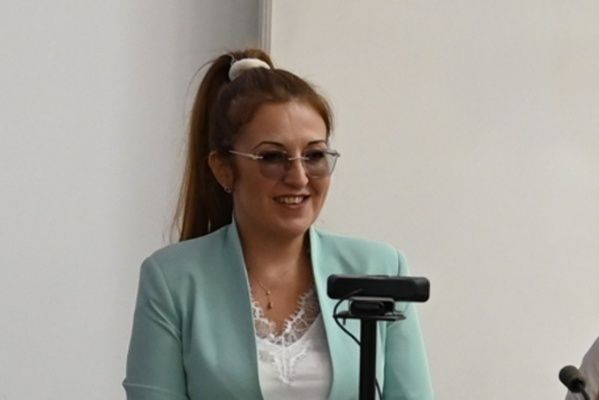
I have never allowed money to determine my happiness!
Introduce
yourself in a few sentences..
My name is Elenita Velikova and I am a professor at the University
of National and World Economy. Over the course of 25 years, I have managed to go
through the entire academic path from a bachelor's degree in "International Tourism",
master's in the same field, PhD student in Economics and Management, assistant,
chief assistant, associate professor, and professor. I work in the field of tourism and
education. I have always loved to learn and I think my profession reflects this passion
most accurately. I believe in the power of knowledge and collaboration and I try to
inspire others to dream through my work.
What did you dream of becoming in your childhood?
As a child, I wanted to become a doctor. In the tenth grade, my dad
advised me to apply to the economic university because later I would be able to work
in a less demanding job. I quickly changed my profile to geography and mathematics and
two years later found myself at UNWE in the "International Tourism" program. I graduated
with a bachelor's degree, a master's degree, and applied for a PhD. During my PhD,
an assistant competition opened up, which I won, and 20 years later I have not changed
my job. I remember that as a child I loved to play teacher. I believe that talents and
career choices are evident from an early age.
At what age did you earn your first money? Tell us
about an interesting incident?
For the first time, I worked during my school years for a cousin of mine
during the vacation. My task was to stay in his office and answer the phone. Later, I
found out that my parents had made him hire me and even that they had paid my first
salary. It was a kind of educational measure – to teach me work and to prevent me from
wandering around the streets all day. Nevertheless, I felt very proud that I was
engaged and already earning my own money.
What are the main factors and examples that shape us
as individuals at an early age and form our interests? What is your
recipe for curiosity, sources of information, and inspiration at
this stage of our human development?
I believe that family is the most important factor in our early
development. I was raised by my grandmother, who taught me the value of hard work.
At home, education and being honest and responsible were always emphasized. My
parents encouraged me to learn and to be interested in the world around me, not just
to take things for granted. My mother always said that children should surpass their
parents. I was a student during the transition, but I remember that I liked my math
teachers the most in both primary and high school. Perhaps that’s why I became an
economist. To this day, I find comfort in solving problems. For me, it is very
important for the brain to develop, and this happens through reading, mathematics, and
learning languages. My recipe for curiosity lies in the fact that I constantly want to
learn about new things and understand them. I do not rest until I reach the essence of
things, until I explain them to myself. Then comes the next case, and so on to this
day.
Has there been any significant change in your perceptions
in more mature age regarding what motivates you to do or not do something?
Yes, over time my perspective on motivation has changed.
When I was younger, my main drive was the desire to prove myself – first to my family,
then to teachers, colleagues, and society. I have always been ambitious and wanted to
achieve results, to see progress. Now, years later, I feel that my motivation comes
mainly from within.
Today, I am driven not so much by the need to prove
something, but by the desire to do meaningful things that leave a mark – in the
students I work with, in the teams I help, and in the projects I implement. I have
learned that not everything depends on external evaluation or recognition. Much more
important is the internal satisfaction and the balance between work, family, and
personal dreams. I now choose my battles carefully – it is not necessary to engage
everywhere and at all costs; it is important to invest your energy where you can truly
be useful and where you believe in the cause.
Whose decision was it where to pursue higher education and
what to study? Was this decision correct, viewed from today’s perspective?
I have always been quite a rebellious child – I insisted on
making my own decisions, even when I listened to my parents' advice. At that moment,
when my dad directed me towards economic education, I thought about it and decided to
listen to him, but not because I gave in, but because I did it with ambition and
reason. In the year I graduated from high school – 1997, only nine people were
accepted into medicine. I decided that I would not bear the disappointment if I was
not accepted, and I turned to another field that was also close and interesting to me.
I applied simultaneously to UNWE and Sofia University "St. Kliment
Ohridski" and was accepted at both universities. This was the moment when I had to
make my choice. After much thought, I chose UNWE and the "International Tourism"
program. I liked that tourism combines economics, culture, and working with people –
something that has always attracted me.
Then came the application for a PhD and shortly after that – the
assistant competition. Everything was happening as if on a drawn path, without a second
of interruption. I have never had a period of hesitation or pause – I have always
moved forward. I believe that when a person is in the right direction, the whole
universe helps them to make the necessary things happen. There are no random things.
Today, when I look back, I know that this decision was
correct. Perhaps back then I chose more by intuition than by plan, but this choice
led me to a career that I love and that brings me meaning and
satisfaction. Sometimes life does not lead us down the most obvious path, but if we
have the courage to move forward, it takes us exactly where we need to be.
Share more about your interests, knowledge, skills, and
hobbies?
My interests are of various natures. Professionally,
I am most passionate about education and the development of tourism – how it can be
a driver for economic growth, but also for the sustainable development of communities.
I love to work on projects that create new opportunities and have a real
effect on people.
On a personal level, I am a curious person – I love to read,
travel, and explore different cultures. For me, traveling is not just a
vacation, but a way to learn something new and see the world through the eyes of
others. I also enjoy solving math problems – it calms me and helps me keep my
mind "in shape".
I love nature and the mountains, and in recent years
I have found pleasure in yoga, as it gives me balance between mind and body.
Would you change your profession today and which fields of
activity capture your interest?
I would not change my profession – it is part of me. I believe
that I am in the right place and that my work has meaning. Sometimes I have
imagined what it would be like to engage in something completely different – for
example, architecture or interior design, because I like to create beautiful and
functional spaces. But these are more hobbies and dreams, not a
professional path.
Tourism and education are the fields where I feel
most confident and useful. I like that this is a dynamic area – it is always
changing and requires you to develop along with it.
They say that personal branding is everything that people say
about you when you are not in the same room with them. What would you like to hear
today?
I would like
people to say that I am a person they can rely on – a professional
who works with dedication and heart. I hope to be associated with integrity,
honesty, and sincerity.
I would be glad to hear that I have left a positive mark – that I have inspired
someone to believe in themselves or to take a step forward. For me, the greatest
compliment is when a student or colleague tells me: "Because of you, I saw that I can
achieve more." This is the true value of personal branding – not just how you look
on the outside, but what you leave behind.
Emotional intelligence, adaptability, and flexibility,
as well as our soft skills, are key conditions for success in recent
years. How do you cope with the daily challenges of life to
stay in good shape and mood?
I have learned to listen to myself and to give myself time for
recovery. My work is dynamic and often very demanding, so I try to find small
"islands" of calm throughout the day – a short walk,
a cup of tea, or a few minutes of silence.
I believe that the most important thing is not to let problems
completely engulf you. I strive to view difficulties as tasks to solve,
and not as personal failures. I maintain contact with my loved ones because conversation
and sharing emotions are a great relief. My best advisor is my daughter.
In recent years, yoga and travel have helped me the most – they
give me balance and inspiration. I try to impose on myself not to
work late in the evenings and on weekends, but often I do not succeed.
What are the most important conclusions you have made so far
about maintaining proper communication considering the different characters of the
people you meet daily – colleagues,
friends, loved ones?
Every person is different, and this is both a
challenge and a wealth. I have learned that in communication, the most important thing is
to listen – not just to hear the words, but to understand the emotion behind them.
Over the years, I have become more patient and more careful. I now
know that it is not necessary to react immediately or to prove that you are right at any
cost. Sometimes silence speaks more than words.
I strive to be clear and open, but also to leave
space for people to express themselves. I believe that respect and empathy are
at the core of good communication – both with colleagues, friends, and my loved ones.
What do you think about money? What is their influence on
your life? What is your advice to people who often ask themselves questions
related to money and how sufficient they are?
Money is important –
they give us security, freedom, and opportunities. But over time, I have realized that
they cannot be a goal in themselves. Money is a tool, not a meaning.
In my life, they have
mattered, especially at times when I wanted to provide stability for
my family or to realize a certain dream. But I have never allowed
them to determine my happiness.
My advice is simple – money should serve us,
not we serve them. It is important to have a goal and a clear idea of what you want to
achieve, and to use money as a means to that end, not as a measure of your own worth.
What is the most valuable career advice you would give to
people?
I would say three things.
First – love what you do, because only then
will you have the strength to get through the tough times.
Second – keep learning. The world is changing, professions
are changing, and if we do not develop, we remain in one place.
And third – build relationships. The people you
work with are your greatest asset. Be honest, fair, and open –
a good reputation is something that no one can take away from you.
If you follow these three things, success will come as
a natural result.