The challenge in the coming years will be to keep your interest in what you do
· Aleksandar Durchev
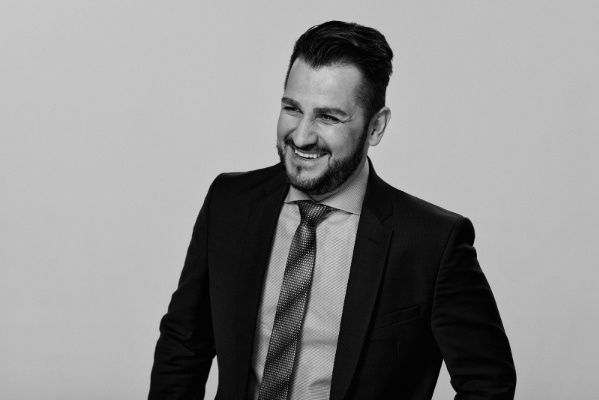
A successful career is to be happy, even in moments when the house of cards collapses, because there is someone to help you build it up again!
Introduce yourself in a few words…
I am Aleksandar Durchev. For over 25 years, I have been involved in
management, starting and ruining businesses, although some, especially in the
field of marketing communications, are quite successful. I am the managing partner
of All Channels
Communication Group . The company is the largest Bulgarian independent
communication group with numerous Bulgarian and international awards for various
achievements. We have offices in Sofia and Vienna and offer integrated services in
advertising, PR, BTL and event
management, influencer
marketing and media planning. I am a co-owner of Cohones Brewery – a craft brewery producing
exceptional beers. I have been teaching for many years at the American University in
Bulgaria. I have taught over the years at SU and NBU. I have studied quite a bit – I have two
and a half master's degrees and a doctoral degree. I have two wonderful daughters and a wife.
How would you describe your career in a few words?
Launching. I started my business at 24 years old. The company
quickly gained important clients and awards and became popular. None of this
would have been possible without my partners and the wonderful people who came,
stayed, or left from
All Channels. Things happened incredibly fast and I didn't have much time to reflect on them over the years. We had to keep ourselves
above the waves with colleagues and not allow ourselves to lose sight of who
we are and why we do all this – whether due to heavy burnouts or because of being dazzled
by temporary successes.
What was
the most important choice that shaped your path In?
There are a few. The first was when I realized that
there was no way I could be an employee in this life and I jumped into something that cost a lot –
nerves, friendships, moments with family, missed parties, and alcohol consumed
by someone else. The second is when my colleagues and I realized that, to
be a successful entrepreneur, you need to have guts. So in 2008, right in
the midst of the shock and horror of the financial crisis, we launched our advertising agency –
the second independent operation in the Group. From there, appetite came with eating. This
predetermined our transformation into a communication group – a model that many
companies in the market followed. There are many other important decisions as well. The life
of an entrepreneur is filled with joyless moments, where choices must be made,
some of which are painful but important for the survival of the business.
What would you like to know at the beginning of your career, but no one told you?
That you can't manage people, processes, and clients with
horns forward. Business is like an organism – you have to take care of it, train it
regularly, and give it the opportunity to grow gradually. Excessive
growth leads to overheating of people, business management systems, and loss
of clients. I learned this the hard way.
Another important thing I wish I had known as an empathetic
and social person is that at the top it is lonely and cold. In a hierarchical society like
Bulgarian, people often look up and see… backsides. I believe that over
the years we attracted and nurtured people for whom hierarchy is not us against
the backsides, but is based on the skills and experience that my colleagues and I exchanged over
the years. We call it the hierarchy of experience – it doesn't matter if you have gray hair,
but what experience you can share with others.
How can a person understand which profession is suitable for them?
When a person feels butterflies in their stomach when doing
something that brings them money and after work instead of scrolling to total brainrot, they delve into and read about
that same topic, it means they have found their calling. To get there, they need to experiment,
search, and be excited. Today this is a big challenge – social media often
squeeze the last drop of enthusiasm, especially in the younger generation, offering
cheap numbing dopamine. Again, we see natural selection in an ironic,
new version.
Which skills according to Inwill be key in the next 10 years?
In my opinion, the most important skill in the coming years will be
to be disciplined, to focus and deepen, and to keep your interest
in what you do. The economy of the moving thumb teaches us to seek quick
pleasures, which kills people's patience for things to happen at their natural
pace. Everyone expects quick accumulation of knowledge, quick problem-solving,
quick careers, new dopamine. This will be the big problem of
future generations in my opinion. Technologies will change many
industries beyond recognition. To succeed or even just to survive in these changes, it will not be enough
just to have specific knowledge and skills. People will be expected to be self-disciplined,
flexible, and resilient. And to be such, you need to be focused on the things you
love, but which are likely to change tomorrow.
How to build a network of useful contacts without appearing interested?
Why shouldn't we appear interested? In my opinion,
contacts are built when we clearly share that we are passionate about a given topic. When
we clearly share with the object of our interest that we share the same passion and admire
their successes in a given field, we create something like a spiritual
connection. If the object of your professional interest does not respond, giving you
a signal that they are excited about the same area, it means you do not need that
contact. And probably this person is what many people think of them.
What is the biggest mistake you have made in your career, and what did you learn from it?
A wisdom says that a person is the only animal
that stumbles twice over the same
stone. And I have made hundreds of mistakes, some of which I have repeated. What
happened during Covid was a big lesson for me. I allowed myself to be
overconfident, but I also made many abrupt movements. We parted ways with many valuable people
and broke many friendships in the company. What would have happened if I had
acted differently is hard to guess. The truth is that today the company is
back on its feet, with an incredible team and clients.
How to recognize a toxic work environment and when is it time to leave?
When people start to “solve” the company's problems in
internal chats, it means things have gone bad. This means that hate groups have formed,
who always “know” better how the company's problems can be solved, but the managers do not deserve to hear their big
solutions. This also means that the managers have distanced themselves from
their team, have elevated themselves to their pedestals, forgetting that every person has
their own perspective and have allowed this perspective to become a topic of informal
discussions in the company. These are tough moments, in which, if the people in the hate
groups have not left, they should be uncompromisingly released. This is
painful because it often “burns” wonderful specialists, it leads to a wave of subsequent departures, and
last but not least – the essence of the problem must be communicated directly to
the company's managers.
What would you do differently if you could start over?
I would probably start later. I started my company
before finishing university and with 1-2 years of practical experience. I would have gained more
managerial experience before diving into all of this. This might have saved me a lot of awkward and difficult moments.
How to maintain our motivation in times of stagnation?
Some try with complaining – defining a string of problems,
throwing them out, finding dissatisfied allies, and defining their common
misery. Believe me, this does not work. On the contrary – it deepens the issues,
as I tried to explain earlier. I have a new favorite saying, unexpectedly, from
Oleksandr Usyk – “I have no motivation, I have discipline.” Motivation easily
disappears. You are tired, angry, disheartened, and… poof – one day you just don’t feel like
going to work, you don’t feel like doing the same stupid things. This is where discipline comes in. Discipline
to wake up, to get up and go
regardless of yourself, to deal with the problems. And as we know – when we
handle the problems, sunny days always come.
How to achieve a balance between professional and personal life?
There will be work even after us. Unless you are a brain
surgeon, you need to realize that this balance is extremely important, so you
don’t have to force your motivation with military discipline. But if your work
gives you more pleasure than interacting with loved ones, it may be time to turn to a specialist. Unfortunately, even here you need discipline – to stop, ask yourself questions, find the answers, and make changes in your life.
When is it time to change our career, not just the job?
Probably when we realize that we just have some job.
The butterflies are gone, discipline doesn’t help, and we see more problems
than solutions. I have seen people who have lost their direction in a given industry
and this is a good opportunity for them not just to change companies, but even the industry. This restart is often
extremely beneficial for people's mental health and helps them gain
new knowledge, skills, and make a great new career.
If you had to give just one piece of advice to people seeking success, what would it be?
To be disciplined not to give up.
What is Inyour definition of “successful career”?
To be happy, even in moments when the house of
cards collapses, because there is someone to help you build it up again.