Be honest about what you want to leave behind
· Maya Hristova
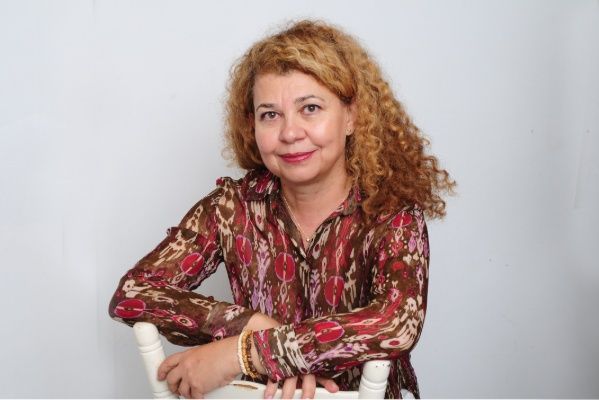
Success, in my opinion, is not measured only by achievements, salaries, or titles — it is measured by the impact you have, the inspiration you provide, and the changes you make!
Introduce yourself in a few words..
I
am Maya Hristova – the person who laid the foundations of EDUGAMA
Group years ago and continues to develop it today as the owner and manager. For me,
education is not just a job, but a mission, because I believe it is the strongest
catalyst for change.
For
more than two decades, my passion has been to facilitate the transition between knowledge and
action – to help people and organizations not just to learn, but to apply,
transform, and leave real value behind. From the very beginning of my
career, I sought ways to build platforms for development. Thus, I created
the first certified training center of Microsoft in Bulgaria, the first testing
center of Prometric in our country, and then the training center of HP – the first one in
the Balkans.
Today,
I am happy that I continue the mission – to give people knowledge and confidence,
which they can turn into real successes.
How would you describe your career in a few
words?
I
would describe it as a journey filled with meaning and new horizons. I have never
stopped learning – from my first steps as an IT professional, through building
certification centers, to creating my own company. What connects all these stages is
one and the same thread – my belief that when a person receives the right knowledge and
support, they can change not only their life but also the environment around them.
What was the most important choice that shaped your
path?
One
of those moments – when I decided to create the first certified training center of
a technology company in Bulgaria. This was not just a business issue, but a matter
of vision: that Bulgaria can have educational institutions that provide learners not just a
certificate, but real competitiveness. When I worked in teams, I felt that many people had
motivation, but did not always have a platform. The choice to invest time, effort, and risk
to build a platform – that shaped me.
Also,
the launch of the next major technology training center, the first in the Balkans – a project
that required not only technical expertise but also building partnerships, trust, logistics.
This taught me that success is not just a matter of idea, but of execution, of people, of processes.
Today,
when I see hundreds of people who have gone through our training programs and
have developed in their careers, I know that I made the right choice.
What would you like to know at the beginning of your
career that no one told you?
That
the fear of making a “wrong choice” is part of the process. No one told me that when
you choose a path, there is no guarantee that it will be the right one – and that’s OK. That
sometimes it’s better to start, despite the uncertainty, than to wait for certainty.
Also,
that success does not come alone – there come the self-comparisons, and the moments when you
will feel left behind. There are days when you ask yourself “Why are others advancing, while
I am moving slower?”. And it would be good to know how important it is to have a network of
people who support you, who believe in you.
The truth
is that mistakes are lessons, and trust in the team is invaluable. I learned that
the biggest breakthroughs come when you allow the people around you to
express their potential and grow together with you.
How can a person understand which profession is
suitable for them?
In
my opinion, you need to test – not just theoretically, but practically. I myself, when
I started managing a training center, spent days with teachers, with
trainees, with clients, listening to their needs – what makes them feel
satisfied, what worries them, what inspires them.
It’s
good to try to work in a small practice – projects, volunteering, internships –
to feel the atmosphere, the culture, whether the work makes you wake up with
desire, not just with a sense of obligation. And also – to pay attention to
what comes naturally to you – what you do with ease and joy, and what tires you
not just physically, but emotionally and mentally.
Which skills do you think will be key in the next 10 years?
I
believe that the future is a combination of technology and humanity. Yes, skills like data
analysis, understanding artificial intelligence, and digital literacy will be
critical. But equally important will be the skills to communicate, to lead teams, to
show empathy, and to work with people from different cultures and backgrounds. In our
organization, we always seek this balance – courses for new technologies, but also training
for leadership, communication, and personal development.
• Ability for adaptive learning – not just to
learn, but to learn to learn: entering new technologies, new methodologies, new
tools.
• Critical thinking and data analysis – not
a bombardment of facts, but the ability to interpret them, to distinguish the important
from the noise, to make decisions based on data.
• Human skills (“the soft side”) – empathy,
communication, leadership, the ability to motivate and inspire – they will become more
valuable, because technologies can do a lot, but they cannot replace the human
connection.
• Ethics and social awareness – with more
automation and AI, it will be important how we use these technologies, what
impact they have on society.
• Creativity and innovation – the ability to
think outside the box, to try new paths, to mix disciplines (e.g.
technology + humanities, business + design + psychology).
How to build a network of useful contacts without
looking interested?
By
starting with one simple thing: to genuinely care about the other person. I
have always believed that good relationships are built on authentic interest, not on
calculations. When you ask someone what their challenge is, offer an idea,
or even just listen – that is a bridge. Many of my strongest partnerships have
started with a simple coffee and a conversation without a plan, but with sincerity.
Be genuinely
interested – what someone is doing, what motivates them, what their
challenges are. Not ideas about what they can do for you – but how you can
help them. When you help without expecting to receive something in return
immediately – that leaves an impression.
Start
with small gestures: share a resource, a book, a contact, help – without waiting
for repayment. This leads to trust. People remember those who have given them
something for free – even if it’s small.
What is the biggest mistake you have made in your
career, and what did you learn from it?
Once,
I tried to grow a project too quickly, without having the necessary structure.
In the end, this led to tension. But I learned that sustainable growth is
more important than rapid growth. This mistake made me more aware and taught me to
build a solid foundation before aiming upwards.
How to recognize a toxic work environment and
when is it time to leave?
For
me, a toxic environment is a place where people lose confidence and start to
doubt their worth. If you cannot express an opinion, if you are afraid of
mistakes, if there is no respect – that is a signal. Then it is time to leave and
seek an environment where you will feel valued and can grow.
The signs
may be quiet, but painful: a constant feeling of fear that you cannot
speak openly; lack of transparency; when your ideas are ignored for
unclear reasons; when you feel isolated, neglected, or emotionally oppressed.
It’s
time to go when your health starts to be sacrificed – mentally, physically,
emotionally – for something that promises a lot but gives you little shine and a lot
of wear and tear. When you start to wake up without desire, with heaviness – that is a sign
that change is necessary.
What would you do differently if you could
start over?
Maybe
I would start building mentoring relationships earlier. Today in my company,
we have a mentoring program for our teachers – because I know from personal experience
how important it is to have someone who has already walked this path.
I
would learn to trust more – my own judgment, but also the people
around me – to share thoughts, to seek advice.
Also,
I would start right now to create and record stories: not only the successful ones, but
also the tough moments — because they shape much more than just the successes.
But
overall, I wouldn’t change much – because every choice, even imperfect, has led me
to who I am today.
How do we keep our motivation in times of
stagnation?
In
such moments, I allow myself to return to the reason why I started
doing what I do now. I remember our first trainees, the first
approved internationally recognized certificate, the first feedback from a person,
whom I inspired — they are like fuel.
Also
— to turn to new projects that inspire me, to change small habits,
to seek new perspectives, to learn from people who are under pressure, who
continue despite everything.
How do we achieve a balance between professional and
personal life?
Balance
for me is the ability to be present and engaged. And I believe that if you want to
be a good leader or professional, you must also be a happy person outside
of work.
For
me, balance is something that is continuously adjusted. There are seasons when
work will require more – a new project, growth, crisis. But then it’s important to set
your boundaries – time for family, for hobbies, for rest. When I’m with
the team – to be fully there. When I’m with my family – not to think about emails
and tasks. I’ve learned that the quality of time is more important than the quantity.
And
I make sure that in the company I lead, people have the same
opportunities – because I believe that a sustainable organization is built by sustainable
people.
When is it time to change our career, not just the job?
When
you start to feel that there is no longer meaning and joy in what you do. When the feeling is that you have reached a ceiling,
not due to lack of ambition, but because the environment, the field, the model limit you.
Changing
jobs can only change the concept of “office, company, salary”. Changing
careers is deeper – it is a change of direction, of your identity. It is
heart surgery – there must be something that makes you wake up with
desire, not just out of necessity. I believe that a person understands this moment intuitively,
as long as they give themselves time to listen.
If you had to give just one piece of advice to
people seeking success, what would it be?
Don’t
seek success as a final destination, seek meaning. When you do things that
matter to you and to others, success comes naturally.
Be
sincere about what you want to leave behind. Success, in my opinion, is not
measurable only in achievements, salaries, or titles — it is measurable in what
impact you have, what you inspire, what you change.
What is your definition of a “successful career”?
For
me, success in a professional path is not hidden only in titles and achievements, but in the fact
that a person grows as an individual. This is a journey that brings satisfaction,
meaning, and pride — not because everything has been easy, but because the difficulties have
turned into valuable lessons. A path in which you have inspired and supported other people to
find their direction. And most importantly — when you look back, you can say: “I left a mark that will live on after me.”