Do more than expected. Challenge yourself constantly, because there are no impossible things
· Kamelia Slaveykova
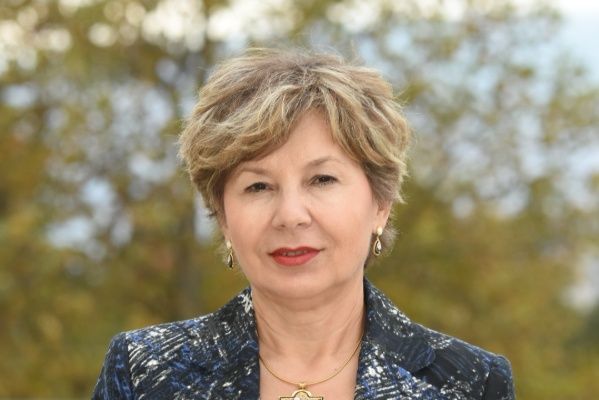
Do not set limits on your dreams – both in life and in your career!
Kamelia
Slaveykova, chairperson of the Board of Directors of Shell Bulgaria
Introduce yourself in a few
sentences!
I am a fighting and persistent person,
who believes that there are no impossible things. A curious and seeking nature, who
constantly challenges herself. I am convinced that everyone builds their own future, even
when it requires sacrifices.
What did you dream of becoming in
your childhood?
As a child, I dreamed of traveling and
discovering new worlds. This was influenced by my father's frequent business trips and
the travel restrictions to Western Europe at that time. And every restriction made me want
to overcome it even more.
The dream came true – before 1989, I won a scholarship for a Dutch language course. Even then, I felt that the propaganda about life in the West and the reality there were different. Despite the attractiveness, I never hesitated to return to Bulgaria.
At what age did you earn your first money? Tell us an interesting story.
As a student during the
vacations, I washed bottles and returned them to the packaging points – my first
own pocket money. The pride was immense. I earned a more serious income as a
student when I worked night shifts in a paper factory for several months. It was not
easy to combine lectures and work, but thanks to that, I managed to
finance a trip abroad on my own.
What factors shape personality at an early age and form interests? What is your “recipe” for curiosity?
At the core is hard work and the
inner need to do more than expected. I remember how in the German high school,
I set goals for myself – for example, to translate a book during the vacation. This was
not imposed from the outside, but an inner drive that brought me satisfaction.
Did your perceptions change in maturity regarding motivation?
Yes – over time, motivation becomes
more conscious. You see the fruits of your efforts and that gives new meaning and energy.
Whose decision was it where to study and was it the right one?
I wanted to study political economy (now
called economics) at VII “Karl Marx” (now UNSS). This was a completely correct
decision. One of our professors used to say: “Political economy is like a hewn stone –
it prepares you to be adaptable for the future.” I believe that is exactly the case.
Interests, knowledge, skills, hobbies?
I love to travel, to discover
new cultures and to be in nature. I challenge myself – whether it’s with
the Camino pilgrimage route in Spain or Italy, with piano lessons, or with
learning something completely new that I have avoided before.
Would you change your profession today?
No, because it satisfies me and
makes me look forward to each day with anticipation.
What does personal branding mean to you?
Personal branding is much more
than a CV or a profile on social networks. It is an aura – invisible, but tangible.
Like a perfume that dazzles you the moment you inhale and leaves a scent that is
remembered. It is the imprint that a person leaves behind – in a meeting, conversation,
or working on a joint project. The personal brand is not what you say about yourself,
but what remains in the minds of others after you have left.
What would you like people to talk about you when you are not in the room?
Honestly, it is not important for me
just to talk. What matters is what remains in them after the meeting – whether I have
sparked a thought, ignited a spark, or changed something in the way they view the
world. I want my presence and my words to inspire, to energize, to
transmit my passion. If after I leave, someone reflects, smiles differently, or takes a step more consciously – that is the most valuable result.
How do you cope with daily challenges to stay in good shape and mood?
With a positive attitude. I believe that
the way you perceive things determines the ease with which you go through
them.
Key takeaways for effective communication with different personalities?
The most important – the need for
real communication. We cannot rely on others to “figure it out.”
A dialogue built on listening and respect saves misunderstandings and
conflicts and makes life easier.
What do you think about money and their influence on your life?
Money is necessary, but
insufficient for a fulfilling life. They are a means, not an end.
The most valuable career advice you would give?
To find yourself and not to
set limits on your dreams – both in life and in your career. But also to work
hard to create the foundation for their realization.