From Excel table to 8 to three successful projects
· Aleksandrina Ikonomova
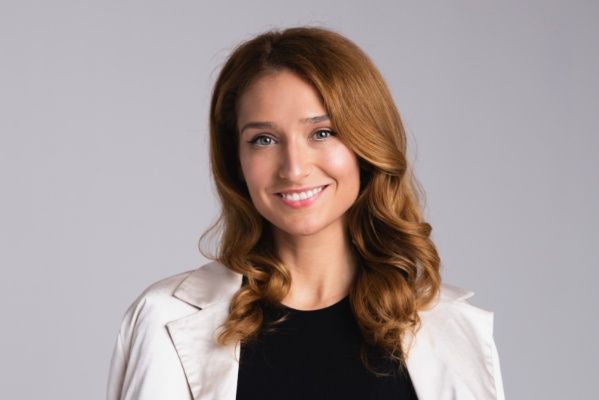
The sooner we understand that money is a mirror of perceived value, not an absolute one, the more consciously and freely we can build both our lives and our work!
Introduce yourself in a few sentences..
My name is Aleksandrina, for short Alya. I have been on the path of entrepreneurship for almost ten years. I started with an event agency after a long experience in the hospitality industry, and during COVID I transitioned to product businesses and various industries. In the end, I returned to my well-known field, but this time from a technological perspective, with software for event optimization.
Today my focus is in three directions: The Liber - a social media for entrepreneurs and creative people, focusing on luxury experiences and products; Negotiate Like a Woman – a global project that collects real cases from women's negotiations to help other women prepare better; and consulting for startups in their early phase, when ideas or new products are still fragile but promising. The common thread among all my endeavors is the desire to connect people and ideas and give them more opportunities for development.
What did you dream of becoming in your childhood?
I always knew that I would be involved in my own business, as I come from a family of entrepreneurs and people with freelance professions. It was very important for me to have freedom and flexibility, as well as to deal with diverse problems, as I easily lose focus and interest if I have a monotonous daily routine. I was an extremely weak student, without any particular talents, but I was very disciplined in sports and did very well in social situations and my communication with people. So, the only thing I knew was that I wanted to learn how to make money, work with many different people, and create interesting and inspiring things. What exactly these “things” are took me a little longer to discover :)
At what age did you earn your first money? Tell us an interesting story?
I was eight when my father handed me an Excel sheet divided by weeks. I had to fill in everything - from grades and remarks at school, through private lessons and help at home, to how often I went out with friends. Every Sunday I cleaned the office with him, and at the end of the month I submitted the report to him, and based on it, he determined my pocket money. That was the first time I felt how unpleasant it is for someone else to determine the value of your work. And even then, I promised myself that I would not depend on a salary, but would determine how much my work is worth myself.
What are the main factors and examples that shape us as individuals at an early age and form our interests? What is your recipe for curiosity, sources, and wells of information and inspiration at this stage of our human development?
For me, the biggest factor has always been my parents. I am from the generation whose mothers and fathers grew up at the peak of communism - a time when the freedom to choose was an impossible luxury. They often carry this feeling onto their children: instead of supporting our natural strengths, they sometimes directed us into “safe” tracks. This is understandable, but often hinders a person from discovering their true desires.
I believe that at an early age, the most important thing is to have both structure and freedom. Structure provides discipline, but the freedom to follow your instinct shows what your true interests are. My “recipe for curiosity” has always been simple: to trust my intuition about what interests me and not to be afraid to try. Everyone has their own strengths and weaknesses. When a person accepts them and starts to seek their own truth, they then find their “own” collective, instead of trying to fit into someone else's.
Has there been any significant difference in your perceptions in more mature age about what motivates you to do or not do something?
Yes. Over the years, I started to trust my intuition more and more, instead of just following what sounds reasonable or logical. When I stopped being guided solely by “rules” and allowed my inner voice to have a say, both my professional and personal life became much better.
Whose decision was it where to pursue higher education and what to study? Was that decision correct, looking back today?
The decision was made by my parents. In the era of free access to information, I believe that the main value of education is the contacts and the environment. I wanted to study business management in England, but in the end, I enrolled in law in Bulgaria, as they insisted. To be honest, I somewhat regret that choice. I feel that I would have gained more from the international perspective and a more suitable environment.
Share more about your interests, knowledge, skills, and hobbies?
I love being physically active, sports have always been an important part of my life. For a long time, I danced and to this day I am a big fan of club culture. In Bulgaria, it is not so developed, but abroad I often look for those places where the music is quality, and people dance and really have fun.
However, my curiosity about the world does not stop at the stage. I closely follow international politics and how it affects the economies and cultures of different countries. Perhaps that is why I also love to travel. For me, it is a way to understand how the “big picture” influences the lives of ordinary people.
Cooking is another hobby of mine, which I admit I spend less time on than I would like. It is like a form of meditation for me. I enjoy experimenting with more complex recipes that require attention and patience.
And my biggest interest is the art of conversation. I believe we have somewhat forgotten how to communicate genuinely, not only on deep topics but also in everyday life. I read a lot on the subject, and one of my projects is dedicated precisely to this - how cultural differences affect the way we negotiate and connect with each other.
Would you change your profession today and which fields of activity capture your interest?
No, I love my work and my way of life.
They say that personal branding is everything that people say about you when you are not in the same room with them. What would you like to hear today?
I would like people to say that I am a person they can rely on, both consistent and brave, with a clear vision and humanity. That through my projects I create spaces for conversations and communities that inspire and provide new opportunities. And that they can always have an interesting conversation with me - one of those that stays in their minds long after. If I remain in their minds as a person who combines ambition with humanity, that is an achievement for me.
Emotional intelligence, adaptability, and flexibility, as well as our soft skills, are key conditions for success in recent years. How do you cope with the daily challenges of life to stay in good shape and mood?
I have a morning routine that grounds me and gives me a stable start. I wake up very early and use the first 30 minutes to write down my thoughts. After that, I go for a walk, and thus my day begins with clarity and focus. This practice has taught me to hear my inner voice better and has drastically improved my quality of life.
And, of course, sports. There is not a day that I do not train because physical activity is the best way for me to release tension and keep not only my body but also my mind in good shape.
What are the most important conclusions you have made so far about maintaining proper communication considering the different characters of the people you meet daily – colleagues, friends, close ones?
Listen to understand, not to respond. We all need to be heard, understood, and accepted, and everyone carries a fear that the other does not suspect.
What do you think about money? What is their influence on your life? What is your advice to people who often ask themselves questions related to money and how sufficient they are?
I think one of the great societal lies is that it is not polite to talk about money. For me, this silence is a form of control because when we do not discuss the topic, we remain less knowledgeable and easier to manipulate. And the truth is that money has a huge significance in our lives; they provide peace, confidence, and freedom. For everyone, “enough” looks different; for one, it may be 100 thousand a year, for another - a million.
Over time, however, I realized that money is not actually a measure of the true value we create, but of the perception of that value. They do not directly reflect our real benefit, but the way others see and evaluate it. That is why it is so important to be able not only to create value but also to show it in a way that resonates with others. In this sense, money is just a tool for exchanging trust and perceptions.
And here comes the great responsibility. I really like the words of Jack Ma that when you have a hundred million dollars, that is no longer your money; it is the trust of society that you will use it better. A true entrepreneur does not just earn but solves social problems and creates value for others.
My advice is simple: educate yourself about money as early as possible and do not stop asking yourself “what value am I creating” and “how is it perceived”. The sooner we understand that money is a mirror of perceived value, not an absolute one, the more consciously and freely we can build both our lives and our work.
What is the most valuable career advice you would give to people?
To listen to their intuition. :)