How do emotional intelligence and authenticity lead to a fulfilling life?
· Gabriela Gateva
Work is more than a way to earn money – it is the engine of our personality!
Introduce yourself in a few sentences!
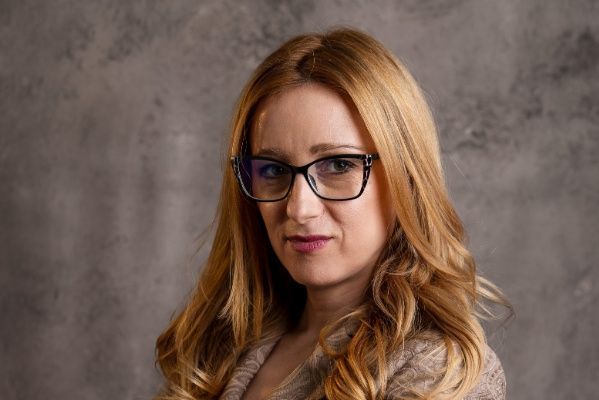
My name is Gabriela Gateva, I am a psychologist by profession, a basic consultant in positive psychotherapy, author of articles and publications on topics in the field of psychology and psychotherapy. I am a co-author of a scientific publication and the author of the book "The Trap of the Narcissistic Relationship".
What did you dream of becoming in your childhood?
As a child, I loved to read a lot, I drew, I loved to observe and explore the world, I sought solitude more.
At what age did you earn your first money? Tell us an interesting story!
I earned my first money by helping my father – he is an artist, had a studio for paintings and icons, and he let me sell his works. I think I was about 15 years old. I remember that the feeling of earning my own money was very pleasing to me. Then I also started saving. It gave me some security and satisfaction that I could provide for myself the things I wanted.
What are the main factors and examples that shape us as individuals at an earlier age and form our interests? What is your recipe for curiosity, sources, and wells of information and inspiration at this stage of our human development?
I believe that values are at the core of everything. They shape our attitude towards ourselves, the world, and people. I am convinced for myself that what makes me fulfilled is my desire to unite the realization of my own goals and dreams with caring for others. I start from the premise that what I am – my whole personality and identity – could not exist inextricably from service to people. The separate individual, individuality makes sense only when it benefits and works for others.
Everything I encounter on my path, I take as a lesson, a lever, an engine, and a springboard to the next step. I view the things I go through from the perspective of a researcher – what can I take, learn, how to use it to serve me. Even the most difficult situations, experiences, or encounters with people do not bring me down – on the contrary, I transform them and turn them into sources of my development.
Has there been any significant change in your perceptions in more mature age regarding what motivates you to do or not do something?
Changes occur at certain stages. It seems like they are part of life cycles – there are periods of strong internal need and desire for rearrangement and change. The last 7 years have been such for me.
I see myself as a person ready for challenges. I accept them and follow my own feelings. I have a strong and leading sense of personal freedom and a desire for independence – whether in choices, belonging, or work style.
I like to create my own opportunities, to seek them, and to build my vision at all levels. My motivation is mainly to seek answers to the questions that arise in the field of mental health, self-knowledge, and human personality.
Whose decision was it where to pursue higher education and what to study? Was this decision correct, looking back today?
The decisions have always been mine, but at the core of the choices for education has been the focus on the human side – personality, social sphere. I started with social activities, continued with two master's degrees in psychology and additional training. I believe that I feel at home in this field and it corresponds to my essence.
Share more about your interests, knowledge, skills, and hobbies!
My interests are partly related to my current activity and working with people. I have been excited to participate in various initiatives and events of organizations working on problematic topics both in the workplace and in the family environment. I have partnered in projects of trade unions and non-governmental organizations. I have participated as a speaker on topics of bullying, violence, burnout, narcissism, narcissistic relationships, and more.
Would you change your profession today and which fields of activity capture your interest?
I prefer to see things this way – I would add to my current activity. I would seek a broader field to further develop myself within this profession. I do not identify solely with it.
I see myself as a person with a wide range of interests. And at this stage, I add – I like and find myself in writing, this is one of my ways of expression.
They say that personal branding is everything that people say about you when you are not in the same room with them. What would you like to hear today?
I would like to hear that I have inspired someone to overcome themselves. That I have instilled confidence in the things they are capable of. That I have encouraged them to dig within themselves, to seek, to know, and discover new knowledge about everything they can be – as long as they challenge their ideas of who they are and what they could achieve.
Emotional intelligence, adaptability, and flexibility, as well as our soft skills, are key conditions for success in recent years. How do you cope with the daily challenges of life to stay in good shape and mood?
Emotional intelligence includes our ability to be aware of the entire palette of emotions, passions, and inner turmoil that we are subjected to every minute. And besides noticing it – to be receptive and compassionate towards ourselves. This is the most difficult for most people. They are more judgmental of their feelings, their torments, and they try in every way to suppress, cut, and sanction them.
Acceptance, which everyone talks about, includes this essential moment – to accept one's inner dynamics. Not to reject my emotional nature, to respect it and give it space. A huge part of mental problems come precisely from this inability to accept all of one's aspects, while at the same time striving at all costs to maintain my social mask. It is inevitable to have it, but authenticity is much more related to giving due to my real, unfiltered essence – an essence that grieves, suffers, wavers, gets angry, envies, and judges – everything we do not like, that irritates us, and that we wish were not there.
What are the most important conclusions you have made so far about maintaining proper communication considering the different characters of the people you meet daily – colleagues, friends, close ones?
It is important to have closeness, but also the necessary distance in every relationship – whether it is an intimate sphere, a circle of friends, or close ones. I observe the two extremes – either too close relationships to the point of merging, or complete and categorical distance. It is necessary for a person to seek connection with others, but not to rely entirely on them for the things that concern them directly.
What do you think about money? What is their influence on your life? What is your advice to people who often ask themselves questions related to money and how sufficient they are?
Money, besides their material appearance, also has its energetic side, and their presence or absence has its reason.
An important aspect is the exchange and balance between giving and receiving. Ultimately, money is necessary, but it should not be decisive in our choice of activity. Some people work unwillingly and only for the money, without even liking what they do. I believe that by giving what is necessary in my activity, money will come sooner or later as a result.
What is the most valuable career advice you would give to people?
I would tell them the following:
Always choose what you can do well, what you are passionate about, and what you consider a passion. An activity, a profession, where you feel at home and meaningful. Work is more than a way to earn money – it is the engine of our personality. It makes us part of a larger community, it is our belonging to other people – because every labor has significance and is a link in the common core.