If you stop developing, you start falling behind
· MARIYAN GENCHEV
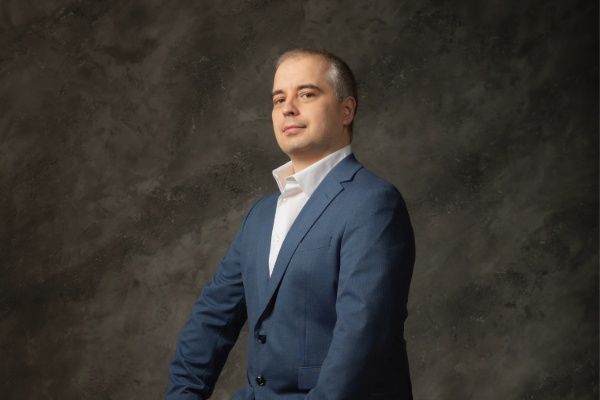
Regardless of whether you are an employee, manager, or entrepreneur – do not stop developing. Work is not just a place where you earn money – it is your platform for personal growth!
Introduce yourself
in a few sentences..
My name is Dr.
MARIYAN GENCHEV and for over 20 years I have been dedicated to building and developing
entrepreneurial, managerial, and leadership skills in the corporate and business world.
I am the founder of MG Academy — a business academy that helps thousands
of professionals and companies achieve real results through practical
training, mentoring, and coaching. I believe that everyone can be successful,
as long as they have the right mindset, knowledge, and confidence — and this is what
I provide to the people I work with.
What did you dream of becoming in your childhood?
Even as a child, I wanted
to help people — back then I didn’t know exactly how this would happen, but I knew
that I wanted to make the world a little better. Today I realize this dream by
helping people develop themselves, build their personal brand, increase their
income, find balance between personal and professional life, and achieve their own goals.
At what age did you earn your first money?
Even as a student,
I started working in various positions – general worker, sales consultant,
technical IT support… That was when I first felt how nice it is to see the results of your work. Since then, I have not stopped working — and developing.
What are the main factors that shape us as individuals at an early age and form our interests? What is your recipe for curiosity, sources and fountains of information and inspiration at this stage of our human development?
Everyone around us — family, friends, teachers, colleagues — leaves an imprint
on us. But I believe that from an early age we should start building our own “I”, not just follow the environment. The most valuable
skills we can develop early are emotional intelligence and
leadership qualities — they teach us how to understand ourselves and others, how to
communicate, lead, and inspire. This is the foundation upon which a successful personal brand is later built.
I believe that curiosity is the fuel of success. Every year I set a goal to read at least 50 books, and in recent years I seek new sources of knowledge and non-standard methods through which to help others even more effectively. I constantly learn — from books, courses, meetings with interesting people, and real business cases. This energizes me and allows me to pass on the accumulated knowledge further — to people who want to develop their personal brand and achieve more.
Has there been any significant change in your perceptions in a more mature age about what motivates you to do or not do something?
Definitely yes — with
the years, a person begins to look at motivation in a much more mature and strategic
way.
Human development goes through seven-year cycles, and according to numerous scientific
studies, the brain fully develops only between the ages of 25–28. That is why I focus most of my work on people over this age —
the major changes and identity crises have already passed, and they can
consciously work on building their personal brand.
If in earlier years my motivation was mainly related to proving myself, today I am driven by the desire to create meaning and lasting value for
others — to help people unlock their potential and lead
a more meaningful, balanced, and successful life.
Whose decision was it where to study and what to learn? Was this decision correct, looking back today?
My parents
insisted that I focus on programming and IT — back then this seemed
the most logical choice. Fortunately, I was accepted into a program related to management,
and this turned out to be the decisive turn in my life.
I went through a bachelor's, master's, and doctoral program, and what I learned in combination with
practice shaped my philosophy that success is not a matter of luck, but of
established habits and skills. Today I can confidently say that this was absolutely
the right decision — and the foundation upon which all my work as a mentor stands.
Share more about your interests, knowledge, skills, and hobbies.
My interests are
closely related to the needs of my students and the companies I train — and
that is why I constantly develop in areas such as management, leadership,
entrepreneurship, emotional intelligence, psychology, personal and career
development, business skills, influence and negotiation, digital transformation, and
artificial intelligence.
I love to learn new things and pass on what I have learned. As a hobby — I maintain
and develop my podcast “Total Entrepreneurship,” where I share strategies,
ideas, and stories that inspire people to be the best version of themselves.
Would you change your profession today and which fields of activity capture your interest?
Honestly — I would not change any of the professions I already perform, I would just
add more new ones. My daily life is multi-layered: entrepreneur, business owner,
business consultant, business development expert, manager, leader, speaker,
mentor, coach, IT specialist, content creator, podcast host…
I am not one of those people who can stay in one place — I constantly seek development
and new challenges because I believe that change is the engine of
true growth.
They say that personal branding is everything that people say about you when you are not in the same room with them. What would you like to hear today?
I would like them to
say that I am a person who changes others. That I give them the courage to start,
structure to continue, and faith that they can go far.
Change is difficult and often not liked — people perceive it with anxiety. But
it is precisely change that is more important than comfort. And if there is something I want to leave
behind, it is the feeling that thanks to our work together, someone has
started to live the life they have always wanted.
How do you handle daily challenges to stay in good shape and mood?
I manage my life
with the same structure that I manage my business — with clear rules and
discipline.
I use a combination of:
- affirmations – daily
positive phrases that direct my thoughts
- time management – schedules,
habits, eliminating “time wasters” (I don’t watch TV, sports, and
social media aimlessly)
- healthy habits – outdoor walks 4–5 times a week, balanced eating, no alcohol or cigarettes
- clear personal meaning and a big goal that energizes me every day
The truth is that everything starts from within — when you know why you do something, you will find how.
What are the most important conclusions you have made about maintaining the right communication with the different characters of the people you meet daily – colleagues, friends, relatives?
Proper
communication is an art that requires a systematic approach. Over time, I have realized that it
depends mainly on three key factors:
- the level of emotional intelligence
– our ability to recognize our own emotions and those of others
- active listening – the ability to hear
not only the words but also the intentions behind them
- assertive communication – to
state our position clearly, confidently, and with respect for the other party
People usually
communicate in four ways – aggressive, passive, empathetic, and assertive.
Only assertive communication brings win-win results for both sides. It
requires a lot of learning and practice. In my trainings, we always work on
this – how to identify what ego state a person enters the conversation with,
what motivation drives them, and how to bring them back to a balanced state to
achieve a constructive dialogue.
Communication is not
just talking – it is the ability to build a real connection. We as
humans love to talk a lot, but we rarely listen truly!
What do you think about money? What is their influence on your life? What is your advice to people who often ask themselves questions related to money and how sufficient they are?
Money is not a goal,
but a tool. They do not bring happiness, they bring power – the power to choose
where and how to live, how to take care of ourselves and our loved ones, what
education our children should receive.
Financial literacy is a mandatory part of modern education, regardless
of whether we are employees, managers, or entrepreneurs. Without it, people often become
prisoners of loans, stress, and fear of tomorrow.
In my life,
money is a means, not the center of the universe. They are a resource that allows me
to realize projects, develop the academy, create new trainings, and
help more people.
When a person has good financial discipline, they free themselves from anxiety
and can think more strategically – about meaning, not survival.
My advice is
simple:
- Earn more than you spend –
this is the foundation.
- Work simultaneously on increasing
income and optimizing expenses.
- Focus on personal development
and your personal brand – this is the fastest way to start earning 30-50%
more in 3–6 months.
Today we live in
times when changing jobs and getting a raise are much
more accessible if you are willing to invest in yourself.
What is the most valuable career advice you would give to people?
Regardless of whether
you are an employee, manager, or entrepreneur – do not stop developing. Work
is not just a place where you earn money – it is your platform for personal
growth.
Do not be afraid to step out of your comfort zone – it exists to remind us that we can do more. If you stop developing, you start falling behind. And
the biggest mistake is to wait for the “right moment” – the ideal moment is now.