In Switzerland, 'on time' means 5 minutes early, and 'well done' means impeccable work
· Dimitar Manolov
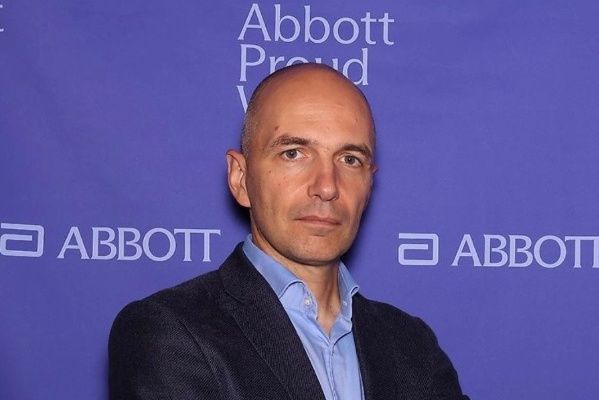
In global marketing, sometimes the biggest challenge is not what we say, but how to say it so that it is heard!
Introduce yourself in a few
sentences. What is your name, what do you do (position, company,
industry)?
My name is Dimitar Manolov and I am the head of marketing at Abbott – a global
pharmaceutical company that operates in over 160 countries and is among the leaders in
healthcare innovation. Abbott was founded over 130
years ago and today is one of the most respected names in the industry, with over 114,000
employees worldwide and annual revenues exceeding 43 billion dollars. The company is
focused on developing solutions that improve the quality of
life – from diagnostics and medical devices to nutritional products and
medications. I have been working in the industry for over two decades, having
held key management roles at GlaxoSmithKline, Actavis/Teva,
Walgreens Boots Alliance, and Abbott. Before my current position, I led
the global expansion of the company's portfolio.
My work has always been at the intersection of business
strategy and real impact on people's lives. I believe that
healthcare marketing is not just communication – it is a commitment to
the patient, to the team, and to society. And when this commitment is driven by
meaning, the results come naturally.
I was born and raised in Bulgaria, and although I now work in an
international environment, the Bulgarian spirit – with its inventiveness, adaptability, and
humanity – is an integral part of my professional and personal code.
What does your work involve as daily commitments?
My work is dynamic, multifaceted, and entirely focused on creating
value – for patients, for business, and for society. Every day is different,
but united by one mission: to turn complex medical science into understandable,
inspiring, and engaging messages that reach people when they need them most.
I manage global marketing strategies for key
therapeutic areas, working with teams from over 50 countries. This means not
just coordination, but building a common vision – one that is relevant in
Tokyo, but also understandable in Sofia. I believe that the strongest ideas are born where
data meets empathy, and creativity meets discipline.
Healthcare marketing is unique – it does not sell,
it explains, inspires, and builds trust. In my daily life, there are analyses of
market trends, strategic discussions with medical and regulatory teams, but
also creative processes where we seek new ways to tell the story of a
therapy – so that it is not just scientifically accurate, but humanly significant.
In global marketing, sometimes the biggest
challenge is not what we say, but how to say it so that it is heard.
And therein lies the magic – to turn the complex into the clear, and the invisible into
understandable.
Ultimately, this is not just a job – it is leadership
through ideas, vision through content, and impact through meaning.
In which country and city are you currently living and how did you end up there?
I live in Zug, Switzerland – a small but extremely dynamic city that is a prime example of how efficiency, internationality, and quality of life can exist in harmony. With a population of around 32,000, Zug is home to over 40,000 registered companies – more firms than residents. This is not just statistics, but proof of the entrepreneurial spirit and business attractiveness of the region.
Zug is also one of the richest cantons in Switzerland – with a GDP per
capita of over 192,000 Swiss francs, placing it second in the country. Here are global hubs of companies in
healthcare, technology, finance, and the blockchain industry.
My journey to Zug began in 2011 when I moved
from Bulgaria to take on an international role at Actavis. This was a moment of personal
and professional transformation – recently married, we were expecting our first child, and
although I had a stable career in Sofia, I decided to take on the challenge. Not
because I was lacking anything, but because I believed I could learn more, expand
my horizons, and gain experience that one day I could return as
value for Bulgaria.
Switzerland is not just a new location – it is a new perspective.
Here I learned to think more globally, to work more precisely, and to value the balance
between personal and professional. And although I am far from home, the feeling of
belonging has never left me – because I believe that the Bulgarian spirit has
its place everywhere where meaning, value, and vision are sought.
What were the biggest challenges you faced at the beginning of your stay?
Moving to Switzerland sounds like a dream come true – a stable economy, to-die-for landscapes, impeccable infrastructure. But the reality is that every new beginning comes with its challenges – especially when you are a foreigner in a country where precision is a cultural value, and punctuality is a form of respect.
In Switzerland, “on time” means five minutes early, and
“well done” means flawless work from the first time. This is not
just an expectation – it is part of the national identity. At first, this was
a cultural shock. Coming from Bulgaria, where we are flexible, adaptive, and often
improvise, I had to learn to think within frameworks, to plan with
surgical precision, and to communicate with measured clarity.
Every step – from registration to permits – is strictly
regulated. The expectations for foreigners are high, especially regarding
language, integration, and participation in public life. This is not a barrier, but an invitation –
to show that you are here not just to live, but to contribute.
And yet, I was not alone. Over 2.3 million
foreigners live in Switzerland, which is over 25% of the population. This is one of the highest proportions
in Europe. And although integration is not always easy, it is possible – when
you are ready to learn, to respect, and to adapt.
The biggest challenge was not the language, nor
the bureaucracy. It was the transition from “I” to “we” – from individual ambition to
collective responsibility. And it was in this transition that I discovered my greatest personal and
professional growth.
How did you overcome the
language barrier (if there was one)?
In my professional life, I primarily use English – it is the language of
global business, strategic discussions, and international teams. But
when you live in the German-speaking part of Switzerland, you quickly realize that German is not
just a language – it is part of everyday life, of culture, of integration.
At first, it was difficult – especially when communicating with
institutions, schools, local services. I started with language courses, of course, but
the real progress came from daily practice. And here something
unexpected happened – the roles at home reversed.
My children started school, adapted quickly, and
soon became my personal linguists - “Dad, that’s not how you say it!”
Sometimes it’s a bit awkward – especially when I make mistakes in front of other parents or
teachers – but that’s part of the process. And it’s those moments, when you learn from
your own children, that remind you that language is not just grammar – it is a connection,
trust, and the courage to expose yourself in order to grow.
What resources or networks (local communities, colleagues, organizations) helped you adapt?
Adapting in Switzerland is not just an administrative process – it is a social and cultural journey. And although the beginning is challenging, the country offers an impressive integration infrastructure that works – as long as you are ready to get involved.
Right from the first months, I found that the best way to feel
part of the new environment is to become an active part of it. I participated in
local initiatives, clubs, and professional networks that helped me not only to
navigate but also to build real connections – with people, with ideas, with communities.
Switzerland is home to over 57,000 sports, cultural, and hobby
clubs, and over 50% of the population participates in at least one volunteer or
social organization. This is not just statistics – this is a culture of
belonging.
The most important thing I learned is that integration does not happen
by itself – it happens when you happen to it. When you step out of your comfort zone,
when you engage, when you start to give, not just to receive.
What are the main
differences between the work culture in your current country and that in Bulgaria?
If I had to summarize Swiss work culture in one word, it would be
“sustainability.” In Switzerland, work is done with a focus on long-term results, on
the quality that remains, and on the trust that is built over the years. Here, quick success is not sought – value that withstands the test of time is sought.
“If you don’t have time to do it right, when will you have
time to do it again?” - this is a mindset that applies to everything: from watch production to strategic planning in business.
Switzerland is among the top 3 countries in the world in productivity,
and is a leader in industrial efficiency, innovation, and trust in institutions.
Punctuality here is not just politeness – it is an expression of respect for the time of
others. Meetings start on time, end on time, and every minute has
value.
In Bulgaria, on the other hand, the work culture is flexible,
adaptive, and human. We have talent that can improvise, find solutions
in conditions of limited resources, and create value through creativity. This is
a huge asset – especially in a dynamic environment. But sometimes this flexibility leads to
short-term solutions, lack of structure, and unsustainable practices.
One of the biggest lessons we can learn from
Switzerland is the investment in people. Over 70% of young people here choose
vocational education that prepares them directly for the labor market. This
leads to one of the lowest youth unemployment rates in the world – below 3%.
Education is not just knowledge – it is a tool for integration, for development,
and for leadership.
What values and
practices in the workplace impressed you the most?
I was most impressed by the culture of trust, freedom, and meaning. In the international
companies I have worked for, professionalism is not just valued – the human aspect is encouraged.
Innovations do not happen only in laboratories or offices – they start from an environment where
people feel free to think, to dream, and to act.
The opportunity to work on your own ideas, to be heard and
supported, creates a sense of belonging. Transparency in communication – from
management to teams – builds not just trust, but a culture of shared
responsibility. This is especially important for us Bulgarians abroad – because when
you are far from home, the environment becomes your new family.
Flexible working conditions, including working from anywhere
in the world, and care for mental health, show that companies no longer
view employees as resources, but as people with stories, dreams, and
potential.
This is not just a job – this is a journey. And when
the values of the company resonate with your personal principles, then you not only
grow – you become inspired.
Have there been situations in which cultural differences have challenged you?
I wouldn’t say that cultural differences have challenged me – they have taught me to be
more aware and adaptive. In Bulgaria, we are more emotional and direct, while in
Switzerland, moderation, silence, and diplomacy are valued. There have been moments when my enthusiasm
has been perceived as excessive, but over time I learned to
balance – to listen more, to observe, to respect the nuances.
This is not a compromise – this is growth. When you learn to
respect cultural differences, you start to lead with empathy, not just with
expertise. And then success comes not because you have changed, but because you have
grown.
How does finding a job differ in your current country compared to your homeland?
On a global level, finding a job is a strategic process that goes beyond
formal requirements. At first, where you studied and what experience you have is looked at, but as
your career progresses, the focus shifts to the real contribution, the scale of
impact, and recognition in the industry.
Expanding your network (networking) and reputation
are key – over 2/3 of positions are filled through recommendations and personal
connections. In global companies, they seek people who not only meet
criteria but inspire trust, have proven results, and are part of
professional communities.
This is not just a job search – this is building a
presence, influence, and a network that works for you.
Did you have to go through any additional qualification courses?
I believe that true leadership does not start with a title, but with curiosity. And that development is not a one-time act, but a continuous process. Therefore, for me, additional qualification has never been a matter of “had to,” but of “wanted to.” I wanted to understand more, to think more globally, to act more responsibly.
Over the years, I have gone through a number of trainings – in
international marketing, regulatory requirements, management, leadership in
a multicultural environment – including at Kellogg School of Management, which is
recognized as one of the leading institutions in the world in the field of marketing. This
is the home of Philip Kotler, “the father of modern marketing,” creator of
the marketing mix concept.
I consider myself a pharmacist by education, but also a strategist
by calling. I have a doctorate and a specialization in marketing, but I have never
viewed them as an endpoint. They are part of the journey – a journey that
continues every day, with every new challenge, with every new idea.
For me, qualification is not a formality. It is a door that opens – but it depends on you what you will do after you enter. It is not the title that defines you – but the value you can create. Of course, academic preparation helps – it provides access, trust, context. But true value comes from how you apply knowledge, how you turn it into results, and most importantly – into meaning.
If there is one thing I would advise every young professional, it is:
Invest in yourself as you would invest in the most promising business – with patience, vision, and faith in long-term value.
Have you encountered prejudices or obstacles because of your foreign origin?
In rare cases - professionalism and results speak for themselves – when you show value, origin becomes secondary.
What would you advise people who want to take a similar step?
Do it. But not with the idea of escaping – but with the mission to develop. Living and working abroad is not an escape, but an opportunity to broaden your horizons, gain experience, build a network, and return – stronger, more confident, more useful.
Over 3.5 million Bulgarians live abroad. In recent years, thousands have returned. This is not just statistics – it is a sign that Bulgaria has potential waiting to be unlocked. And that more and more people realize: true change begins with ourselves.
Be curious, open, brave. Learn, work, build. But never forget where you came from – because that is what makes you unique. Bulgaria needs you – your experience, your energy, your vision. And when you return, you will not just adapt – you will inspire.
If you could go back, would you choose the same path?
Yes. I would choose it again – with all the mistakes, lessons, and victories. Because it is not just about what you achieve, but about how you grow. My path gave me not just a career, but meaning. And if I had to start over – I would start with the same passion, but with even more patience, curiosity, and desire to pass it on.
What do you miss most about your homeland in professional and personal terms?
I miss that special Bulgarian emotion that cannot be learned – it is felt. The warmth in communication, the spontaneous conversations that start with “How are you?” and often end with “Let me know if I can help.” In Bulgaria, work is not just a professional commitment – it is human interaction, empathy, sometimes even friendship.
On a personal level, I miss the feeling of closeness – not geographical, but cultural. To step out onto the street and hear the native language, to feel the familiar rhythm of the city, to know that you are part of something that has shaped you. Bulgaria has a soul – and it is felt in every meeting, in every idea, in every spontaneous smile.
Professionally, I miss the Bulgarian flexibility – the ability to find solutions even when resources are limited. This is a talent that is not taught in business schools – it is built in reality, in everyday life, in those moments when you have to improvise, but you do it with class.
I always carry with me the Bulgarian approach – human, adaptive, intuitive. Because I believe that Bulgaria's greatest competitive advantage is not in the numbers, but in the people – in the way we think, feel, and act.
Have you considered returning and under what conditions would you do it?
Yes – I have not only considered it, but I believe it will happen. I will return when I can create real value – not only as a professional but also as a person who believes in Bulgaria. I believe that the experience I have gained around the world should be shared – with the young, with businesses, with society.
I will return to work, to inspire, and to help. Because Bulgaria is not just a place I left – it is a cause to which I return. And when we are ready to unite our knowledge, energy, and vision – then we will make our country stronger, more open, and more successful.
What do you think about money? What is its influence on your life? What is your advice to people who often ask themselves questions related to money and how sufficient they are?
Money is like oxygen – you don’t think about it when you have it, but you feel its absence immediately when it’s gone. It is a necessity, but not a goal. The real question is not “How much is enough?”, but “What do you do with it when you have it?”
In my career, I have seen people with little means who achieve huge impact, and those with millions who don’t know why they get up in the morning. For me, money is a tool – a means that gives you the freedom to choose, to create, to help. It should not be a measure of success, but an opportunity for meaning.
If you can sleep peacefully, take care of your family, invest in yourself, and lend a hand to someone else – then you have enough. Everything beyond that is a bonus. And a responsibility.
My advice - Do not chase the number. Chase the value. Because in the end, the most valuable currency is not money – but time, trust, and the impact you leave behind.