Journalism is my passion, and freedom of speech is my cause
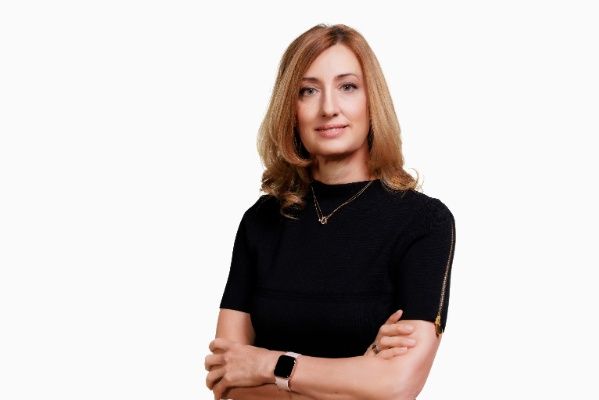
· Vesela Kisyova
Learn to say "No"!
Introduce yourself in a few sentences..
My name is Vesela Kisyova and I have been a journalist for over 30 years, with 25 of those working in television. I started my career at United Radio Stations "Kanal Kom" - Plovdiv, whose founder was Zhivko Zhelev, then I moved to Sofia and worked for about two years at the newly established TV "Europa", then I continued at BTV. I have gone through all the journalistic positions that exist in electronic media, starting from reporter and reaching chief editor and director of "News and Current Affairs" at TV "Europa". At BTV, I started as a "News" producer, Responsible Editor for "News" and Executive Producer of the show "This Saturday and Sunday". I have a higher education, three master's degrees, a specialization in the USA and countless trainings in the field of television journalism. I define myself as a professional who knows the television machine well and tries to get the most out of it for the benefit of the viewer in front of the screen. I love to create content and I have not found anything more inspiring so far than the profession of journalist.
What did you dream of becoming in your childhood years?
My childhood dream was to save wild animals in Africa. I was impressed by films like "Serengeti Must Not Die" and the books of conservationist Joy Adamson. As I grew older, I realized that I always wanted to work for something that matters to many people. As I got older, I realized this as working for some public interest. For example, to improve the quality of life of people, which I actually did through journalism, because a well-informed person can make the right decisions for their life and the life of their community. I remember that somewhere as a teenager I told my classmates that I would become a journalist and I surprised myself because I had not seriously considered it until that moment. I loved to read a lot and write, probably this thought came to my mind intuitively, and it turned out to be prophetic for my life.
At what age did you earn your first money? Tell us an interesting story?
At 18, I started working after I was not accepted to study "Law" at Sofia University. Back then, if you were not accepted to study higher education, you had to work. My father, of course, also did not think of letting me stay without a job and found me the hardest possible one – working shifts in a factory. Thus, from the student desk of the Plovdiv English High School, I found myself among the working class in eight months. This was an invaluable lesson from my father to see how money is earned. During my entire studies, I also worked. I taught English lessons until I started working as a journalist. The times were extremely interesting, I fell in love with this profession and stayed in it.
What are the main factors and examples that shape us as individuals at an early age and form our interests? What is your recipe for curiosity, sources and wells of information and inspiration at this stage of our human development?
Family is what shapes our values and interests. My father was an engineer, and my mother was a teacher, and we read a lot at home. For every holiday or the beginning of the school year, we received books as gifts. Going to the school or city library was one of my favorite activities. Education was also a value for our family. That’s why both my sister and I read. I believe that the personal example of parents is the most important for shaping the value system of children.
Did any significant difference occur in your perceptions in more mature age about what motivates you to do or not do something?
Somewhere in high school, my interest in social and political issues began to grow. I remember that my father secretly listened to "Radio Free Europe" in the evening and often told what he had heard. This sharply contradicted the propaganda in school at that time, and I was in something like cognitive dissonance. I didn’t know exactly what was happening and whom to believe. The process of Perestroika had just begun. It was felt that the atmosphere in society was becoming increasingly heated and something different was coming. Once, I decided to share my skepticism about the socialist regime during the class teacher's hour, when my teacher, in order to protect me, squeezed my hand tightly so that I wouldn’t speak. That’s when I understood what it was like not to be able to say what you think because it is dangerous. It seemed quite strange to me that thoughts could be dangerous. Later, freedom of speech became a meaning and cause in my life, and I always fought for it.
Whose decision was it where to pursue higher education and what to study? Was this decision correct, looking at it from today’s perspective?
My father really wanted me to become a doctor, but I categorically refused. He was driven by the motivation that being a doctor is one of the eternal professions like those of an architect, engineer, or teacher, and I would not be left without work. His other motivation was that I would be able to work abroad, something that at that time was almost impossible for many Bulgarians. He himself had worked for nearly five years as an engineer in Algeria and convinced me that this would allow me to see the world without prejudices and to know it from my own experience. Today, I am extremely happy that I did not listen to him and went my own way. Nothing else would inspire me as much as journalism and working in television. I became a witness from the front row of many important events. I especially loved reporting because it allowed me to feel the dynamics and processes of what was happening on the ground. Therefore, when I was offered to become an editor, I resisted for a while. Producing in television also became my passion. The big productions, in which many people participate, the synchronization between them, the creation of content, and the anticipation of whether the viewer will appreciate and like it, the responsibility before the broadcast, the adrenaline during and after a job well done, these are emotions that have always brought me satisfaction and inspired me in my work. To inform honestly according to the rules of the profession, to tell interesting stories through which people connect or draw experience, to help society by guarding its interest – this is something that has always "lit me up". And although sometimes it has been quite difficult, it has never stopped me from fighting for professional standards and "the public's right to know". Because for me, the viewers are never some imaginary whole. They are our parents, children, friends, our closest people. To betray them is like betraying yourself and your interests. The only thing I regret is that both my parents passed away early and did not get to see that I am a happily realized person.
Share more about your interests, knowledge, skills, and hobbies?
Besides reading books and listening to podcasts lately, traveling is my source of recharge. Alone and with my family, we have traveled to around 60 countries. The journey has always inspired me as an experience. Studying other cultures and meeting people from other nationalities enriches my perspective on the world. I often imagine how a news story from a place I have visited affects the people there. I also love art very much. One of my favorite activities is to walk through world galleries, read biographies of artists, or attend contemporary art courses. I love spending time in our family house in the village of Gela because it is close to nature, but if I have to choose between the mountains or the sea, I would choose the sea. I can sit and watch it for hours. I have the feeling that it washes away stress and allows my spirit to cleanse itself.
Would you change your profession today and which fields attract you?
I don’t think I would replace it with anything else. Everything related to content creation continues to excite me. I am also excited about the processes in society and the state.
They say that personal branding is everything that people say about you when you are not in the same room with them. What would you like to hear today?
I would like to hear that I have passed the test of time. That I have not given up and that I have not betrayed my values and the causes I believe in. That there has been unity between what I say and what I do. That I have been an example for someone and that in a critical moment they remembered my deeds, words, or advice to them. I would be happy if they continue to quote some of my "winged phrases" for which I was known.
Emotional intelligence, adaptability, and flexibility, as well as our soft skills, are key conditions for success in recent years. How do you cope with the daily challenges of life to stay in good shape and mood?
I would like to learn more in this regard. Life has made me tougher than I want to be. Recently, I have been impressed by the method of "Nonviolent Communication" that two sisters, Kali and Petya, have adopted as their mission to spread. One of them suffered a serious accident, and this method helps her to fully recover. With it, you learn to have more empathetic presence in communication instead of giving advice or making people follow some of your instructions. Since I fall a bit into the category of "perfectionist", I realize that I demand too much from people who still have much to learn, and it takes time for them to walk their path. I understand that it is difficult to skip stages; in television, a person needs at least five to seven years, and sometimes more, to build themselves as an authority and professional in their field. However, the television machine spins quite fast, and it happens that young people are entrusted to you. It is your responsibility not to waste them in a short time. From there comes the pressure for things to happen faster and with less damage to them. Your success is actually for them to succeed. There is no greater satisfaction for a producer in television than at the end of the show or news broadcast to have produced a homogeneous whole that meets the high criteria you set from the beginning. Of course, it is possible for everything to go wrong; the product is the work of many people, and from the negligence of one of them or a technical failure, a "chain reaction" can occur, and only quick and accurate intervention can prevent a bad outcome. The producer's responsibility in such cases is enormous. So is the stress.
What are the most important conclusions you have made so far about maintaining proper communication considering the different characters of the people you meet daily – colleagues, friends, close ones?
Let’s not forget that television is also a territory of people with a big ego, which requires communication skills and overcoming tension in stressful situations. The solution is always in favor of teamwork. Working alone in a television environment is impossible.
As for my close ones, they are used to my busy daily life and show great understanding for my work. I owe them a lot. Sometimes I return overloaded from noise, meetings, and conversations with many people, and I just want to be alone and quiet.
What do you think about money? What is their influence on your life? What is your advice to people who often ask themselves questions related to money and how sufficient they are?
I like the thought that "money makes bad taste stand out". Otherwise, I have nothing against them; I do not share the thought that poverty is equivalent to morality and integrity. Rather, it should be equivalent to laziness. I believe that money should be a fair exchange for the energy you put into your work to realize some product or activity that meets the needs of the market or benefits society. I have always insisted that good and quality journalistic work should be well paid. The state of society and the country should depend on it. And if a journalist manages to change something for the better, it brings great benefits to everyone.
What is the most valuable career advice you would give to people?
To work on what gives them meaning and not to compromise their values, because this turns into an internal conflict that will affect their health. And, as we know, health has no price. Therefore, they should exercise their right to say "No" when they see that their values begin to diverge from those of the work or company they work for. You know this thought that with "no" and "yes" we manage our lives, so let’s use these two words to be creators of our own careers.