The Challenge of Being a Partner in a Recruitment Agency in Switzerland
· Aleks Aleksandrova
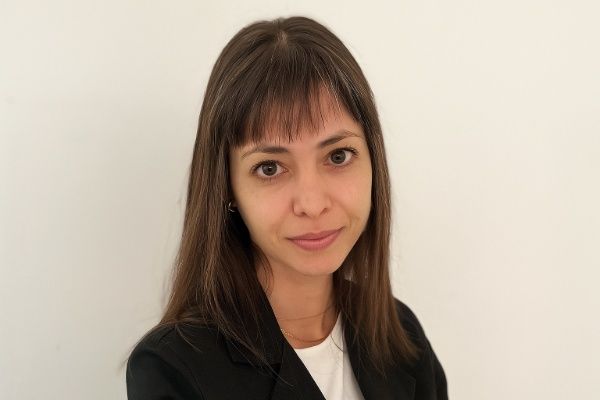
In Switzerland, people keep their personal space and are colder!
Introduce yourself in a few sentences. What does your work as daily commitments consist of?
My name is Aleks Aleksandrova. I am a partner and manager of a Swiss recruitment agency, with offices in Germany and Bulgaria. For more than 20 years, I have been engaged in the recruitment of qualified professionals and experts across Europe, the USA, Canada, Singapore, and the UAE, mainly in the IT, Banking and Finance, Pharmacy, Industry and Manufacturing, and Fast-Moving Consumer Goods sectors.
A year ago, I also created a platform that helps IT specialists meet innovative companies from around the world that want to expand their teams.
I am also involved in digital psychology, helping various departments and their leaders to form or reorganize their teams, taking into account the strengths and weaknesses of each team member, thus increasing the effectiveness of their work and having happier and more fulfilled employees. This is a method that also helps with new career orientation and choosing the right direction for anyone at a crossroads.
I am a qualified specialist and expert in working with the subconscious, and through the Theta Healing method, I help busy people protect themselves or save themselves from “burnout”.
My daily commitments are quite diverse, and fortunately, my days do not pass monotonously and boringly. I meet and talk with interesting people from different business spheres, which enriches me a lot. I form remote teams for various companies in different locations and conduct interviews with candidates for various positions; each project is unique in itself. It’s wonderful!
In which country and city do you currently live, and how did you end up there?
Since 2007, I have been living in Basel, Switzerland. Freshly graduated, I went to study for a master's degree at the University of Basel. After my graduation, I started working, and that’s how I stayed to live there.
What were the biggest challenges you faced at the beginning of your stay?
The differences in mentality. It was hard for me to get used to the fact that people are more closed off, keep their personal space quite a lot, and seemed cold to me.
How did you overcome the language barrier (if there was one)?
I graduated from high school with an extended study of the German language and had no problem with the language barrier; in fact, this helped me learn the Swiss dialect faster.
What resources or networks (local communities, colleagues, organizations) Inand helped you adapt?
Colleagues at the university and various student organizations. After that, my colleagues at work helped me adapt quite quickly to the specifics of the labor market and our sector.
What are the main differences between the work culture in your current country and that in Bulgaria?
In Switzerland, people can choose their percentage of employment. There are quite flexible employment models – people can work 2, 3 days a week or have full-time employment.
Punctuality is something that everyone adheres to. In work relationships, they quite distinguish themselves from their personal ones. Always polite with their colleagues, but also quite distant. I have rarely seen true and sincere friendships formed at work, as is the case in Bulgaria. They are quite diplomatic at the workplace and try not to interfere where it is not their responsibility. They clearly and precisely know their work commitments and where they extend according to the job description.
What values and practices in the workplace impressed you the most?Inand?
Adherence to clearly defined boundaries in work processes. Another thing that I applaud a lot is the chance to change your employment norm – if a woman has been on maternity leave and has worked 2 or 3 days a week, or even 4 days only half a day, she can return to a full work week whenever she decides.
Another thing related to men is that after they complete military service, for several consecutive years after that, they go once a year for military training, and the employer is obliged to comply with this requirement of the state.
Employees are offered and provided with more and more different social benefits, especially if they have families with children.
Have there been situations where cultural differences have troubled you?
At first, yes. Then gradually I began to realize that they are just like that, and actually, I need to adapt and integrate. Now, knowing the mentality, I am not troubled by any situations related to cultural differences. I can note that living and working with more and more foreigners, the Swiss have started to change, which I think is very nice.
How does finding a job differ in your current Incountry compared to your homeland?
When I went to Switzerland in 2007, the labor market was quite limited for foreigners. Only people from neighboring countries could be hired there quite easily. Over the years and with the expansion of the EU, this has changed. There are still specific requirements and restrictions regarding the issuance of work visas, but it is no longer as complicated as it was years ago.
For locals, it has never been a problem to find a job if they want to work. For the unemployed, the labor offices provide various opportunities and retraining courses; the goal is for people not to remain unemployed for long, and the state is quite focused on this.
Candidates for a given position most often go through two interviews, just like in Bulgaria. Feedback to the candidate when they are not approved at any of the stages is mandatory and is never skipped.
Did you have to go through any additional qualification courses?
Specifically for my job in the field of Human Resources, no. My additional training, which was of personal interest to me, was Digital Psychology and Theta Healing certification.
In Switzerland, the requirements for additional qualification courses vary for different professions. For example, nurses and doctors must pass exams and/or additional qualifications at the local level before they are approved and hired. Each canton has its own specific requirements for different sectors, hiring rules, and minimum wage levels.
Have you encountered prejudices or obstacles due to your foreign origin?
At first, yes, prejudices, but not obstacles. Some people didn’t even know where Bulgaria is.
What would you advise people who want to take a similar step?
To prepare, to research the legislation of the canton they are going to, to take that step, and not to give up.
If you could go back, would you choose the same path?
Yes, always. The first years alone abroad shaped and built my character, for which I am very grateful.
What do you miss most from your homeland in professional and personal terms?
Friends, warm emotions, sharing, and the fact that in Bulgaria, close contact with strangers is much easier, quicker, and happens more naturally.
Have you considered returning, and under what conditions would you do so?
My profession takes me to Bulgaria almost every month, and I do not have the feeling that I have left Bulgaria and need to return. I realize that I am lucky.
What do you think about money? What is its influence on your life? What is your advice to people who often ask themselves questions related to money and how sufficient they are?
Money is energy. Exchange. We say that to receive, you must give. The energy invested in the process of giving returns as receiving, and in the same amount. Exchange of value.
Their influence in my life has taught me this – they are important for everyone, as well as for me. They measure my satisfaction with the process of giving.
My advice to people who often ask themselves questions related to money and how sufficient they are or why they don’t have them is to reconsider their perspective on money and its significance for them – whether they really give as much as they believe they deserve to receive in return. And if they think they give a lot but receive little, then what is the reason for that? Anyone can change and increase their financial flows, as long as they truly want to.
#Aleks_Aleksandrova #Recruitment_of_Talent #IT_Tech_Teams_on_Demand