The meaning in work is born from curiosity about the unknown
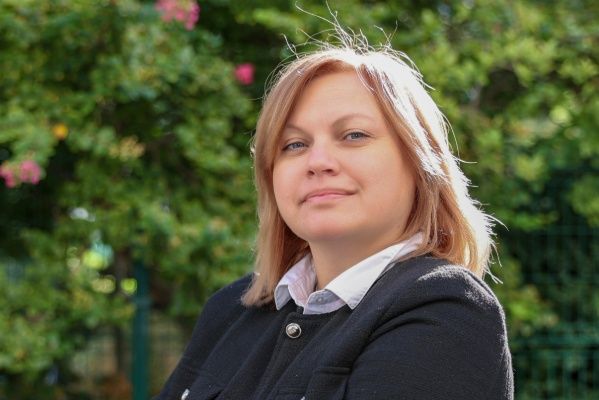
· Professor Maria Dimitrova
Professional life and professional contacts should remain behind the doors of the workplace and within working hours!
Introduce yourself in a few words..
My name is Maria Dimitrova and I am the daughter of two doctors. Currently, I am a lecturer and researcher at the Faculty of Pharmacy of the Medical University of Sofia. The oldest higher education institution in pharmacy in Bulgaria. I hold the position of professor and am currently the head of the Department of Organization and Economics of Pharmacy, and for several months I have also been part of the team led by the dean of the faculty, corresponding member prof. Dr. Georgi Momekov, dfn, where I am responsible for project funding, public procurement, and public relations. In addition, I am the president of ISPOR BG Chapter, which allows me together with a wonderful team of people to contribute to the creation of a platform of scholars and experts in the field of health technology regulation and market access, united around conducting evidence-based events for the benefit of the health of our society.
On a personal level, I have a wonderful family,
which always supports me and I am a proud mother of two incredible children – Andrey and
Katerina. I admit that they are my greatest teachers and inspirers,
because despite their age (Andrey is 15, and Katerina – 7) they manage to amaze me every day
with their discipline, determination, wit, and
persistence (sometimes stubbornness). Probably this is due to the fact that both
are not only very good students but also great athletes (Andrey is a basketball player, and
Katerina trains in rhythmic gymnastics).
How would you describe
your career in a few words?
I think that up to this point I have managed to achieve
a lot with hard work, curiosity, and teamwork. I have taken on many
various positions that I initially held in the
pharmaceutical industry - marketing, drug safety, medical
advisor, market access, but I think that 12 years ago I managed to discover
my true calling – that of a lecturer and researcher, for which I will always be
deeply grateful to my scientific supervisor, mentor, and recent leader
– prof. Genka Petrova, dfn. Of course, many
challenges and heights still lie ahead of me that I would like to achieve, but I think I am on
the right path. I am absolutely convinced that the greatest catalyst for
my desire to continue to develop and learn is undoubtedly our students –
they are demanding, curious, innovative, and creative. Working with them gives
meaning and makes challenges more attractive. I think that the Faculty of Pharmacy, MU-Sofia has the most amazing students 😊!
What was
the most important choice that shaped your path?
I made it in 11th grade at SMG “Paisii
Hilendarski,” when I decided to study pharmacy. I think that this choice brought me
here.
What would you like
to have known at the beginning of your career, but no one told you?
That competition is not a bad word. Competition
is not a race, but a driver of high achievements and quality relationships. The path,
I have traveled so far has shown me 100% that if a person wants to
improve and challenge themselves, they must be surrounded by people with
high expertise and reputation.
How can a person understand which profession is suitable for them?
I think I would need at least a large
PhD to answer this question, although probably even then I would
struggle. 😊 I think this choice should start at the end of the
high school stage, so that you can follow your higher education, which will
shape your future profession, in the right place. In this regard, I believe that in
Bulgaria there should be more initiatives from universities to be
more recognizable among high school students. Yes, it is true that every year every university
has an open house day, but I think we should be more persistent and
present ourselves more among students – we should go to them. I believe that
this would greatly help a prospective student to more easily shape their vision for
their professional development and will save them unnecessary years studying the
wrong profession.
Which skills do you think will be key in the next 10 years?
Here I will only list them,
because if I start to reflect, it will take many more pages –
adaptability, emotional intelligence, critical thinking, active listening,
teamwork, communication skills.
How to build
a network of useful contacts without appearing interested?
I think we still need to hint
that we are interested (at least a little 😊). Otherwise, in my profession, a network of useful contacts is
built very easily (at least for me) – our participation in projects, our work with
other universities, scientific and expert teams, students, doctoral candidates, partners.
It happens naturally. Of course, social networks help a lot. Perhaps this way
we do not appear interested, but we are the ones who spark interest through our
publications, emotions, and achievements that we share. Currently, on social networks,
we mutually follow nearly 700 people and I think that each contact has been or will be useful to me at
some point. I hope I also fit this profile.
What is the biggest mistake you have made in your career, and what did you learn from it?
To expect people to act as I
act. I have found myself in situations of disappointment, but it is precisely these that made me
the person I am today. Now I know that I must follow my own line of behavior and that everyone has their own manner of working, thinking,
and communicating, and it is not necessary for them to match mine.
How to recognize
a toxic work environment and when is it time to leave?
When communication breaks down and
trust in the team is lost. I believe that good teamwork requires people to
be honest and open with each other, even when opinions do not match.
I think we should say things as they are, because everything else
for me is hypocrisy. For me, it is toxic.
What would you
do differently if you could start over?
I don’t think there is anything I want to
change. I believe that everything that has happened to me and all the people I have
met on my professional path have been there, exactly when they needed to be, for
good or for bad. Maybe, if I now feel the need to start over to do something different, it means I haven’t achieved what I want. And I sincerely rejoice in the person I am
at the moment.
How to maintain our motivation in times of stagnation?
Here I will allow myself to quote a
great basketball player – Michael Jordan “I’ ve missed more than 9000 shots in my career. I’ve lost almost 300 games. 26 times
I’ve been trusted to take the game-winning shot and missed. I’ ve failed over
and over, and over again in my life. And that is why I succeed” and a very
witty teenager with a big heart and bold dreams J – “Mentality is
not thaught. You either have it, or you sit on the bench“. Stagnation is a temporary
state and should not be defined as failure or lack of success. It is precisely in these
moments that we need to awaken our “mentality,” because it is what gives us
the most strength to lift our heads, stand up, and move forward.
How to achieve
a balance between professional and personal life?
When we realize that professional
life and professional contacts should remain behind the doors of the
workplace and within working hours.
I am deeply convinced that work
will never end, projects will always exist, articles will always be there, and the halls and
laboratories will always be full of students, but the childhood of our children and the comfort
of family and partner happens only once. There is no reverse mode, there is no playback. I don’t think we
have the right to allow them to be put in the background and we need to set a
boundary to maintain balance.
When is it time to change our career, not just the job?
When we lose satisfaction from
what we do and realize that we can no longer contribute to the success and
development of the organization. I think there are no irreplaceable people and we should know
when we can no longer give more of ourselves and cannot receive more for
ourselves. Then we should leave with dignity and try again.
If you had to give just one piece of advice to people seeking success, what would it be?
Success is persistence, hard work, and
discipline. There is no lottery ticket for success. We have to earn it.
What is your definition of a “successful career”?
Here I will answer as a lecturer –
when you manage to surpass your teacher. I have always said that our alumni are
a testament to our work; if they are successful in their work, it means we have
succeeded.
For me, this is the formula for a successful
career... and of course kindness... I think that we should always and above all
be kind.